



What Are the Top AI Tools for Cybersecurity Professionals?
Discover the best AI tools that cybersecurity professionals use to detect threats, automate defense systems, and safeguard sensitive data. Learn how artificial intelligence enhances cyber protection, improves response time, and transforms the cybersecurity landscape for modern digital security teams.
Introduction
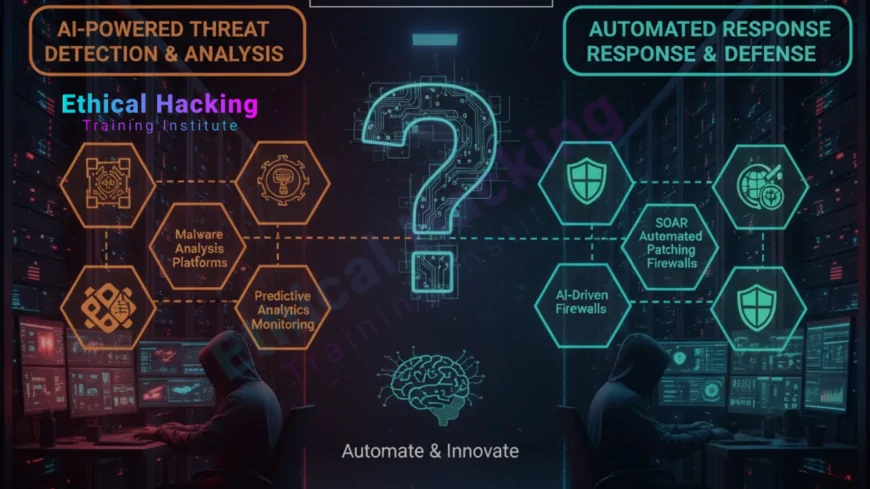
Artificial Intelligence (AI) has become one of the most transformative forces in the cybersecurity world. With the increasing complexity of cyber threats, traditional security methods are no longer sufficient. AI tools can analyze massive amounts of data, detect anomalies, and even predict potential attacks before they happen. For cybersecurity professionals, AI is not just a technological advantage, it is a necessity for staying ahead of hackers. Whether you are a beginner or an experienced professional, understanding and using AI tools can significantly enhance your defensive capabilities.
The Role of AI in Modern Cybersecurity
AI plays a vital role in strengthening cybersecurity strategies. It uses machine learning and deep learning algorithms to identify patterns that indicate malicious behavior. Unlike human analysts, AI systems can monitor thousands of endpoints and respond to suspicious activity in real-time. This allows cybersecurity teams to focus on strategic decision-making instead of manual threat detection.
AI’s predictive analysis feature is particularly beneficial. By studying historical data, AI can recognize the early signs of an attack, such as unusual login attempts or data transfers. To understand more about how AI tools are reshaping hacking and defense, check out this AI and hacking blog for deeper insights.
Benefits of Using AI Tools in Cybersecurity
AI tools provide several advantages that make cybersecurity faster, smarter, and more reliable. They can detect, prevent, and mitigate cyber threats without requiring continuous human intervention. Here are some of the top benefits:
- Speed and Automation: AI reduces the time needed to detect and respond to cyber threats.
- Enhanced Accuracy: Machine learning models minimize false positives in threat detection.
- Predictive Threat Analysis: AI predicts potential attacks based on existing data patterns.
- 24/7 Monitoring: AI-based systems continuously monitor networks for unusual activity.
- Adaptive Learning: AI evolves with every new threat, improving over time.
To gain a strong foundation in how these technologies are applied, you can learn through a comprehensive hacking course that covers AI’s role in cybersecurity defense.
Top AI Tools for Cybersecurity Professionals
Below is a list of some of the most widely used AI tools in cybersecurity. These tools help professionals automate detection, improve response times, and maintain robust defense mechanisms.
| Tool Name | Primary Function | Best For |
|---|---|---|
| Darktrace | Uses AI to detect unusual network behavior | Enterprise networks |
| Cylance | AI-powered malware prevention | Endpoint protection |
| CrowdStrike Falcon | Real-time threat detection using AI | Incident response |
| IBM QRadar | Threat intelligence and log analysis | Security analytics |
AI-based cybersecurity tools are not limited to large corporations. Even small organizations can deploy them to enhance protection. If you are new to this field, you can explore ethical hacking certification programs that include AI security training modules.
AI for Threat Detection and Incident Response
AI is particularly powerful in threat detection and response management. It can quickly recognize new patterns of cyberattacks and take preventive actions before the threat spreads. For example, if a ransomware attack starts encrypting files, an AI-driven system can isolate infected devices to stop the damage.
These systems continuously learn from previous incidents, making them smarter with every attack they encounter. For cybersecurity professionals, this means faster containment and fewer disruptions. To deepen your understanding of modern cybersecurity tools, explore the Nmap hacking techniques that complement AI-driven analysis.
AI and Machine Learning in Phishing Prevention
Phishing is one of the most common and dangerous cyber threats. AI tools use natural language processing (NLP) to analyze the content of emails, detect suspicious phrases, and identify fake websites. By comparing message patterns, they can flag phishing attempts before a user even clicks a link. AI also helps organizations create adaptive filters that recognize and block fraudulent communications in real-time.
Many organizations are adopting AI-based phishing filters that integrate directly into their email systems. You can learn about these advanced defense tactics through a Certified Ethical Hacker (CEH) course to strengthen your practical knowledge.
AI in Malware Detection and Analysis
AI’s ability to detect and classify malware has revolutionized cybersecurity. Unlike signature-based antivirus programs, AI models can identify zero-day malware by analyzing behavior instead of code signatures. This proactive approach prevents infections even when traditional tools fail.
Deep learning algorithms help security systems identify hidden malware and suspicious file behavior automatically. As AI continues to evolve, its role in malware defense will only expand. You can explore additional defensive measures in this cybersecurity career path guide.
Challenges of Using AI in Cybersecurity
While AI offers significant advantages, it also introduces certain challenges. Attackers are beginning to use AI as well, creating smarter and harder-to-detect attacks. Additionally, AI systems can sometimes produce false positives or require high-quality data to perform accurately. Without proper tuning, an AI system might flag harmless activities as threats, leading to wasted time and resources.
Cybersecurity professionals must continuously train and update AI models to maintain reliability. For better insight into balancing AI use in hacking and defense, check this online CEH certification blog that discusses AI integration in real-world security training.
Conclusion
AI has become an indispensable part of modern cybersecurity. It provides speed, intelligence, and adaptability to defend against an ever-evolving threat landscape. For cybersecurity professionals, learning to use AI-powered tools effectively can open the door to greater protection, faster responses, and more efficient threat management. As cybercriminals continue to adopt advanced technologies, the integration of AI in defense systems will be the key to staying one step ahead. Whether you’re a beginner or an expert, embracing AI-based tools is a must in today’s digital battlefield.
Frequently Asked Questions
What is AI in cybersecurity?
AI in cybersecurity refers to using machine learning and data analytics to detect and prevent cyber threats automatically.
How does AI help prevent cyberattacks?
AI analyzes network data, detects unusual patterns, and responds instantly to potential threats, reducing human error.
Which AI tools are best for cybersecurity?
Popular tools include Darktrace, Cylance, CrowdStrike Falcon, and IBM QRadar for automated threat detection.
Can AI replace cybersecurity professionals?
No, AI supports experts by handling repetitive tasks, but human decision-making is still crucial.
Is AI-based cybersecurity expensive?
Some enterprise tools can be costly, but many scalable options exist for smaller organizations.
Does AI improve phishing detection?
Yes, AI uses natural language processing to identify phishing emails and block them before they reach users.
Can AI detect zero-day attacks?
AI can detect unknown threats by studying behavior patterns rather than relying on predefined signatures.
Is AI used for malware analysis?
Yes, AI helps identify and isolate new malware types faster than traditional antivirus systems.
Can hackers use AI too?
Yes, hackers also use AI to create adaptive attacks, making defense AI systems essential.
How can beginners learn AI for cybersecurity?
Beginners can start with online courses or certifications that focus on AI-based cybersecurity tools.
Are AI-based systems always accurate?
Not always. AI models must be trained with quality data to ensure accuracy.
Does AI affect privacy?
AI enhances privacy protection by reducing data exposure and blocking intrusions.
Can AI detect insider threats?
Yes, AI identifies behavioral anomalies in employees that may indicate insider threats.
Is AI the future of cybersecurity?
Absolutely. AI will continue to evolve, making cybersecurity faster and more effective.
Should cybersecurity professionals learn AI?
Yes, understanding AI tools is essential for anyone who wants to stay relevant and effective in the cybersecurity industry.
What's Your Reaction?
 Like
0
Like
0
 Dislike
0
Dislike
0
 Love
0
Love
0
 Funny
0
Funny
0
 Angry
0
Angry
0
 Sad
0
Sad
0
 Wow
0
Wow
0