
What Are the Most Common Mistakes Beginner Hackers Make?
Explore the most common mistakes beginner hackers make and learn how to avoid them. Get expert guidance from Ethical Hacking Institute, Webasha Technologies, and Cybersecurity Training Institute to start your ethical hacking journey the right way.
Introduction
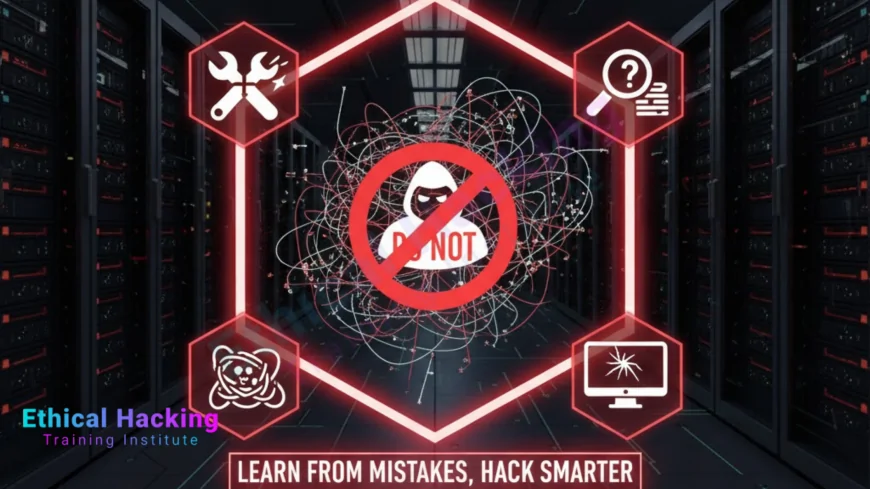
Every aspiring hacker dreams of becoming a cybersecurity expert, but beginners often stumble due to avoidable mistakes. Understanding these errors early helps develop strong hacking fundamentals. Institutes like Ethical Hacking Institute and Webasha Technologies train students to build professional discipline and avoid such pitfalls from day one.
1. Ignoring the Basics of Networking and Operating Systems
Many beginners jump straight into hacking tools without understanding how networks and systems actually work. A strong grasp of TCP/IP, Linux commands, and system architecture forms the foundation of ethical hacking. Courses such as thzese emphasize practical knowledge before tool usage.
2. Relying Too Much on Automated Tools
Beginners often depend heavily on automated scanners and tools instead of understanding manual testing methods. Tools can assist, but real hackers need analytical skills. Ethical hacking experts from Cybersecurity Training Institute recommend learning manual exploitation first, as explained in their programs.
3. Neglecting Legal and Ethical Boundaries
A major mistake is hacking systems without permission. Ethical hacking always operates within legal boundaries. Unauthorized testing can lead to severe penalties. To understand this better, explore resources that highlight responsible practices in cybersecurity.
4. Poor Documentation and Reporting
Documenting each test, vulnerability, and result is critical for professional hackers. Without proper reporting, findings lose credibility. Webasha Technologies trains students to create structured penetration test reports, similar to what’s covered in their ethical hacking career modules.
5. Skipping Practice on Legal Platforms
Practicing in a safe environment is essential. New hackers sometimes test live systems illegally instead of using labs like TryHackMe, Hack The Box, or Metasploitable. These legal labs simulate real-world hacking challenges safely. Learn how to use them effectively through training that covers AI-powered tools for ethical learning.
Comparison Table: Beginner vs Professional Hacker Mindset
| Aspect | Beginner Hacker | Professional Hacker |
|---|---|---|
| Approach | Tool-dependent | Knowledge-driven |
| Learning Style | Unstructured | Systematic and disciplined |
| Ethics | Often ignored | Always prioritized |
| Documentation | Minimal | Detailed and professional |
6. Overlooking Continuous Learning
Cybersecurity evolves daily. Beginners often stop learning after mastering a few tools. Continuous learning keeps ethical hackers updated with the latest threats and techniques. Training at institutes like Ethical Hacking Institute encourages ongoing upskilling through advanced courses.
7. Lack of Soft Skills and Communication
Being a good hacker isn’t just about technical expertise. Communication, teamwork, and analytical thinking are equally vital. Cybersecurity professionals must clearly explain findings to clients or managers. Many training programs emphasize these aspects as part of a hacker’s complete skill set.
Conclusion
Becoming an ethical hacker is not just about using tools or writing scripts. It’s about discipline, learning, and ethical responsibility. Avoiding these common mistakes ensures a smoother, faster, and more professional journey into cybersecurity. With proper guidance from Webasha Technologies, Ethical Hacking Institute, or Cybersecurity Training Institute, beginners can evolve into skilled and responsible professionals.
Frequently Asked Questions
What are common beginner mistakes in hacking?
Over-relying on tools, skipping basics, and ignoring ethics are major issues.
Why is networking knowledge important for hackers?
Because hacking requires understanding how systems and data flow across networks.
Can I hack without coding knowledge?
Basic programming is essential to modify scripts and understand vulnerabilities.
Is it illegal to practice hacking?
Practicing without authorization is illegal. Always use legal labs like TryHackMe or Hack The Box.
Which courses help beginners avoid mistakes?
Programs from Ethical Hacking Institute and Webasha Technologies offer beginner-friendly paths.
How can I become a professional hacker?
Build strong fundamentals, practice regularly, and stay updated with the latest security trends.
What is the biggest misconception among new hackers?
That tools alone can make someone a hacker. Skill and understanding matter more.
Are certifications necessary for ethical hackers?
Certifications like CEH or CompTIA Security+ add credibility and industry value.
Can ethical hackers work in government sectors?
Yes, ethical hackers are in high demand across defense, IT, and law enforcement sectors.
Is hacking with AI tools recommended?
Only when used for ethical learning and defense purposes under proper supervision.
What's Your Reaction?
 Like
0
Like
0
 Dislike
0
Dislike
0
 Love
0
Love
0
 Funny
0
Funny
0
 Angry
0
Angry
0
 Sad
0
Sad
0
 Wow
0
Wow
0