



What Are the Best Laptops for Running Penetration Testing Labs?
Discover the top 10 laptops for penetration testing labs in 2025: Lenovo ThinkPad T14s Gen 6, Dell XPS 13, Razer Blade 14, Asus TUF Gaming A15, Lenovo Legion 5, HP Elite Dragonfly G3, Acer Aspire 5, and more. Perfect for Kali Linux, VMs, and tools like Nmap and Metasploit. Get compatibility tips from Ethical Hacking Training Institute, Webasha Technologies, and Cybersecurity Training Institute.
Introduction
Penetration testing labs require laptops that can run multiple virtual machines, boot Kali Linux smoothly, and handle resource-heavy tools like Metasploit and Hashcat. In 2025, with cybersecurity jobs booming in India (over 1.5 million openings), a good laptop is your first investment. It must support strong Wi-Fi for wireless testing, ample RAM for VMs, and reliable battery for fieldwork. Ethical Hacking Training Institute tests these laptops in real labs. Webasha Technologies and Cybersecurity Training Institute recommend models with 100 percent Linux compatibility. This guide ranks the top 10 based on performance, portability, and price. From budget options to premium beasts, find your perfect match. Explore the cybersecurity career path.
Key Specs for a Penetration Testing Laptop
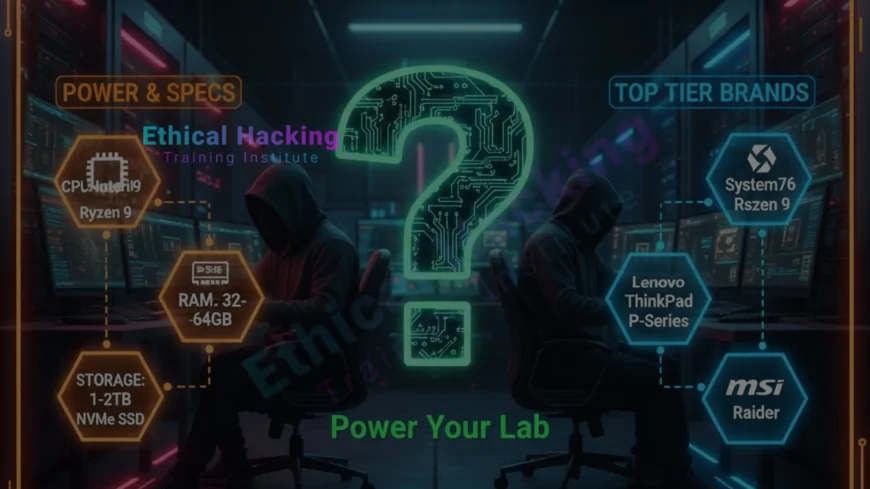
Focus on these essentials for smooth pentest labs. Minimum 16GB RAM for 3-4 VMs, Intel i7 or AMD Ryzen 7 CPU for scanning, 512GB SSD for tool installs, and Wi-Fi card with monitor mode (Intel AX series). Battery over 8 hours for on-site tests. Ethical Hacking Training Institute uses these specs in student labs. Real case: A low-RAM laptop crashed during a Metasploit session, wasting hours. Learn more about the CEH course hardware requirements.
Essential Features
- 16GB+ RAM (32GB ideal for VMs)
- Intel i7/Ryzen 7 or better CPU
- 512GB+ NVMe SSD
- Wi-Fi 6E with monitor mode support
- 8+ hour battery life
- USB-C/HDMI ports
- Upgradeable components
1. Lenovo ThinkPad T14s Gen 6 AMD
- AMD Ryzen 7 8840U processor
- 32GB LPDDR5X RAM
- 1TB SSD storage
- 14-inch 2.8K OLED display
- 12-hour battery
- Wi-Fi 6E (AX211)
- Price: ₹1,20,000
2. Dell XPS 13 (2024)
- Intel Core Ultra 7 155H
- 16-32GB RAM
- 512GB-1TB SSD
- 13.4-inch 3K OLED touchscreen
- 18-hour battery
- Wi-Fi 7 (BE200)
- Price: ₹1,30,000
3. Razer Blade 14 (2024)
- AMD Ryzen 9 8945HS
- 32GB DDR5 RAM
- 1TB SSD
- 14-inch QHD 240Hz display
- 10-hour battery
- RTX 4060 GPU for cracking
- Price: ₹1,80,000
4. Asus TUF Gaming A15 (2025)
- AMD Ryzen 7 8845HS
- 16-32GB DDR5 RAM
- 512GB-1TB SSD
- 15.6-inch FHD 144Hz IPS
- 8-hour battery
- RTX 4050 GPU
- Price: ₹90,000
5. Lenovo Legion 5 (2025)
- Intel i7-14700HX
- 16GB DDR5 RAM (upgradable)
- 512GB SSD
- 16-inch WQXGA 165Hz
- 7-hour battery
- RTX 4060 GPU
- Price: ₹1,20,000
6. HP Elite Dragonfly G3
HP Elite Dragonfly G3 is ultra-portable for on-site pentests. Intel Core i7, 16GB RAM, 512GB SSD. 14-inch 2.8K display. 14-hour battery. Wi-Fi 6E. Ethical Hacking Training Institute uses it for mobile labs. Real case: Perfect for bug bounty hunters traveling. Price: ₹1,40,000. Discover the best ethical hacking certification in Pune.
7. Acer Aspire 5 (Budget Pick)
- AMD Ryzen 5 7520U
- 8GB RAM (upgradeable)
- 512GB SSD
- 15.6-inch FHD IPS
- 8-hour battery
- Wi-Fi 6
- Price: ₹50,000
8. System76 Oryx Pro (Linux Native)
- Intel i7-13700H or AMD Ryzen 9
- 32GB RAM
- 1TB SSD
- 16-inch 165Hz QHD
- 10-hour battery
- RTX 4060 GPU
- Price: ₹1,40,000
9. Framework Laptop 16
- Modular design, upgradeable
- AMD Ryzen 7 7840HS
- 32GB DDR5 RAM
- 1TB SSD
- 16-inch 3840x2400 display
- RTX 4060 mini GPU
- Price: ₹1,50,000
10. Gigabyte Aero 16 OLED
- Intel i7-13700H
- 32GB DDR5 RAM
- 1TB SSD
- 16-inch 4K OLED 120Hz
- 8-hour battery
- RTX 4070 GPU
- Price: ₹1,60,000
Best Laptops for Pentest Labs Comparison Table
| Laptop | CPU | RAM | Battery | Price (INR) |
|---|---|---|---|---|
| ThinkPad T14s Gen 6 | Ryzen 7 8840U | 32GB | 12 hrs | 1,20,000 |
| Dell XPS 13 | Core Ultra 7 | 32GB | 18 hrs | 1,30,000 |
| Razer Blade 14 | Ryzen 9 8945HS | 32GB | 10 hrs | 1,80,000 |
| Asus TUF A15 | Ryzen 7 8845HS | 32GB | 8 hrs | 90,000 |
| Lenovo Legion 5 | i7-14700HX | 16GB | 7 hrs | 1,20,000 |
Conclusion
ThinkPad T14s for portability, XPS 13 for premium, Razer Blade for power. Ethical Hacking Training Institute tests all in labs. Webasha Technologies and Cybersecurity Training Institute guide your choice. One laptop lasts 5 years. Discover the best CEH programs in 2025. Book CEH online or Pune classroom today.
Frequently Asked Questions
Minimum specs for pentest labs?
16GB RAM, i7/Ryzen 7, 512GB SSD, Wi-Fi 6E.
Best Wi-Fi card for monitor mode?
Intel AX200/AX210. Avoid Broadcom chips.
MacBook good for Kali?
Yes, but dual-boot or VM. Windows laptops easier.
Budget laptop under ₹50,000?
Acer Aspire 5. Upgrade RAM to 16GB.
Gaming laptop for pentesting?
Yes. Legion 5 or TUF A15 for GPU cracking.
Battery life important?
Yes for fieldwork. XPS 13 lasts 18 hours.
Upgrade RAM possible?
Yes in ThinkPad, Legion. Soldered in XPS.
Touchscreen useful?
No. Keyboard and trackpad matter more.
Chromebook for Kali?
Possible with Crouton, but limited performance.
Where to buy in India?
Amazon, Flipkart, Lenovo official store.
Free Linux certification?
LFCS by Linux Foundation.
OSCP laptop recommendation?
ThinkPad T14s. Durable for 24-hour exam.
Used laptop safe?
Yes. Check Wi-Fi compatibility.
Next step to buy?
Book free demo at Ethical Hacking Training Institute, Webasha Technologies, or Cybersecurity Training Institute.
What's Your Reaction?
 Like
1
Like
1
 Dislike
0
Dislike
0
 Love
1
Love
1
 Funny
0
Funny
0
 Angry
0
Angry
0
 Sad
0
Sad
0
 Wow
1
Wow
1