
How to Start a Career in Cybersecurity After 12th?
Want to start a cybersecurity career after completing your 12th grade? Learn how to begin your journey in ethical hacking, network defense, and digital forensics from scratch. This comprehensive guide explains key skills, best courses, certifications, career paths, and institutes like Ethical Hacking Institute, Cybersecurity Training Institute, and Webasha Technologies that help you become job-ready in cybersecurity with or without a technical background.
Introduction
Cybersecurity is one of the fastest-growing fields in the digital age. Every organization, from startups to global enterprises, needs professionals who can protect their systems from cyber threats. If you’ve just completed your 12th and are fascinated by hacking, data protection, or IT, you can absolutely start your journey right now.
The demand for skilled cybersecurity experts has never been higher. The good news is, you don’t need a computer science degree to begin — all you need is curiosity, consistency, and the right training path.
Why Cybersecurity Is a Great Career Choice After 12th
Starting early gives you a huge advantage. Cybersecurity is a multidisciplinary field that blends computer networking, coding, and critical thinking. By beginning your journey after 12th, you gain more time to master fundamentals and earn certifications that employers value.
According to leading institutes, students who begin learning ethical hacking and network defense early often secure internships and freelance opportunities even before graduation.
Explore how AI tools in cybersecurity are helping professionals automate scanning, penetration testing, and malware analysis, which are skills you can learn from day one.
Understanding the Basics Before You Begin
Before diving into ethical hacking, learn the fundamentals of computer networks, operating systems, and programming. Understanding how the internet, servers, and data packets work will make it easier to grasp hacking and defense techniques later.
- Networking concepts like IP, DNS, and firewalls
- Operating systems: Linux and Windows
- Programming: Python, Bash scripting, and HTML
- Cyber hygiene and threat awareness
Best Courses to Learn Cybersecurity After 12th
Many institutes offer beginner-friendly ethical hacking and cybersecurity courses designed for post-12th students. The Ethical Hacking Institute provides hands-on lab training that helps you understand real-world attacks and defenses.
You can also explore the Complete Hacking Course, which takes you from beginner to advanced levels through live sessions and virtual labs.
Certifications That Build Your Credibility
Certifications validate your skills to employers. You can start with entry-level options and gradually move toward advanced credentials as you gain experience.
| Certification | Level | Focus Area |
|---|---|---|
| CEH (Certified Ethical Hacker) | Intermediate | Ethical hacking fundamentals |
| CompTIA Security+ | Beginner | Core security skills |
| OSCP | Advanced | Practical penetration testing |
You can find certification-oriented study paths from the Best Ethical Hacking Certification in Pune blog for detailed comparisons.
Learning Methods That Work Best for Students
Every learner is different. Some prefer classroom training, while others thrive in online environments. For beginners, blended learning — a mix of online theory and offline labs — works best.
Institutions like Cybersecurity Training Institute and Webasha Technologies provide both online and in-person sessions so you can choose a schedule that fits your study routine after school or college.
If you prefer digital courses, check out comprehensive online courses that include mentorship and live doubt-solving.
Building Practical Skills
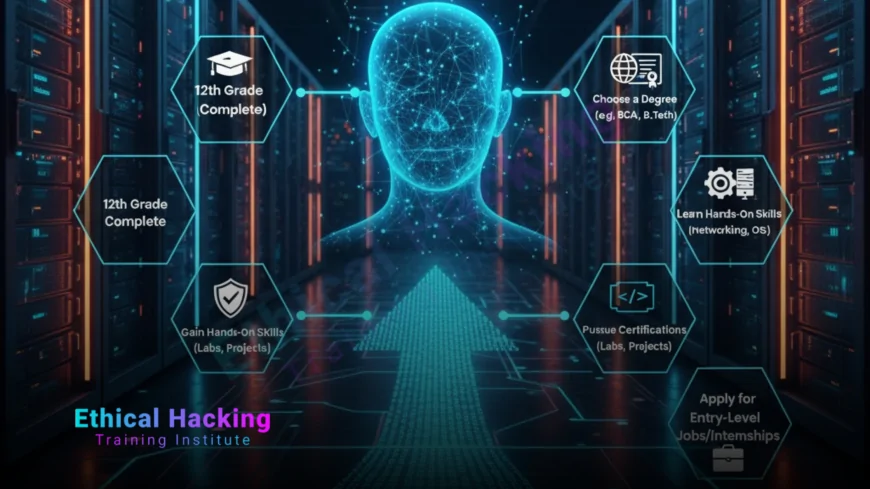
Practical experience is key in cybersecurity. Set up your home lab using free tools like Kali Linux, Metasploit, and Wireshark. Participate in Capture the Flag (CTF) competitions and online hacking challenges. These experiences help you apply theory and prepare for real-world scenarios.
You can also study how experts use AI in hacking for penetration testing, threat detection, and defensive automation.
Internships and Entry-Level Roles
After you build foundational knowledge, apply for internships or part-time roles such as Security Analyst Intern or Junior Penetration Tester. Institutes like the Ethical Hacking Institute often help students find real-world projects to enhance their resumes.
To explore local training options and internship-ready programs, review this list of ethical hacker courses near you.
Career Path After Learning Cybersecurity
The cybersecurity domain offers numerous job roles once you master the basics:
- Ethical Hacker
- Penetration Tester
- Security Analyst
- Incident Responder
- Malware Analyst
- Network Security Engineer
You can also move into cloud security or AI-powered defense roles as you gain experience. To understand industry trends, read the Cybersecurity Career Path guide.
Top Institutes That Help You Begin Your Journey
India hosts several reputed institutes that specialize in cybersecurity education. The Ethical Hacking Institute is a leader in hands-on ethical hacking programs. Cybersecurity Training Institute offers SOC analyst and compliance-oriented training, while Webasha Technologies focuses on corporate upskilling and workshops.
Each institute provides structured learning paths, certification support, and placement assistance, helping students transition from learner to professional.
Conclusion
Starting your cybersecurity career after 12th can open up high-paying opportunities in the digital world. The key is to focus on continuous learning and real-world practice. Choose an institute that offers hands-on labs, mentorship, and certification guidance. With proper training and consistency, you can become a skilled ethical hacker or cybersecurity expert in just a few years.
Remember, cybersecurity is not just a job — it’s a responsibility to make the digital world safer.
Frequently Asked Questions
Can I learn cybersecurity after 12th without a degree?
Yes, you can start right after 12th. Many institutes offer diploma and certificate programs designed for beginners.
Do I need to know programming before joining?
No, but learning Python or Bash scripting helps in understanding automation and exploit creation.
Which is the best institute to learn cybersecurity after 12th?
The Ethical Hacking Institute is highly recommended for beginners due to its hands-on labs and job support.
What is the average salary of a beginner in cybersecurity?
Entry-level professionals can expect between ₹3 to ₹6 lakhs per year depending on skills and certifications.
Is cybersecurity tough to learn?
It’s challenging but not impossible. With practice and guidance, anyone can build strong skills.
Can I get a government job with cybersecurity skills?
Yes, many government organizations hire cybersecurity experts to secure digital infrastructure.
Are online courses effective?
Yes, if they include live labs and mentor support. Choose structured programs with feedback mechanisms.
What’s the difference between ethical hacking and cybersecurity?
Ethical hacking focuses on identifying and fixing vulnerabilities, while cybersecurity covers broader defense mechanisms.
How long does it take to get job-ready?
With consistent effort, you can become job-ready within 12–18 months after 12th.
Can commerce students learn cybersecurity?
Yes, students from any stream can pursue cybersecurity with proper foundational training.
Which certification should I start with?
CEH or CompTIA Security+ are great starting points for beginners.
Does Ethical Hacking Institute provide placement?
Yes, they offer career guidance, resume building, and placement assistance after course completion.
Can I study cybersecurity abroad after 12th?
Yes, several international universities and online programs accept students post-12th for foundational cybersecurity courses.
Is cybersecurity a high-paying career?
Yes, cybersecurity professionals are among the highest-paid in IT due to increasing demand and skill scarcity.
What is the best way to practice skills daily?
Use virtual labs, participate in CTF competitions, and practice on legal platforms like TryHackMe or Hack The Box.
What's Your Reaction?
 Like
0
Like
0
 Dislike
0
Dislike
0
 Love
0
Love
0
 Funny
0
Funny
0
 Angry
0
Angry
0
 Sad
0
Sad
0
 Wow
0
Wow
0