

How to Practice Ethical Hacking Safely at Home?
Learn how to practice ethical hacking safely at home using virtual labs, Kali Linux, and legal penetration testing platforms. Explore essential tools, precautions, and best practices to enhance your skills without breaking cybersecurity laws or endangering real systems.
Introduction
Practicing ethical hacking at home is one of the best ways to build practical cybersecurity skills. With the right setup, tools, and safety measures, you can learn penetration testing, network scanning, and vulnerability assessment without harming real-world systems. Institutes like Ethical Hacking Institute and Webasha Technologies often encourage learners to build personal labs before joining advanced certification programs.
1. Understanding the Need for a Safe Hacking Environment
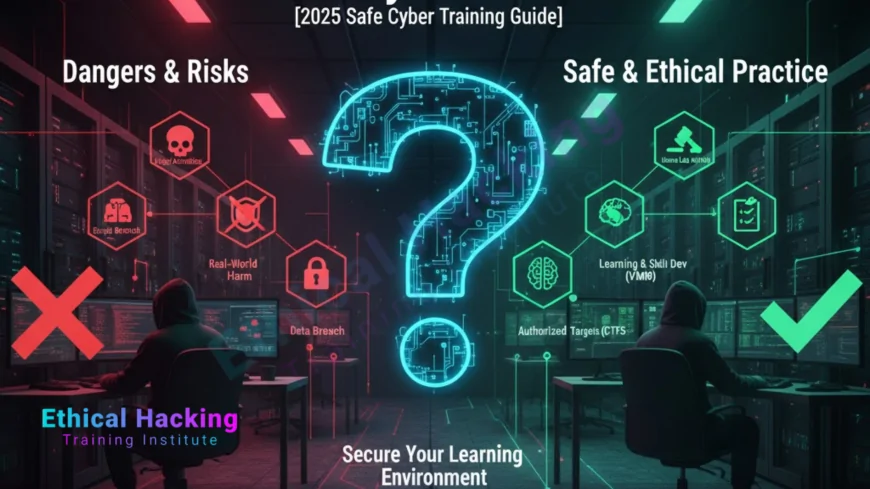
Ethical hacking is about identifying and fixing vulnerabilities, not exploiting them. Practicing in a safe, isolated environment ensures you stay within legal boundaries. Setting up a home lab lets you experiment freely without risking public networks. Before diving in, learn the basic structure of a controlled environment to avoid legal or ethical issues.
2. Setting Up Your Home Lab
A safe home lab can be created using free or open-source tools. Install virtual machines using platforms like VirtualBox or VMware. Use isolated networks to ensure your activities remain private. Most cybersecurity training programs, including those at Cybersecurity Training Institute, provide hands-on guidance for lab configuration and testing techniques.
3. Tools You Need to Get Started
You’ll need essential tools for ethical hacking such as:
- Kali Linux – a complete suite for penetration testing
- Metasploit Framework – for exploitation and payload generation
- Wireshark – for packet analysis
- Burp Suite – for web security testing
- Nmap – for network scanning
You can access free learning materials and detailed tutorials through industry resources like courses offered by Ethical Hacking Institute.
4. Using Virtual Machines for Practice
Virtual machines are the backbone of a safe hacking environment. They let you create both attacker and victim systems within the same computer. Tools like Kali Linux and Metasploitable 2 can be used to simulate attacks safely. Ethical hacking educators recommend using snapshots so you can easily restore your environment after experiments.
5. Online Platforms for Safe Practice
If you don’t want to set up local labs, online hacking platforms are a great alternative. Some of the most popular options include:
- TryHackMe – guided challenges for beginners
- Hack The Box – real-world simulation for professionals
- OverTheWire – Linux-based hacking challenges
- VulnHub – downloadable vulnerable machines
Each of these platforms allows you to practice legally and safely. Institutes like Webasha Technologies often integrate these into their curriculum for enhanced student learning using cloud-based labs.
6. Legal and Ethical Guidelines
Always remember that hacking without permission is illegal. Ethical hackers must operate within defined legal frameworks. Avoid scanning external IP addresses or attacking real servers. Cybersecurity Training Institute emphasizes the importance of understanding laws like the IT Act and responsible disclosure practices to ensure students stay compliant.
7. Tips for Practicing Safely
Follow these best practices to keep your home hacking lab secure:
- Isolate your lab network from your main internet connection.
- Use VPNs to protect your traffic.
- Regularly update all your tools and operating systems.
- Document your findings for better learning retention.
- Never attempt to test third-party systems without written permission.
These guidelines ensure you learn effectively while staying safe. For further guidance, follow structured lessons offered through cybersecurity pathways.
Comparison Table: Local Lab vs Online Platform
| Feature | Local Lab | Online Platform |
|---|---|---|
| Setup Cost | Low (free tools) | Depends on subscription |
| Customization | Fully customizable | Limited |
| Ease of Use | Moderate | Beginner-friendly |
| Internet Dependency | No | Yes |
8. Continuous Learning and Certification
Once you’ve mastered basic hacking labs, the next step is to pursue certifications like CEH, CompTIA Security+, or OSCP. These credentials help validate your skills and open new career opportunities. Ethical Hacking Institute and Cybersecurity Training Institute offer structured learning paths that prepare you for these certifications through hands-on labs and guided training.
Conclusion
Practicing ethical hacking at home is a rewarding way to learn cybersecurity. With a proper lab setup, ethical discipline, and guidance from trusted institutions like Ethical Hacking Institute, Cybersecurity Training Institute, and Webasha Technologies, anyone can develop strong hacking skills while staying safe and legal. Remember: hacking is only ethical when it’s responsible, authorized, and focused on learning.
Frequently Asked Questions
What equipment do I need to start hacking at home?
A computer with good RAM, VirtualBox or VMware, and internet connectivity for downloading tools.
Is it legal to practice hacking at home?
Yes, as long as you work within isolated environments and do not target real networks or systems.
What is the best OS for ethical hacking?
Kali Linux is the most popular, followed by Parrot OS and BlackArch Linux.
Can I use my personal Wi-Fi for hacking practice?
It’s safer to use a virtual network or sandboxed environment to avoid exposing real devices.
Which online platforms are best for beginners?
TryHackMe, Hack The Box, and OverTheWire are great starting points.
Do I need programming skills to start?
Basic knowledge of Python, Bash, or PowerShell helps in automation and scripting.
Can I damage my computer while hacking?
Yes, if you practice without virtualization or backups. Always use snapshots in virtual machines.
What are the most common beginner mistakes?
Skipping documentation, testing live networks, and ignoring legal restrictions.
Are paid courses necessary to learn hacking?
Not mandatory, but paid courses offer structured guidance and mentorship.
How do I secure my home lab?
Keep it offline or behind a firewall, and never connect it to your personal devices.
Can I practice on my friend’s network with permission?
Yes, but ensure written consent to stay within legal and ethical limits.
What is the safest way to learn penetration testing?
Start with local virtual labs, then move to online platforms like Hack The Box.
Which certifications help after learning at home?
CEH, OSCP, and CompTIA Security+ are excellent next steps.
How long does it take to build a lab?
A basic lab setup can be done within a few hours using free tools.
Where can I get expert guidance?
Enroll in training programs from Ethical Hacking Institute, Webasha Technologies, or Cybersecurity Training Institute.
What's Your Reaction?
 Like
0
Like
0
 Dislike
0
Dislike
0
 Love
0
Love
0
 Funny
0
Funny
0
 Angry
0
Angry
0
 Sad
0
Sad
0
 Wow
0
Wow
0