




How Do Hackers Exploit Software Vulnerabilities?
Software vulnerabilities are flaws in code, configuration or design that attackers turn into exploits to compromise systems, steal data or cause denial of service. This comprehensive guide explains the typical discovery methods used by attackers and researchers, how common vulnerability classes like buffer overflows, SQL injection and deserialization are exploited, and real world examples such as Heartbleed and Log4Shell to show practical impact. You will learn exploitation stages from reconnaissance to persistence, the role of automated tooling and fuzzing, delivery vectors, how exploits are weaponised, and how defenders should prioritise mitigation: patching, virtual patching, monitoring, least privilege and secure development practices. The article includes a clear comparison table, step-by-step defensive checklists, recommended learning paths and 15 frequently asked questions for students and security teams aiming to understand exploit mechanics and prevention strategies.
Introduction
Every nontrivial software system contains bugs. Most bugs are harmless under typical use, but some create conditions an attacker can abuse to change program flow, access sensitive memory, or escalate privileges. Exploiting such a vulnerability turns a latent bug into a security incident. For defenders, the goal is to reduce the number of exploitable weaknesses, detect exploitation attempts early, and respond in a way that limits impact and recovers trust.
Overview of the Exploitation Lifecycle
High level stages
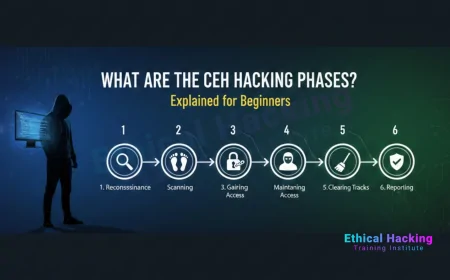
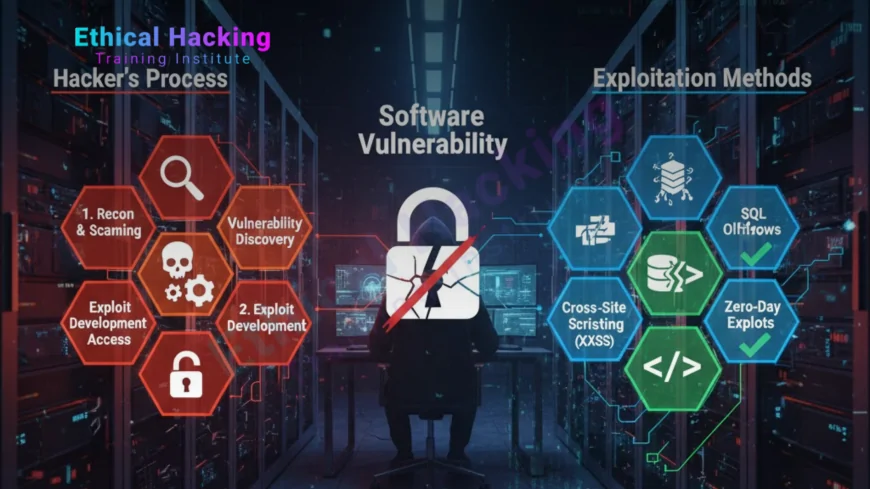
Attackers typically follow a sequence: reconnaissance to find targets, discovery to identify vulnerabilities, weaponisation to turn a flaw into an exploit, delivery to reach the victim, exploitation to execute code or escalate privileges, post-exploitation actions such as lateral movement and data theft, and finally persistence to maintain access. Understanding this lifecycle helps defenders insert controls at multiple points to interrupt attacks.
Automation and scale
Modern adversaries use automation to scan large address spaces, prioritise vulnerable services, and sometimes generate exploit code automatically. Automation increases scale but does not remove the need for careful verification and testing by skilled operators.
To learn practical tool workflows used by attackers and testers, many learners study curated tools in safe lab environments.
Discovery Methods: How Bugs Are Found
Manual code review and reverse engineering
Skilled researchers comb through source code (when available) or reverse engineer binaries to find logic errors, unsafe API usage, or incorrect error handling. Manual review excels at complex logic flaws that automated tools miss.
Automated fuzzing and static analysis
Fuzzers feed malformed inputs to programs to trigger crashes or unexpected behavior. Static analysis inspects source or binaries to flag risky patterns. Combined, these approaches surface candidate issues more quickly than human review alone.
Common Vulnerability Types and How They Are Exploited
Buffer overflow and memory corruption
Buffer overflows occur when a program writes more data into a buffer than it was allocated to hold. Attackers exploit certain overflow conditions to overwrite control data (for example, a return address) and redirect execution to attacker-controlled code or gadgets. Modern mitigations like address space layout randomisation and non executable memory raise the bar, but bypass techniques and logic flaws still make memory corruption a potent class of exploit.
SQL injection
SQL injection allows an attacker to inject SQL syntax into an application query when input is not properly sanitised. Successful SQL injection can leak sensitive data, modify database contents and sometimes execute commands on the host depending on the database and configuration. Proper parameterisation, least privilege on DB accounts and input validation prevent many such attacks.
Deserialization and unsafe object handling
Many modern platforms accept serialized objects from untrusted sources. If object deserialisers instantiate classes or call methods during reconstitution, attackers can craft input that triggers unexpected behavior or remote code execution. Frameworks often publish safer patterns and advisories to avoid this class of risk.
For structured study linking vulnerability classes to lab exercises, many learners follow practical AI aware tracks that include fuzzing and exploit workflows.
Real-World Case Study: Heartbleed (CVE-2014-0160)
Heartbleed was a memory disclosure vulnerability in OpenSSL's TLS heartbeat extension that allowed attackers to read up to 64KB of memory from a vulnerable process with each request. The flaw exposed sensitive data including session cookies, credentials and private keys. The bug's impact shows how a single simple programming mistake in a widely used library can have catastrophic systemic consequences.
Real-World Case Study: Log4Shell (CVE-2021-44228)
Log4Shell was a critical remote code execution vulnerability in the widely used Java logging library Log4j. If user-controlled data reached the vulnerable logging function, JNDI lookups could be used to load code from attacker controlled endpoints, enabling arbitrary code execution. The severity came from both ubiquity of the library and the ease of exploitation in many contexts. Rapid patching, configuration changes and coordinated advisories were necessary to control the damage.
To prepare for similar systemic risks, teams often follow recommended certification routes that include supply chain and dependency mapping modules.
Weaponisation: Turning a Bug into an Exploit
Making an exploit reliable
Initial crashes or proof of concept code often need refinement to be reliable across diverse environments. Exploit developers account for differences in memory layout, CPU architecture, and installed mitigations. Techniques include crafting ROP chains, heap grooming, creating position independent payloads and fallback strategies when environment assumptions differ.
Bypassing mitigations
Modern systems include mitigations like DEP, ASLR and control flow integrity. Exploit authors combine multiple techniques, such as information leaks to defeat ASLR or return oriented programming to bypass DEP, making exploitation a layered engineering task rather than a single step.
Delivery Vectors: How Exploits Reach Targets
Email and document attachments
Phishing remains a top delivery mechanism: malicious documents that exploit parser bugs, or macros that drop payloads, are a common initial vector. Social engineering increases success rates and can target specific individuals to bypass broad technical controls.
Network services and web attack surfaces
Exposed services, APIs and web applications that accept user data are primary attack surfaces. Attackers scan for accessible endpoints with known vulnerable versions, then deliver payloads directly via crafted requests or injected inputs.
If you want to practice safe reproduction of exploit chains and delivery analysis, sign up for guided lab courses that include hands-on environments and retired challenges.
Post-Exploitation: Impact, Persistence and Lateral Movement
Common post-exploitation goals
Once an exploit runs, attackers typically aim to escalate privileges, harvest credentials, move laterally to higher value hosts, discover sensitive data, and establish persistence. They may install backdoors, exfiltrate data slowly to avoid detection, or use legitimate admin tools to blend in.
Living off the land
Using built-in tools reduces the forensic footprints of attackers. Techniques such as scheduled tasks, remote management interfaces, and credential reuse help adversaries maintain presence without obvious malicious binaries.
Detection Challenges and Defensive Strategies
Why detection is hard
Exploits may look like legitimate activity, especially when attackers use standard protocols and admin tools. Signature based detection fails for novel exploits. Behavioral detection, anomaly analytics and threat hunting are more effective but require good telemetry and tuned baselines.
Layered defensive controls
Defenders should combine secure coding practices, dependency and supply chain management, timely patching, virtual patching for critical windows, segmentation to limit blast radius, strong identity controls, and EDR/behavior analytics to detect unusual process or network behavior. Regular purple team exercises that simulate exploitation are valuable to improve detection and response.
For teams seeking structured, instructor-led readiness training that covers prevention and detection, consider a complete curriculum that pairs labs, exercises and incident simulations.
Comparison Table: Vulnerability Type, Attacker Technique and Primary Defenses
| Vulnerability Type | How Attackers Exploit It | Primary Defensive Actions |
|---|---|---|
| Buffer overflow / memory corruption | Overflow data to overwrite control structures, use ROP chains or code reuse. | Memory safe languages, ASLR/DEP, compiler hardening, fuzz testing. |
| SQL injection | Inject SQL to read or alter DB contents or escalate to host commands. | Parameterized queries, least privilege DB accounts, input validation. |
| Deserialization | Craft object payloads that execute unexpected code paths. | Avoid insecure serialization, whitelist classes, use safe parsers. |
| Dependency / supply chain | Insert malicious code upstream, poison packages or compromise build pipelines. | SBOMs, signed artifacts, dependency scanning, CI isolation. |
| Logic / auth flaws | Abuse logic flows or weak auth to gain higher privileges. | Threat modelling, code reviews, robust auth and session controls. |
Practical Defensive Checklist for Teams
- Maintain an up to date inventory of software and libraries and map their exposure.
- Run continuous fuzzing and static analysis for critical components.
- Enforce code review, threat modelling and secure coding training for developers.
- Automate dependency scanning and require signed artifacts from CI.
- Apply timely patching and use virtual patching or WAF rules when immediate patches are not possible.
- Deploy EDR, central logging and behaviour analytics and tune these tools using purple team exercises.
- Implement least privilege and strong credential hygiene including MFA and short lived credentials.
- Prepare incident response playbooks for exploit discovery, containment, evidence collection and remediation.
Tools and Techniques Attackers and Testers Use
Recon and scanning
Attackers use port scanners, web scanners and vulnerability feeds to discover exposed services. Skilled operators combine passive OSINT with active probes to prioritise targets.
Fuzzing and exploit frameworks
Fuzzers like AFL and libFuzzer, and frameworks such as Metasploit, help developers and attackers discover and prototype exploits. Responsible use in controlled lab environments helps defenders learn how patterns of crashes indicate root causes.
If you want hands-on practice with these tools under mentorship, many learners choose guided career tracks that pair labs with expert feedback.
How to Learn Exploit Development Responsibly
Study exploit mechanics in isolated labs only. Start by reproducing classic vulnerabilities on intentionally vulnerable VMs, learn how mitigations change exploitation, and focus on defensive outcomes: how fixes and detection would have prevented the attack. Ethical learning emphasises disclosure, legal boundaries and improving defensive posture rather than offensive tool proliferation.
When to Involve External Help
Bring external researchers, incident response firms, or CERT partners when an exploit is complex, affects many customers, or requires specialised reverse engineering. External teams can accelerate triage, coordinate disclosure and assist with mitigation and legal obligations.
Conclusion
Hackers exploit software vulnerabilities by combining discovery, engineering and delivery: they find flaws with manual review and automation, refine exploits to bypass mitigations, deliver payloads via phishing or exposed services, and then act to achieve their objectives. Defenders win by reducing exploitable weaknesses through secure design, automating detection and patching, exercising response plans and building telemetry that lets teams detect anomalous behavior early. Practical training, realistic lab practice and cross team coordination are essential to turn knowledge into resilience. For guided learning and labs that map directly to real-world exploit mechanics, training options from institutions such as Ethical Hacking Institute, Cybersecurity Training Institute, and Webasha Technologies can help practitioners gain hands-on experience in a safe, structured way.
Frequently Asked Questions
What exactly is an exploit?
An exploit is code or a technique that takes advantage of a software vulnerability to cause unintended behavior such as code execution, data disclosure or privilege escalation.
How do fuzzers find bugs?
Fuzzers feed unexpected or malformed inputs to programs to trigger crashes or incorrect behavior; advanced fuzzers track code coverage to find new execution paths that reveal deeper bugs.
Are buffer overflows still common?
They are less common in new code that uses memory safe languages, but legacy code and system-level components still expose memory corruption vulnerabilities that attackers can exploit.
How can SQL injection be prevented?
Use parameterised queries or prepared statements, enforce least privilege for database accounts and validate or normalise input where appropriate.
What is virtual patching?
Virtual patching uses compensating controls, such as web application firewall rules or IDS signatures, to block exploit attempts when immediate vendor patches are not yet available.
How quickly do attackers weaponise new vulnerabilities?
It depends. Some vulnerabilities are weaponised within hours if easy to exploit and high impact; others take weeks or months while exploit developers refine reliable code.
Can automated tools generate full exploits?
Automation aids discovery and prototype generation; full, reliable exploits often still require human engineering to handle environment variability and bypass mitigations.
What role do bug bounty programs play?
Bug bounty programs incentivise researchers to disclose vulnerabilities responsibly to vendors, which reduces the number of undisclosed or sold zero-days in illicit markets.
How should organisations prioritise vulnerability fixes?
Prioritise based on exposure, exploitability, asset criticality and potential business impact; use risk scoring and threat intelligence to guide remediation SLAs.
What is "responsible disclosure"?
Responsible disclosure means informing the vendor or maintainer privately about a vulnerability, giving them time to patch, and coordinating public disclosure only after mitigations are available.
Are exploits always illegal to study?
No. Studying exploits in isolated, legal lab environments for defensive learning and research is legitimate. Exploitation of systems without permission is illegal and unethical.
How do mitigations like ASLR and DEP help?
ASLR makes memory addresses unpredictable, and DEP marks memory non executable to prevent injected code from running. Together they increase the difficulty of successful exploitation.
What is the difference between a patch and a mitigation?
A patch fixes the underlying vulnerability in code. A mitigation is a compensating control that reduces risk until a patch is applied, such as access restrictions or firewall rules.
Where can I practice exploit development safely?
Use intentionally vulnerable VMs and CTF platforms in isolated lab networks. Enrol in structured courses and mentorship programs to learn safe, ethical practices.
Which learning path is best for defenders who want to understand exploits?
Start with secure coding and defensive monitoring, learn common vulnerability classes through hands-on labs, then practice incident response and threat hunting. Combination of theory, labs and mentor feedback is most effective.
What's Your Reaction?
 Like
0
Like
0
 Dislike
0
Dislike
0
 Love
0
Love
0
 Funny
0
Funny
0
 Angry
0
Angry
0
 Sad
0
Sad
0
 Wow
0
Wow
0