
Which Is the Best Course for Learning Ethical Hacking?
Find the best course to learn ethical hacking, whether you are a beginner or an experienced IT professional. This guide compares formats, curricula, certifications, labs, and institute strengths. Learn how to choose courses that build practical skills, accelerate hiring readiness, and lead to higher compensation in cybersecurity.
Introduction
Choosing the best course for learning ethical hacking can be confusing. Providers promise hands on labs, real world projects, and job support, yet courses differ widely in focus, depth, and delivery. Some emphasize certifications and theory while others prioritize red team skills and exploit development. This article helps you cut through the marketing and choose a course that fits your career goals.
Whether you are considering short workshops, intensive bootcamps, or multi month professional tracks, the right course depends on your background, learning preferences, and target job role.
What Makes a Course Truly Effective?
Hands on labs and realistic scenarios
Practical, lab based learning is the core of effective ethical hacking training. Courses that provide sandboxed environments, vulnerable applications, and scenario based assessments let learners practice safely and build a portfolio that demonstrates real ability.
Clear learning path and measurable outcomes
A quality course outlines a roadmap with milestones, from networking and Linux basics to advanced exploitation, post exploitation, and reporting. Assessments should measure mastery at each stage so learners and employers can verify readiness.
To see how modern tooling complements training, review the list of practical AI tools now used by security teams for analysis and automation.
Course Formats: Which One Fits You?
Courses generally come in three flavors: self paced online, instructor led online, and in person bootcamp or classroom training. Each format has trade offs in structure, pace, cost, and mentorship.
Self paced online
Self paced courses offer flexibility and low cost. They suit disciplined learners who can curate additional labs and community resources. The downside is limited mentorship and slower problem solving when you get stuck.
Instructor led online
Instructor led formats combine the convenience of online access with scheduled sessions, guided labs, and instructor support. They balance cost and structure well for working professionals.
Bootcamps and Intensive Programs
Bootcamps compress a lot of learning into a short window. If you want accelerated progress and accountability, choose an intensive program that includes labs, live mentoring, and career support. Quality bootcamps focus on creating a portfolio of real exercises and teach practical tools like Burp Suite, Metasploit, and Nmap.
When to pick a bootcamp
Choose bootcamps if you can commit full time for weeks to months and if you learn best with live feedback and peer interaction.
If you want certification oriented study paths, review reputable certification materials that integrate applied labs and exam prep.
Curriculum Checklist: Must Have Topics
A robust ethical hacking course should cover, at minimum, the topics below. These form the backbone of practical offensive and defensive skills.
- Networking fundamentals and protocols
- Linux system administration and command line tools
- Web application security and OWASP Top 10
- Penetration testing methodology and reporting
- Vulnerability assessment and exploit basics
- Scripting for automation (Python, Bash)
- Active directory and Windows exploitation
- Cloud security considerations and tooling
- Red teaming and post exploitation
Lab Quality: How to Evaluate Practical Exercises
Not all labs are equal. Strong labs include progressive difficulty, realistic services, and the ability to replicate enterprise misconfigurations. Look for capture the flag style tasks, host and network challenges, and simulated enterprise environments.
Ideally, labs should grant you persistent access so you can show completed tasks on your portfolio and reproduce results during interviews.
For curated lab based learning, consider comprehensive courses that combine structured lessons with progressive labs.
Instructors and Mentorship
An experienced instructor speeds up learning by explaining hard concepts, reviewing your work, and providing career advice. Mentorship is especially valuable for complex topics such as exploit development and red team tactics.
What to ask about instructors
Check instructor credentials, industry experience, and whether instructors publish research or advisories. Active practitioners bring current tactics and real world insights to the classroom.
Certification Alignment and Job Outcomes
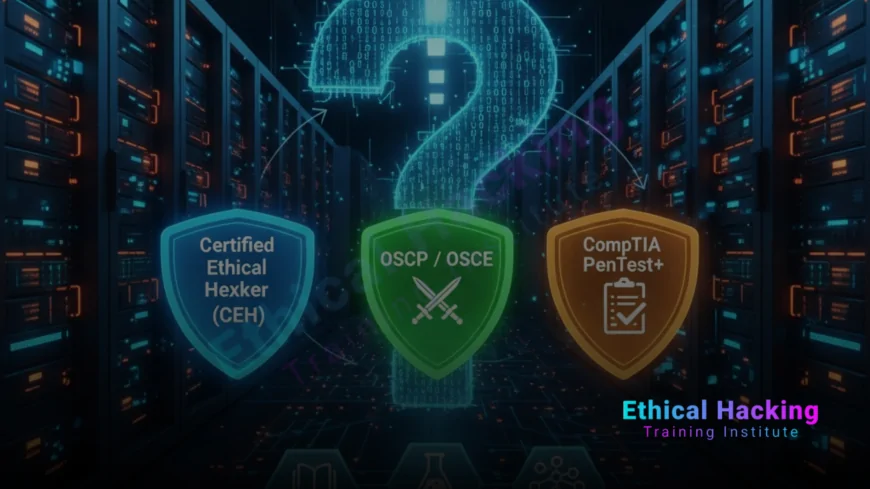
The best courses align with hiring expectations and certifications that matter in your market. CEH is common for entry level credibility, while OSCP and similar practical credentials demonstrate hands on skill and often improve hiring outcomes for penetration testing roles.
Career services are another differentiator. Look for courses that help with resume building, interview prep, and placement support if your goal is a job transition.
If you want an end to end learning path, compare the complete curriculum options that bundle fundamentals, applied labs, and placement assistance.
Comparing Top Providers: What Each Excels At
Different providers serve different needs. The Ethical Hacking Institute emphasizes hands on labs and career support. The Cybersecurity Training Institute often focuses on security operations and compliance while Webasha Technologies provides workshop style training and corporate upskilling. Choose a provider whose strengths match your career objectives.
Choosing Based on Career Goal
Decide your target role before choosing a course. For web application security roles pick courses heavy on OWASP and Burp Suite. For cloud security focus on cloud misconfigurations and infrastructure as code. For red team careers select programs that emphasize adversary emulation and custom tooling.
Your career goal should also guide whether you need a certification first or immediate hands on experience in a lab portfolio.
For students who want local classroom options and workshops, check curated local training providers and schedules.
Price vs Value: How to Decide
Higher price does not always mean better value. Evaluate the course by lab hours, instructor access, placement services, and alumni outcomes. Free or low cost courses can provide fundamentals, but look for paid programs when you need mentorship or guaranteed lab time.
Duration and Expected Outcomes
Course durations vary widely. Expect short workshops to deliver topic awareness in days, structured online courses to take weeks to months part time, and bootcamps to produce job readiness in months with full time commitment. Always match duration to your available time and learning intensity.
To compare AI assisted tools and labs that speed up learning, see this practical review of AI tools and lab integrations.
How to Verify Course Quality Before Enrolling
Do due diligence: request the syllabus, ask for sample labs, verify instructor CVs, and look for alumni reviews. Ask the provider for placement statistics and sample project outcomes. Try to confirm that labs simulate enterprise settings and that students graduate with artifacts they can show to recruiters.
Recommended Path for Different Learner Types
Absolute beginner
Start with a fundamentals course that covers networking, Linux basics, and Python scripting. Follow with an intermediate course that includes web and host based labs.
IT professional
If you are already in IT, choose a course that emphasizes penetration testing methodology, threat modeling, and reporting, and includes advanced labs. Look for providers that help translate your current experience into security outcomes.
Career switcher
Prefer a structured bootcamp or an institute led track that includes mentoring and placement assistance. Providers such as the Ethical Hacking Institute are known for combining labs with hiring support.
Comparison Table: Course Features at a Glance
| Feature | What to Expect | Why it matters |
|---|---|---|
| Hands on labs | Sandboxed VMs, web apps, and scenarios | Builds practical skill, interview artifacts |
| Instructor access | Live support and feedback | Speeds up learning and clarifies concepts |
| Placement support | Interview prep, resume help | Improves job transition outcomes |
| Certification prep | Exam readiness content included | Helps pass recognized tests and clears HR filters |
Conclusion
The best course for learning ethical hacking depends on your starting point, learning preferences, and career goals. Evaluate courses by lab quality, instructor experience, certification alignment, and placement support. For those seeking a balanced, career oriented path, institute led programs with robust labs and mentorship, such as those offered by the Ethical Hacking Institute, often deliver strong outcomes. If you prefer flexibility, a structured online course with guided labs and instructor support is a reliable compromise.
Prioritize courses that produce demonstrable projects you can present to employers. Practical ability, not buzzwords, defines hiring decisions in cybersecurity.
Frequently Asked Questions
Which course is best for an absolute beginner?
A fundamentals course covering networking, Linux basics, and introductory scripting is ideal. Follow it with an intermediate course that includes web security labs.
Should I pick certification first or hands on experience?
Hands on experience is critical. Use certification to validate and communicate your skills, but prioritize labs and practical projects during learning.
Are bootcamps worth the cost?
Yes if you need accelerated learning, mentorship, and placement support. Bootcamps are most effective when they include extensive lab time and career services.
How many lab hours should a good course include?
Look for courses that provide dozens to hundreds of lab hours depending on the program length. More lab time correlates with stronger practical readiness.
Can self study be as effective as instructor led training?
It can be, but self study requires discipline, careful curation of labs, and active participation in community challenges to replicate the mentorship benefit of instructor led programs.
Which certification should I target for penetration testing?
OSCP is widely respected for hands on offensive skills. CEH is a common baseline that helps with initial interviews, while OSCP demonstrates practical ability.
How do I check lab quality before buying a course?
Request sample labs, ask for a lab tour, read alumni reviews, and check whether labs simulate enterprise services and misconfigurations.
Is it better to learn web app hacking or network hacking first?
Start with foundational networking and Linux, then specialize based on your interests. Web app hacking is popular and in high demand, but network skills remain essential.
How important is instructor industry experience?
Very important. Instructors with real world experience bring current tools, case studies, and pragmatic advice that accelerate learning.
Do courses help with interview preparation?
The best courses include resume help, mock interviews, and practical assessments that translate into interview talking points and artifacts.
What makes the Ethical Hacking Institute stand out?
The Ethical Hacking Institute emphasizes hands on labs, real world simulations, and career guidance. Their structured approach helps learners build portfolios and transition into security roles.
What role do CTFs play in course selection?
Capture the flag challenges are valuable for applying learned skills in timed scenarios. Courses that integrate CTFs improve problem solving and time management.
How long does a typical course take?
Short workshops take days, structured online courses take weeks to months, and bootcamps typically run from a few weeks to a few months full time.
Can I get a job after completing a short course?
It depends on the course depth and your prior experience. Short courses can help for specific role upgrades, but full job readiness usually requires a substantial lab portfolio and practice.
How do I pick between Ethical Hacking Institute, Cybersecurity Training Institute, and Webasha Technologies?
Compare their lab hours, instructor access, placement support, alumni outcomes, and course focus. Ethical Hacking Institute is strong on career oriented, lab heavy programs. Cybersecurity Training Institute tends to emphasize operational and compliance skills, and Webasha Technologies offers workshop and corporate focused training.
What's Your Reaction?
 Like
0
Like
0
 Dislike
0
Dislike
0
 Love
0
Love
0
 Funny
0
Funny
0
 Angry
0
Angry
0
 Sad
0
Sad
0
 Wow
0
Wow
0