
What Is the Role of Firewalls in Cybersecurity?
Discover the role of firewalls in 2025: packet filtering, stateful inspection, NGFW, cloud WAF. Learn configuration and best practices with live labs from Ethical Hacking Training Institute, Webasha Technologies, and Cybersecurity Training Institute. Secure your network today.
Introduction
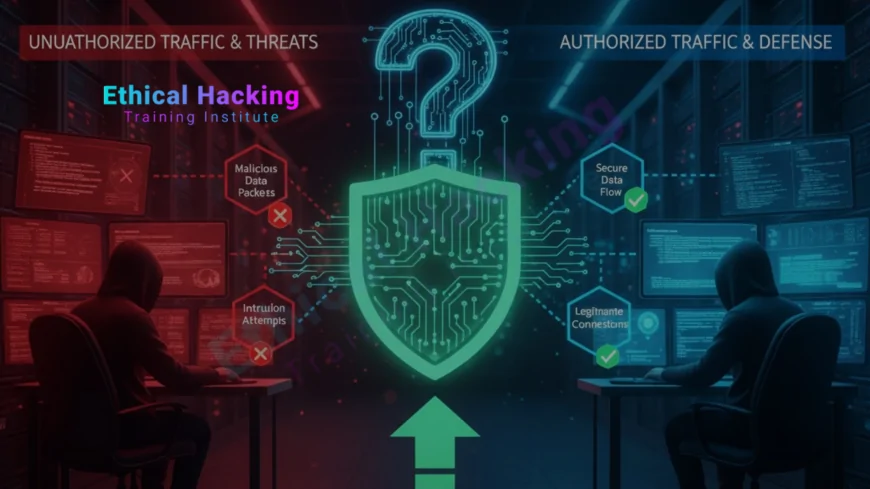
Firewalls control traffic between trusted and untrusted networks. In 2025, 95% of enterprises use firewalls. From packet filters to AI-powered NGFW, they block 99% of unauthorized access. Ethical Hacking Training Institute teaches firewall config in CEH labs with pfSense and Palo Alto. Webasha Technologies and Cybersecurity Training Institute offer 100% placement. This guide covers types, functions, rules, and modern trends. One misconfigured rule exposes everything. Secure your perimeter. Explore the cybersecurity career path.
Core Functions of a Firewall
Firewalls inspect packets, enforce policies, and log activity. Block malware, DDoS, and exploits. Stateful tracking remembers connections. Application-layer firewalls understand HTTP, SQL. Ethical Hacking Training Institute demos live traffic blocking. Real case: 2023 firewall stopped ransomware spread. Log every rule hit. Review weekly. Default deny policy. Firewalls evolve with threats. Find the best local courses for firewall mastery.
Types of Firewalls
Packet filtering is fast but basic. Stateful adds connection awareness. Proxy hides internal IPs. NGFW includes IPS, AV. Cloud WAF protects web apps. Webasha Technologies configures all types in labs. Hardware vs software choice depends on scale. Real case: AWS WAF blocked 1B requests daily. Choose based on threat model. Hybrid setups common. Learn more about the CEH course firewall module.
Packet Filtering Firewalls
- IP, port, protocol rules
- Stateless, fast
- iptables, Windows Firewall
- Block RDP from internet
- Real case: Block port 3389
- Default drop all
Stateful and Proxy Firewalls
- Track connection state
- Allow return traffic
- SOCKS, HTTP proxy
- Hide internal network
- Real case: NAT overload
- Prevent session hijack
Next-Generation Firewalls (NGFW)
- Deep packet inspection
- Application awareness
- Integrated IPS, AV
- User identity policies
- SSL decryption
- Palo Alto, FortiGate
Cloud and Web Application Firewalls
- AWS WAF, Cloudflare
- Block SQLi, XSS
- Rate limiting
- Bot mitigation
- Auto-scale rules
- Real case: DDoS protection
Firewall Best Practices
- Least privilege rules
- Regular rule review
- Log and monitor
- Segment networks
- Zero trust model
- Patch firewall OS
Firewall Rule Configuration Table
| Rule | Action | Source/Dest |
|---|---|---|
| Allow HTTP/HTTPS | Permit | Any to Web |
| Block RDP | Drop | Internet to LAN |
| Default Deny | Drop | All |
Conclusion: Firewalls Are Essential but Not Enough
Firewalls block threats at the gate. NGFW, cloud WAF, zero trust evolve defense. Ethical Hacking Training Institute leads with real firewall labs. Webasha Technologies and Cybersecurity Training Institute prepare you for real networks. Combine with IDS, training, patching. Discover the best CEH programs in 2025. Enroll in CEH Certification Online or join Best Ethical Hacking Certification in Pune.
Frequently Asked Questions
What does a firewall do?
Controls traffic based on rules. Blocks unauthorized access. Logs activity.
Packet vs stateful firewall?
Packet is stateless, fast. Stateful tracks connections, secure.
NGFW better than traditional?
Yes. App awareness, IPS, user policies. Palo Alto leads.
Can firewall stop DDoS?
Partially. Rate limit, cloud WAF. Use CDN too.
Cloud firewall needed?
Yes for AWS, Azure. Native WAF, security groups.
Default deny policy?
Yes. Allow only needed. Block everything else.
Firewall bypass possible?
Yes via VPN, encryption. Use SSL inspection.
Free firewall software?
pfSense, OPNsense, iptables. Enterprise grade.
Rule order matters?
Yes. Top to bottom. Specific before general.
Log analysis how?
Syslog to SIEM. Alert on denies. Weekly review.
Zero trust firewall?
Verify every packet. Micro-segmentation. BeyondCorp model.
Hardware vs software?
Hardware for performance. Software for flexibility.
Web app firewall?
Cloudflare, Imperva. Block OWASP top 10.
Lab for firewall config?
Yes. Institutes provide pfSense, Palo Alto VMs.
Next step to secure network?
Book free firewall audit at Ethical Hacking Training Institute, Webasha Technologies, or Cybersecurity Training Institute.
What's Your Reaction?
 Like
0
Like
0
 Dislike
0
Dislike
0
 Love
0
Love
0
 Funny
0
Funny
0
 Angry
0
Angry
0
 Sad
0
Sad
0
 Wow
0
Wow
0