

What Is the Difference Between a Hacker and an Ethical Hacker?
Learn the key differences between a hacker and an ethical hacker, including their goals, methods, legality, and career paths. Understand how ethical hackers protect systems from cybercriminals and how to start your journey in cybersecurity.
Introduction
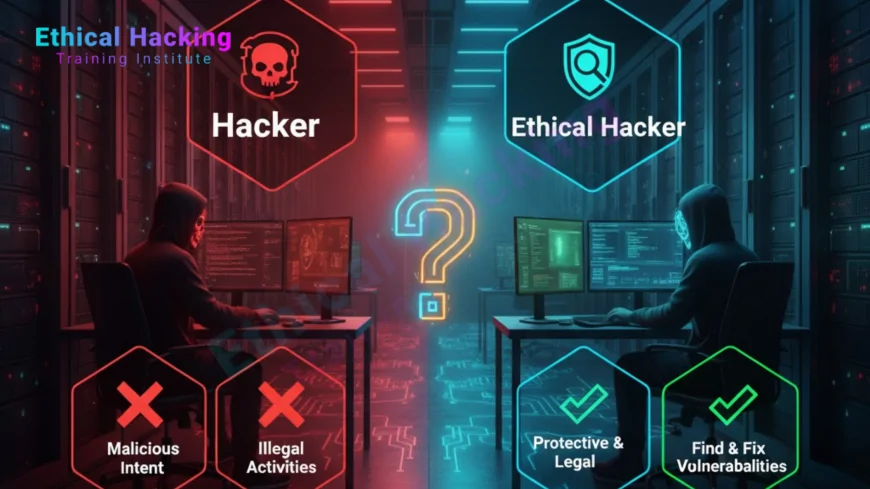
In today’s world, where almost everything is connected to the internet, cybersecurity plays a vital role in protecting personal and organizational data. You’ve probably heard terms like “hacker” and “ethical hacker,” but do you know the real difference between them? While both use similar tools and techniques, their intentions and purposes are completely different.
This article will clearly explain what separates a hacker from an ethical hacker, their objectives, methods, and how each one impacts the digital world. If you are interested in building a career in cybersecurity, institutes like the Ethical Hacking Institute and Webasha Technologies can guide you toward a rewarding path.
Who Is a Hacker?
A hacker is someone who uses programming skills and technical knowledge to gain unauthorized access to systems or data. Hackers exploit vulnerabilities in networks, software, and databases to achieve their goals, which may range from stealing information to causing system damage or gaining control over digital assets.
Types of Hackers
Not all hackers are criminals. Based on intent, hackers are categorized into different types:
- Black Hat Hackers: They break into systems for malicious reasons, such as stealing data, identity theft, or deploying malware.
- Grey Hat Hackers: These individuals often exploit vulnerabilities without permission but do not necessarily have harmful intent. They sometimes reveal flaws publicly.
- White Hat Hackers: These are ethical hackers who work legally to protect systems from cyberattacks.
Who Is an Ethical Hacker?
An ethical hacker, also known as a white-hat hacker, is a cybersecurity professional authorized to test the security of systems and networks. They identify vulnerabilities before malicious hackers can exploit them. Ethical hackers follow strict guidelines and work under legal contracts to improve an organization’s digital safety.
Most ethical hackers undergo professional training and earn certifications such as CEH (Certified Ethical Hacker) or CompTIA Security+. Institutions like the Cybersecurity Training Institute and Webasha Technologies provide hands-on programs to help students gain practical experience in ethical hacking.
Key Differences Between a Hacker and an Ethical Hacker
The following table highlights the major differences between hackers and ethical hackers:
| Aspect | Hacker | Ethical Hacker |
|---|---|---|
| Objective | To exploit vulnerabilities and gain unauthorized access | To identify and fix vulnerabilities to protect systems |
| Legality | Illegal and punishable by law | Completely legal with proper authorization |
| Motivation | Financial gain, revenge, or curiosity | Security enhancement and protection |
| Tools Used | Malware, phishing kits, keyloggers | Penetration testing tools, network scanners, forensic software |
| End Result | Data breaches and system damage | Enhanced system security and awareness |
Legal and Ethical Boundaries
The most crucial difference between hackers and ethical hackers lies in legality. Ethical hackers operate with permission, following defined scopes and objectives. Hackers, on the other hand, violate privacy laws and can face severe legal consequences for unauthorized access.
Ethical hackers must comply with regulations such as the IT Act 2000 in India and global data protection laws. Organizations often hire professionals certified through the Ethical Hacking Certification Programs to ensure they follow these legal standards.
Skillsets and Tools Used
Both hackers and ethical hackers require advanced technical knowledge. However, ethical hackers use their expertise for defense and analysis, while hackers exploit weaknesses. Common skills include programming, networking, cryptography, and understanding of operating systems.
Ethical hackers often use penetration testing tools like Metasploit, Burp Suite, and Wireshark, while hackers may use malware, phishing scripts, and social engineering tactics. Learning about these tools is part of professional ethical hacking training programs, such as the ones offered at Webasha Technologies.
Career Path for Ethical Hackers
The demand for cybersecurity professionals is growing rapidly. Organizations now require ethical hackers to protect sensitive information. You can start your journey with beginner-friendly certifications or join specialized training from the Ethical Hacking Institute to gain both theoretical and practical experience.
- Start with basic IT and networking concepts.
- Learn operating systems like Linux and Windows.
- Get certified with CEH, CompTIA Security+, or OSCP.
- Practice on real-world labs and simulation platforms.
Why Ethical Hackers Are Important
Ethical hackers are the front line of defense in cybersecurity. They help organizations identify vulnerabilities before attackers exploit them. Their contributions help prevent data breaches, ransomware attacks, and other digital threats. Many successful cybersecurity experts began as curious learners and trained through structured programs like the Cyber Security & Ethical Hacking Career Path.
Conclusion
In summary, while hackers and ethical hackers may share similar technical abilities, their intentions, methods, and legal boundaries make them fundamentally different. A hacker breaks systems for personal or financial gain, while an ethical hacker strengthens them to ensure digital safety. If you aspire to enter this exciting field, begin your journey with trusted institutions like the Ethical Hacking Institute or Webasha Technologies, and transform your curiosity into a cybersecurity career.
Frequently Asked Questions (FAQs)
What is the main difference between a hacker and an ethical hacker?
A hacker breaks into systems illegally, while an ethical hacker is authorized to find and fix vulnerabilities.
Is ethical hacking legal in India?
Yes, ethical hacking is legal when performed with permission under the IT Act 2000.
How can I become an ethical hacker?
You can pursue ethical hacking courses, earn certifications like CEH, and practice through online labs.
What qualifications are needed for ethical hacking?
A background in IT, networking, or computer science is helpful but not mandatory.
What are black-hat hackers?
Black-hat hackers perform unauthorized attacks for malicious or financial reasons.
Can an ethical hacker stop cyber attacks?
Yes, ethical hackers identify vulnerabilities and implement security measures to prevent attacks.
Where can I learn ethical hacking?
You can enroll in institutes like Ethical Hacking Institute or Webasha Technologies for professional training.
Do ethical hackers use the same tools as regular hackers?
Yes, but ethical hackers use them for testing and protection, not for exploitation.
What are some popular ethical hacking certifications?
CEH, CompTIA Security+, and OSCP are widely recognized certifications.
Can I become an ethical hacker after 12th?
Yes, with dedication and the right training program, you can start learning ethical hacking after 12th.
How much does an ethical hacker earn in India?
On average, an ethical hacker earns between ₹3 LPA to ₹12 LPA depending on skills and experience.
What are AI tools used in ethical hacking?
AI tools assist in vulnerability detection and threat analysis. Learn more about them in this article.
Is ethical hacking a good career choice?
Yes, it’s one of the fastest-growing and high-paying careers in cybersecurity.
Can I learn ethical hacking online?
Absolutely. There are several online hacking courses available for beginners and professionals.
What is the role of Webasha Technologies in ethical hacking education?
Webasha Technologies offers practical, industry-recognized cybersecurity and ethical hacking training for aspiring professionals.
What's Your Reaction?
 Like
0
Like
0
 Dislike
0
Dislike
0
 Love
0
Love
0
 Funny
0
Funny
0
 Angry
0
Angry
0
 Sad
0
Sad
0
 Wow
0
Wow
0