

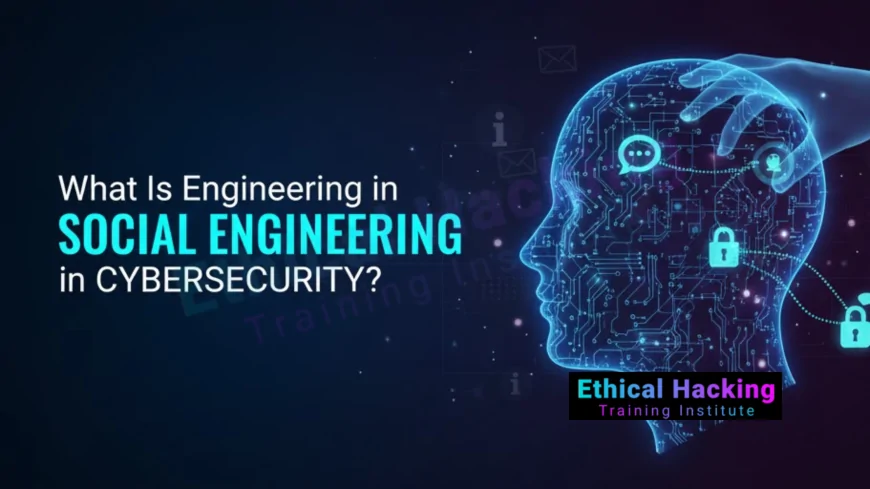
What Is Social Engineering in Cybersecurity?
Learn what social engineering is in cybersecurity, how attackers manipulate human behavior, the techniques they use, and how you can protect yourself with practical strategies. This detailed guide is beginner friendly and ideal for anyone who wants to strengthen security awareness.
Introduction
Social engineering in cybersecurity is the practice of manipulating human behavior to gain unauthorized access to confidential data or systems, and it remains one of the most powerful attack methods because people naturally trust familiar communication patterns. Attackers exploit emotions such as curiosity, fear, urgency, and authority to deceive users, and this makes social engineering far more dangerous than many technical threats. In the middle of learning how these attacks work, you might explore advanced hacker techniques on AI based hacking methods which helps you understand how modern criminals combine technology with psychological tricks. Social engineering targets the human mind, not the machine, so even strong passwords and firewalls fail when users unknowingly give away sensitive information. This is why understanding these manipulation strategies is essential for every beginner and professional.
How Social Engineering Works
Social engineering works by identifying weaknesses in human decision making, gathering information about a target, and then using that information to craft believable messages or requests. Attackers often conduct OSINT, create fake identities, or impersonate trusted institutions to make victims comply.
The Psychology Behind Social Engineering
Social engineers succeed because they understand human behavior better than most users understand cybersecurity, and they exploit emotions such as trust, panic, and curiosity to guide victims into taking harmful actions. During this process attackers leverage authority bias, social proof, reciprocity, scarcity, and other psychological triggers, and mastering these concepts is essential for anyone learning hacking fundamentals since hackers depend more on persuasion than on technical exploits. While understanding these mental tactics, learners often benefit from studying structured cybersecurity training like the role of artificial intelligence in hacking which helps clarify how attackers combine mental manipulation with advanced technologies. Social engineering attacks are successful because people are often unaware of how predictable their reactions become under pressure.
Common Types of Social Engineering Attacks
Social engineering exists in several different forms, each designed to exploit specific human vulnerabilities. Here are the most common types of attacks:
- Phishing emails that trick users into clicking malicious links.
- Vishing calls where attackers impersonate customer support.
- Smishing messages delivered through mobile SMS.
- Pretexting attempts to gather sensitive identity information.
- Baiting attacks using fake freebies or infected USB drives.
Phishing and Email-Based Manipulation
Phishing attacks rely on convincing emails that appear legitimate, and attackers often design them to look identical to real notifications from banks, cloud services, government platforms, or company HR departments, which makes them extremely effective because most users rush through their inbox without verifying authenticity. To make these messages believable, criminals combine psychological pressure with realistic branding, sometimes even linking to visually identical login pages that steal your credentials in seconds, but understanding these tactics becomes much easier when learners explore structured online security education such as the best ethical hacking certification options which helps beginners learn how phishing kits and spoofing techniques operate. Phishing remains the most common social engineering attack because it only requires a single careless click to succeed.
Pretexting, Impersonation, and Human Manipulation
Pretexting is one of the most dangerous social engineering methods because attackers build a false identity and create a strong backstory before contacting the victim. Common impersonation tactics include pretending to be IT support, law enforcement, or a financial advisor. Typical components include:
- A believable identity or job role.
- A legitimate sounding reason for contacting the victim.
- Requests for sensitive information or immediate action.
- Use of urgency or pressure to bypass critical thinking.
Baiting and Physical Social Engineering
Baiting attacks use curiosity and temptation to lure victims into dangerous situations, and they are extremely effective in workplaces where security awareness is low because users may pick up a USB drive labeled confidential or accept free software without verifying its source, leading to instant malware installation or credential theft once the device is plugged into a system. Attackers often combine baiting with physical intrusion attempts such as tailgating into restricted buildings or leaving infected devices in public areas since humans naturally trust convenience, and understanding these real world exploitation strategies becomes clearer when learners explore materials like the best online hacking courses which provide hands on examples of how baiting attacks operate. Baiting succeeds because attackers rely on human curiosity and the desire for free resources.
Social Engineering Through Mobile Devices
Mobile platforms are increasingly targeted by social engineering attacks because people tend to trust SMS messages or quick app notifications without proper verification. Some common mobile manipulation techniques include:
- Smishing texts with malicious payment or delivery updates.
- Fake app downloads disguised as utility tools.
- Permissions abuse where apps request excessive access.
- Malicious QR codes that redirect users to phishing pages.
The Role of OSINT in Social Engineering
Open Source Intelligence is essential for social engineers because they gather publicly available information about a target, including job roles, social media posts, phone numbers, habits, and personal details, which helps them craft convincing messages. OSINT allows attackers to personalize their approach and increase success rates. OSINT sources often include:
- Social media profiles and photos.
- Public company employee lists.
- Leaked credentials databases.
- Online forums and discussion pages.
How Hackers Combine Social Engineering With Technical Attacks
Modern hackers often combine psychological manipulation with technical exploits to increase the success rate of intrusions. They may use phishing to obtain credentials, then perform privilege escalation, or use a fake software update to install malware. Common combined methods include:
- Phishing linked with malware installation.
- Pretexting combined with remote access tools.
- Smishing combined with credential harvesting.
- Baiting combined with USB-based exploits.
Real World Examples of Social Engineering Incidents
Real world attacks highlight how effective social engineering can be because organizations across the world have suffered massive data breaches due to a single manipulated employee clicking a malicious link or sharing sensitive details. Attackers repeatedly use psychological tricks to impersonate trusted authorities, pressure employees into bypassing protocols, or mislead them with fake login pages, and studying these incidents helps beginners understand how hackers think and why human error remains a leading cause of cyber compromise. These events also reveal how training programs and security awareness can significantly reduce risks by teaching users to recognize suspicious requests and verify communication sources before taking action.
Social Engineering in Corporate Environments
Businesses are highly vulnerable because employees interact with countless emails, calls, files, and third party tools. Even a single unaware user can allow attackers to enter a corporate network. Companies must train staff, enforce verification procedures, and routinely test employees through simulated attacks to assess awareness levels. Corporate social engineering attacks often focus on finance departments, HR systems, or executive assistants.
How to Protect Yourself From Social Engineering Attacks
Protecting yourself from social engineering requires awareness, critical thinking, and consistent security habits. Some effective defense strategies include:
- Always verify the identity of unknown callers or email senders.
- Avoid clicking links from untrusted sources.
- Use multi factor authentication on every major account.
- Be cautious of free downloads, giveaways, or urgent requests.
- Educate yourself regularly through cybersecurity training programs.
Common Mistakes That Make You Vulnerable
Many people unknowingly expose themselves to social engineering by ignoring basic digital safety habits. Common mistakes include:
- Sharing too much personal information online.
- Using weak or repeated passwords.
- Trusting unsolicited calls or messages.
- Downloading unknown files or apps.
- Failing to verify financial or security requests.
The Importance of Cyber Awareness Training
Cyber awareness training helps individuals recognize manipulation tactics, identify fake emails, and respond safely to suspicious messages. Training programs often include phishing simulations, role based workshops, and real world incident examples that help employees build strong habits.
The Future of Social Engineering Attacks
Social engineering will continue evolving as attackers adopt artificial intelligence tools to craft realistic phishing emails, analyze human behavior, and automate large scale deception while also personalizing scams for specific victims using publicly available data gathered from social media or breached databases. This rapid evolution will increase the difficulty of detecting and preventing social engineering attacks, making it essential for individuals and organizations to stay aware of newly emerging patterns and continuously update security practices rather than relying solely on traditional defenses or outdated awareness methods, especially because criminals consistently adapt faster than most security infrastructures.
How AI Is Changing Social Engineering
AI enables attackers to create realistic deepfake voices, generate phishing emails at scale, and analyze millions of user details simultaneously. This increases both speed and accuracy, making attacks harder to detect.
The Role of Ethical Hackers in Preventing Social Engineering
Ethical hackers help protect organizations by conducting social engineering assessments, testing employee awareness, identifying weak communication flows, and improving verification systems. They simulate attacks to strengthen defenses.
Tools for Testing Social Engineering Resistance
Security professionals use tools such as phishing simulators, OSINT frameworks, and password auditing tools to evaluate how well employees handle suspicious interactions.
Conclusion
Social engineering remains one of the most powerful cyber attack methods because it targets human psychology rather than technical systems, and understanding how it works helps users defend against modern digital threats. By improving awareness, verifying communication sources, and practicing safe online habits, anyone can significantly reduce the chances of becoming a victim.
Frequently Asked Questions
What is social engineering in cybersecurity?
It is the use of psychological manipulation to trick people into giving confidential information or access.
Why is social engineering dangerous?
Because it bypasses technical defenses by targeting human emotions and trust.
What are common social engineering attacks?
Phishing, vishing, smishing, pretexting, baiting, and impersonation.
How can I detect a phishing email?
Check for suspicious links, spelling errors, strange sender addresses, and urgent requests.
Is social engineering used in hacking?
Yes, it is one of the most common hacking methods.
Can social engineering happen over the phone?
Yes, attackers often use voice calls for impersonation.
What is pretexting?
Creating a fake identity or scenario to trick a victim into sharing data.
Is baiting still used today?
Yes, attackers still leave malicious USB drives or free offers to lure victims.
How do companies defend against social engineering?
Through awareness training, verification processes, and simulated attacks.
What is smishing?
Phishing messages sent through SMS or mobile notifications.
Does MFA help?
Yes, MFA prevents unauthorized access even if credentials are stolen.
What is OSINT in relation to social engineering?
It is gathering public information to craft targeted attacks.
Can AI increase social engineering attacks?
Yes, AI can automate phishing creation and deepfake generation.
How do I stay safe online?
Verify identities, avoid clicking unknown links, and use strong passwords.
Is social engineering preventable?
Yes, with awareness, education, and consistent security practices.
What's Your Reaction?
 Like
0
Like
0
 Dislike
0
Dislike
0
 Love
0
Love
0
 Funny
0
Funny
0
 Angry
0
Angry
0
 Sad
0
Sad
0
 Wow
0
Wow
0