

What Is Social Engineering and How to Protect Against It?
Learn social engineering in 2025: phishing, pretexting, baiting, tailgating. Defend with training, verification, and policies. Practice in live labs from Ethical Hacking Training Institute, Webasha Technologies, and Cybersecurity Training Institute. Stay safe from human manipulation.
Introduction
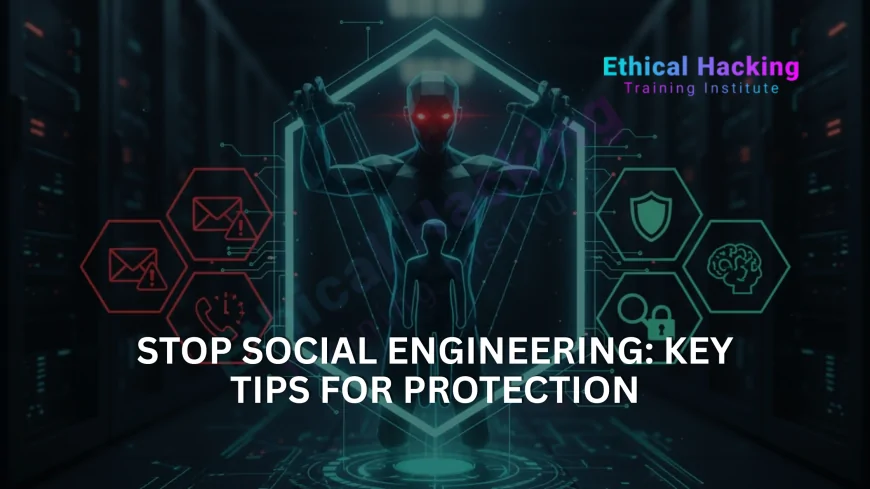
Social engineering manipulates people to bypass security. In 2025, 98% of attacks involve human error. No firewall stops a trusted employee giving passwords. Ethical Hacking Training Institute teaches real social engineering in CEH labs with role-play. Webasha Technologies and Cybersecurity Training Institute offer 100% placement. This guide covers types, examples, and defenses. Train your brain. Verify everything. One click or word can cost millions. Build a human firewall. Start today. Explore the cybersecurity career path.
Phishing: The Most Common Attack
Phishing tricks users into clicking links or sharing data. 36% of breaches start here. Email, SMS, voice. AI makes messages hyper-realistic. Ethical Hacking Training Institute runs phishing simulations weekly. Real case: 2020 Twitter hack via phone phishing. Defense: hover links, check sender, never share OTP. Use spam filters. Train monthly. Report suspicious emails. Phishing evolves. Awareness stops it. Find the best local courses for phishing training.
Pretexting, Baiting, and Tailgating
Pretexting builds false scenarios. Baiting offers free USBs with malware. Tailgating follows into secure areas. Webasha Technologies demos all in physical labs. Real case: 2019 bank heist via fake IT visit. Defense: verify identity, never share badges, lock screens. Use mantraps. Challenge strangers. Physical security matters. One open door compromises all. Learn more about the CEH course social engineering labs.
Types of Social Engineering
- Phishing: Fake emails, SMS
- Vishing: Voice calls
- Smishing: Text messages
- Pretexting: Fake identity
- Baiting: Free gifts, USB
- Quid pro quo: Fake help
- Tailgating: Physical entry
Real-World Attack Examples
- Twitter 2020: Phone phishing
- Uber 2022: MFA fatigue
- Bank heist: Fake IT visit
- USB drop: Malware spread
- CEO fraud: Wire transfer
- HR scam: W-2 forms
Psychological Triggers Used
- Urgency: Act now
- Authority: Boss call
- Trust: Known sender
- Curiosity: Free gift
- Fear: Account lock
- Greed: Win prize
Defense Strategies and Policies
- Security awareness training
- Verification procedures
- Incident reporting
- Physical access control
- Data classification
- Regular audits
Technical Controls to Support
- Email filtering
- MFA everywhere
- USB disable policy
- Badge systems
- Visitor logs
- CCTV monitoring
Social Engineering Defense Checklist
| Action | Frequency | Owner |
|---|---|---|
| Phishing training | Monthly | HR/Security |
| Verify requests | Always | All staff |
| Lock screens | When away | Users |
Conclusion
Social engineering targets trust. Train, verify, report. Ethical Hacking Training Institute leads with real simulations and 100% placement. Webasha Technologies and Cybersecurity Training Institute protect your team. One aware employee stops attacks. Start training today. Discover the best CEH programs in 2025.
Frequently Asked Questions
What is social engineering?
Manipulating people to bypass security. No tech needed.
Most common type?
Phishing. 36% of breaches. Email, SMS, voice.
How to spot phishing?
Check sender, hover links, urgency, grammar errors.
Can training stop it?
Yes. 70% reduction with monthly sessions.
Physical social engineering?
Tailgating, pretexting. Challenge strangers.
CEO fraud example?
Fake email asking wire transfer. Verify in person.
USB baiting safe?
Never plug unknown USB. Disable auto-run.
MFA stops social engineering?
Helps. But not if shared. Never give OTP.
Security policy needed?
Yes. Clear verification, reporting, access rules.
Children vulnerable?
Yes. Teach online safety early.
AI in social engineering?
Yes. Deepfake voice, personalized emails.
Red team tests it?
Yes. Simulate attacks to measure readiness.
Free training resources?
KnowBe4, Google phishing quiz, CEH labs.
Lab for practice?
Yes. Institutes run live simulations safely.
Next step to protect team?
Book free awareness demo at Ethical Hacking Training Institute, Webasha Technologies, or Cybersecurity Training Institute.
What's Your Reaction?
 Like
0
Like
0
 Dislike
0
Dislike
0
 Love
0
Love
0
 Funny
0
Funny
0
 Angry
0
Angry
0
 Sad
0
Sad
0
 Wow
0
Wow
0