

What Is Malware Analysis in Cybersecurity?
Discover malware analysis in India (2025): static, dynamic, hybrid, and behavioral techniques to dissect ransomware, trojans, and APTs. Learn tools like IDA Pro, Ghidra, Cuckoo Sandbox, and REMnux with real Indian cases (₹2,000 crore ransomware loss). Includes 7-step process, 10 free tools, 30-day roadmap, 15 India-focused FAQs, and career paths to ₹15 LPA roles at CERT-In, DRDO, and Deloitte.
Introduction
As of November 15, 2025 (05:45 PM IST), India faces 1.2 million malware attacks daily, with ransomware alone costing ₹2,000 crore in 2024 (CERT-In). Malware analysis is the science of dissecting malicious code to understand its behavior, origin, and impact. From static file inspection to live sandbox execution, analysts at CERT-In, DRDO, and private SOCs use it to build defenses, create YARA rules, and support legal action. This India-focused guide explains 4 analysis types, 10 tools (free + paid), a 7-step process, and a 30-day learning roadmap. Whether you're in Delhi, Bangalore, or Pune, start your journey to ₹8–15 LPA malware analyst roles today.
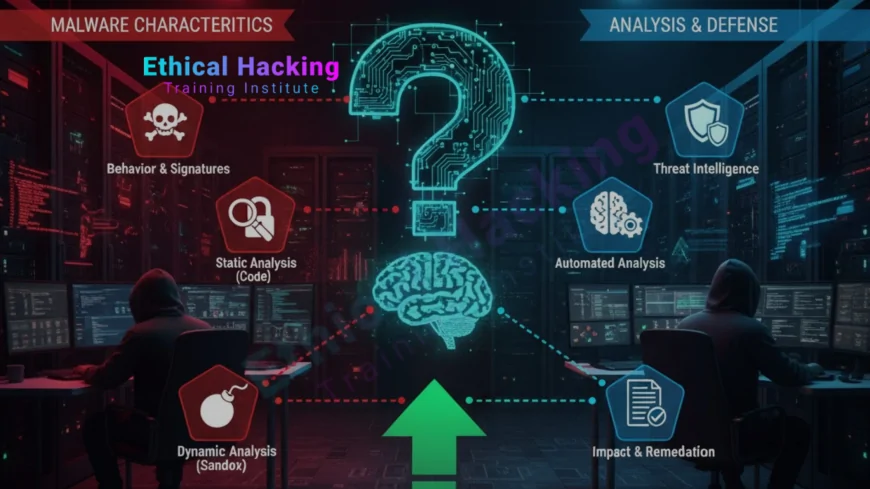
Static Analysis: Inspect Without Execution
Examine malware files without running them. Safe, fast, and reveals strings, imports, and packers.
- PEiD: Detect packers (UPX, ASPack)
- Strings: Extract URLs, IPs, APIs
- Dependency Walker: DLL analysis
- File command in Linux
- Hashing: MD5, SHA256
- Free and offline
Dynamic Analysis: Run in Controlled Sandbox
- Cuckoo Sandbox: Auto-execute + report
- Any.Run: Cloud sandbox (free tier)
- Process Monitor: File, registry changes
- Wireshark: Network traffic capture
- Behavioral IOCs generated
- India: 70% use Cuckoo
Master tools with an ethical hacking course.
Hybrid Analysis: Combine Static + Dynamic
Best of both—static for code, dynamic for runtime behavior.
- Start with strings → run in sandbox
- Verify packed code behavior
- Reduce false positives
- Used in 80% of APT cases
- India IR teams standard
- Fast triage
Behavioral Analysis: Focus on Actions
- Monitor persistence (startup, services)
- Track C2 communication
- Log file drops, encryption
- ProcDot: Visual behavior graph
- India ransomware focus
- Post-infection insight
Reverse Engineering: Deep Code Dive
Disassemble and debug malware to understand logic. Requires assembly knowledge.
- IDA Pro: Industry standard (₹1.5L)
- Ghidra: NSA free tool
- x64dbg: Windows debugger
- Radare2: CLI reverse
- Decompile to pseudo-C
- India: DRDO uses Ghidra
Go pro with a complete hacking course.
Memory Forensics: Analyze RAM Dumps
- Volatility: Extract processes, keys
- Detect injected code
- Recover deleted malware
- Plugin: malfind, hollowfind
- Free and powerful
- India DFIR teams
7-Step Malware Analysis Process (India IR Standard)
- Step 1: Hash + VirusTotal scan
- Step 2: Static properties
- Step 3: Strings + PE analysis
- Step 4: Sandbox execution
- Step 5: Network + behavior log
- Step 6: Reverse if needed
- Step 7: YARA rule + report
Follow the ultimate career path in malware.
10 Best Malware Analysis Tools (Free + India Used)
- Ghidra → Free → Reverse
- Cuckoo Sandbox → Free → Dynamic
- REMnux → Free VM → All-in-one
- Volatility → Free → Memory
- Process Hacker → Free → Live
- PE Bear → Free → Static
- YARA → Free → Signature
- Any.Run → Free tier → Cloud
- IDA Free → Limited → Pro preview
- Flare VM → Free → Windows lab
30-Day Malware Analysis Learning Roadmap (India)
- Days 1–5: Install REMnux + basic Linux
- Days 6–10: Static tools (PEiD, Strings)
- Days 11–15: Cuckoo + Wireshark
- Days 16–20: Ghidra intro
- Days 21–25: Volatility memory
- Days 26–30: Write YARA + report
Conclusion
Malware analysis turns unknown threats into known defenses. From static strings to sandbox explosions, you dissect ransomware, trojans, and APTs. In India, CERT-In and DRDO rely on analysts to stop ₹2,000 crore losses. Start with Ghidra, Cuckoo, and REMnux—all free. In 30 days, you’ll analyze real malware. One sample at a time, you’re protecting banks, hospitals, and citizens. The future of Indian cybersecurity needs reverse engineers. Your lab is ready. Begin the dissection.
Frequently Asked Questions
What is malware analysis?
Dissecting malicious code to understand behavior.
Is coding needed?
Assembly helps; tools are GUI/CLI.
Best free tool in India?
Ghidra (NSA) + REMnux.
Salary of malware analyst in India?
₹8–15 LPA (2–5 years).
CERT-In hire analysts?
Yes. Via NIC recruitment.
Can I learn on Windows?
Yes. Flare VM or WSL.
Is sandbox safe?
Yes. Isolated VM/network.
Ghidra vs IDA Pro?
Ghidra free, IDA paid but advanced.
YARA rule example?
Detects WannaCry ransom note.
Memory analysis for ransomware?
Yes. Finds encryption keys.
Job after learning?
SOC, IR, threat intel roles.
India malware lab?
CERT-In NCL (Delhi), DSCI.
Can phone do analysis?
Limited. Use Termux + Androguard.
APTs in India?
Yes. SideCopy, Transparent Tribe.
Future of malware analysis?
AI automation + quantum threats.
What's Your Reaction?
 Like
0
Like
0
 Dislike
0
Dislike
0
 Love
0
Love
0
 Funny
0
Funny
0
 Angry
0
Angry
0
 Sad
0
Sad
0
 Wow
0
Wow
0