



What Is Ethical Hacking for Mobile Applications?
Ethical hacking for mobile applications is the practice of testing mobile apps to find security flaws before attackers do. This guide explains mobile threat models, common vulnerabilities, testing methodologies, tools, legal and ethical considerations, and practical steps developers and security teams can use to secure Android and iOS applications.
Introduction
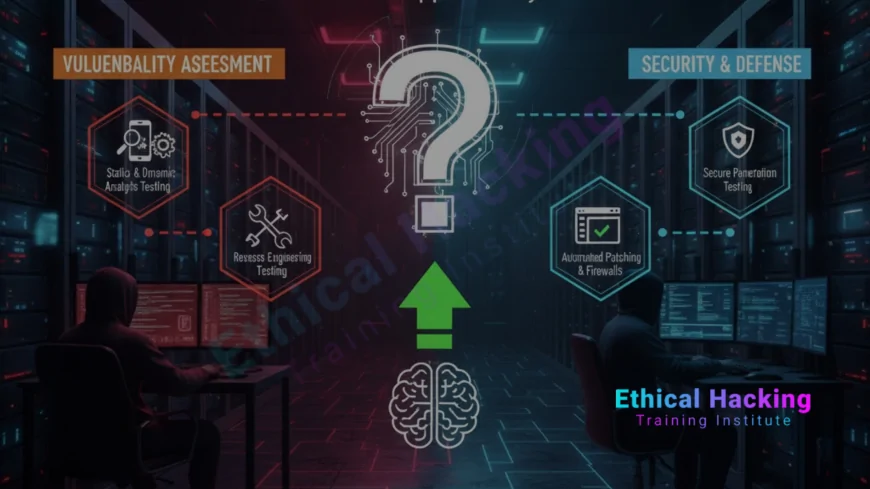
Mobile applications power banking, healthcare, commerce, communication, and countless daily tasks. As app adoption grows, so does the attack surface. Ethical hacking for mobile applications, also called mobile app penetration testing, is the controlled practice of probing apps to identify weaknesses that could be abused by attackers. The goal is to find issues early, provide actionable remediation, and improve overall app resilience. This guide covers core concepts, common attack vectors, testing methods, and practical recommendations for both developers and security teams.
Why Mobile App Security Matters
Mobile apps often handle sensitive user data, valuable tokens, and privileged actions. Compromised apps can lead to data breaches, financial fraud, reputation loss, and regulatory penalties. Mobile platforms introduce unique challenges: varied OS versions, device fragmentation, hardware-backed keys, app store ecosystems, and user-installed third-party libraries. Ethical hackers help organizations understand how these factors combine to create practical risks and what countermeasures are most effective.
Teams commonly map device and network exposure before deep testing, because knowing reachable services and open ports influences which tests are relevant; practitioners often pair app testing with network reconnaissance tools such as Nmap to build a complete picture of the attack surface.
Mobile Threat Model and Attack Surface
Effective ethical hacking starts with threat modeling. For mobile apps, the attack surface includes the app binary, network traffic, backend APIs, local and remote storage, interprocess communications, third-party SDKs, and OS-level permissions. Typical threats are credential theft, data leakage, insecure communication, improper session handling, and privilege escalation. Model likely attackers: opportunistic criminals, targeted attackers, malicious insiders, and automated botnets. Prioritization follows asset value, exploitability, and impact on users and business.
Common Mobile Application Vulnerabilities
Some weaknesses are specific to mobile, others mirror web and backend problems. Common issues include:
- Insecure data storage: Sensitive data stored in cleartext on device storage, logs, or backups.
- Improper platform usage: Misusing platform security features such as Keychain (iOS) or Keystore (Android).
- Weak server-side controls: Relying on client-side checks for authorization or input validation.
- Insufficient transport protection: Unencrypted HTTP or weak TLS configurations.
- Insecure intercomponent communication: Exposed intents, URL schemes, or custom URI handlers that allow actions from other apps.
- Reverse engineering and tampering: Attackers modifying app behavior via instrumentation or patched binaries.
- Use of vulnerable third-party libraries or SDKs.
When testing, ethical hackers look for both technical misconfigurations and logic flaws that could enable fraud or privacy violations.
As attackers adopt automation and AI to scale reconnaissance and exploit generation, defenders benefit from training that explains both mobile and broader attacker tooling, for example through hands-on AI and ethical hacking resources that highlight evolving tactics.
Mobile Ethical Hacking Methodology
A structured methodology keeps tests efficient and repeatable. A standard approach includes:
- Scoping and rules of engagement: Define what devices, accounts, and backends are in scope and obtain written permission.
- Reconnaissance: Collect public info, app metadata, permission sets, and API endpoints.
- Static analysis: Analyze the app binary for hardcoded secrets, insecure configurations, and suspicious code paths. Tools such as APKTool, JADX, or class decompilers help identify issues in Android packages, while iOS testing may require different unpacking approaches.
- Dynamic analysis: Run the app on instrumented devices or emulators, intercept traffic with a proxy, and observe runtime behavior.
- API and backend testing: Test the server using authenticated and unauthenticated flows for access control and input validation flaws.
- Reverse engineering and tamper testing: Assess resistance to binary tampering, hooking frameworks, and runtime instrumentation.
- Reporting and remediation guidance: Provide clear, prioritized findings and test evidence, with code-level or configuration fixes where possible.
Static Analysis Techniques
Static analysis inspects the application without running it. For Android, unpacking the APK and reviewing the manifest reveals permissions and exported components. Searching for hardcoded API keys, insecure cryptographic usage, and use of debugging interfaces is crucial. On iOS, examining binaries and property lists can show insecure endpoint URLs or stored credentials. Automated SAST tools speed coverage, but manual review finds nuanced logic and obfuscation issues.
Static checks should include dependency scanning to detect vulnerable libraries. Many vulnerabilities arise from outdated SDKs or third-party SDKs that introduce tracking or insecure behavior.
Developers and testers often complement static checks with guided courses and labs to learn toolchains and real examples; structured training courses reinforce these techniques through hands-on practice.
Dynamic Analysis and Runtime Testing
Dynamic testing runs apps to observe real behavior. Common steps include instrumenting the app, intercepting network traffic with a proxy like Burp, validating certificate pinning, and exercising auth flows. Testers try to manipulate inputs, tamper sessions, and fuzz APIs. Monitoring app logs and device state during tests reveals insecure caching, weak session handling, and unexpected API calls.
Use of rooted/jailbroken devices or hooking frameworks such as Frida enables deep runtime introspection but must be performed in controlled environments and with permission. Dynamic tests also validate mitigations such as encryption enforcement and secure storage usage.
Reverse Engineering, Tampering, and Anti-Tamper Controls
Reverse engineering helps attackers understand app logic and find sensitive code paths. Ethical testers reverse engineer to identify embedded secrets, crypto misuse, and feature flags that could be abused. Tampering tests involve modifying the app binary or hooking into runtime functions to bypass checks or alter behavior. Anti-tamper measures include code obfuscation, runtime integrity checks, root/jailbreak detection, and hardware-backed key stores.
Anti-tamper must be balanced with usability; overly aggressive checks can break functionality or create false positives in legitimate environments.
To build practical skills for these advanced techniques, many practitioners follow formal paths such as CEH training which covers reverse engineering, tampering methods, and defenses in a structured format.
Tools and Platforms for Mobile App Security Testing
There are many tools tailored to different phases of mobile testing. Key examples include:
- Static tools: JADX, Apktool, MobSF for binary analysis and automated checks.
- Dynamic tools: Burp Suite (interception proxy), Frida (runtime instrumentation), Objection (runtime mobile exploration).
- Device management: Emulator farms, physical device labs, and device clouds to test different OS versions and vendor customizations.
- Backend testing: API scanners and manual testing with Postman or custom scripts.
Choosing the right combination of tools depends on platform, app architecture, and testing goals. Testers should also instrument logging and telemetry to reproduce issues and collect reliable evidence for remediation.
Reporting, Remediation, and Secure Development Practices
Findings should be reported clearly, with reproduction steps, risk rating, and suggested fixes. Practical remediation includes using platform secure storage (Keychain, Keystore), enforcing TLS with proper certificate validation and pinning where appropriate, avoiding sensitive data in logs, and applying least privilege to app permissions. Secure development practices integrate security into CI/CD pipelines with automated scans, dependency checks, and pre-deployment testing.
Teams that combine developer training, code review, and pre-release pentesting reduce the number of critical issues reaching production. For organizations building developer skills, guided learning tracks and instructor-led labs provide measurable improvement; many teams pair internal programs with external courses such as hands-on hacking courses to accelerate capability building.
Mobile App Security Checklist
| Area | Action | Why it matters |
|---|---|---|
| Secure Storage | Use Keychain/Keystore and avoid plaintext storage | Prevents local data theft |
| Transport Security | Enforce TLS, validate certificates, consider pinning | Protects data in transit |
| Dependency Management | Scan and update third-party SDKs | Reduces exposure to library vulnerabilities |
| Code Obfuscation | Obfuscate binaries and detect tampering | Raises difficulty for reverse engineers |
| CI/CD Security | Integrate SAST/DAST and dependency checks | Prevents insecure builds from reaching users |
Conclusion
Ethical hacking for mobile applications is a critical discipline that blends static analysis, dynamic testing, reverse engineering, and secure development practices to protect users and organizations. The mobile ecosystem introduces unique risks, but applying a structured methodology, using appropriate tooling, and integrating security into the development lifecycle dramatically reduce exposure. Prioritize threat modeling, automate checks where possible, and practice hands-on testing in controlled environments. Training and continuous learning ensure teams keep pace as mobile platforms and attacker techniques evolve.
If you want to scale skills across a team, consider combining internal secure development initiatives with formal hands-on training courses to create repeatable, measurable improvements in mobile app security.
Frequently Asked Questions
What is the difference between mobile and web application testing?
Mobile testing covers platform-specific issues such as local storage, permissions, and device APIs, in addition to web-like backend and API vulnerabilities. Mobile also involves reversing binaries and testing on varied device firmware and OEMs.
Do I need a jailbroken or rooted device to test mobile apps?
Rooted/jailbroken devices allow deeper runtime inspection and hooking, but many dynamic tests can be performed on emulators or non-rooted devices using safe instrumentation. Always have permission before modifying device state.
Are hardcoded API keys always critical?
Hardcoded keys often increase risk because they can be extracted from binaries. The severity depends on the key scope and what it protects; any secret in the client should be treated as compromised.
How do I test for insecure data storage?
Inspect local files, databases, and preferences on the device, review backups, and test for sensitive data stored in logs or caches. Automated tools can speed discovery, but manual checks find nuanced cases.
What is certificate pinning and should I use it?
Certificate pinning binds the app to a specific server certificate or public key, reducing the risk of man-in-the-middle attacks. Use it for high-risk apps, but implement upgrade and emergency bypass strategies safely.
How do I handle third-party SDK risks?
Maintain an inventory of SDKs, track versions, monitor for vulnerabilities, and apply runtime restrictions where possible. Prefer SDKs with good reputations and active maintenance.
How important is threat modeling for mobile apps?
Threat modeling identifies high-value assets and likely attack paths so defenses are applied where they reduce the most risk. It informs testing scope and prioritization.
Can code obfuscation stop reverse engineering?
Obfuscation increases difficulty but does not prevent skilled attackers. Combine obfuscation with runtime protections and server-side checks for better security.
What legal permissions are required for ethical hacking?
Always obtain explicit, written authorization from the owner of the app and backend systems. Define scope, timeline, and data handling rules to avoid legal risk.
How often should mobile apps be penetration tested?
Test before major releases, after significant architecture or dependency changes, and at least annually for production apps. High-risk apps may require more frequent testing.
What role does CI/CD play in mobile app security?
CI/CD pipelines enforce automated checks early, prevent insecure builds, and streamline dependency updates and signing. Integrate SAST, dependency scanning, and build-time policy checks into pipelines.
How do I securely manage signing keys?
Use hardware-backed key storage and dedicated signing services. Limit access, rotate keys per policy, and audit signing operations to prevent misuse.
Can I automate mobile security testing?
Yes. Automated static and dynamic scans cover many common issues, but manual review is required for business logic and complex reverse engineering tasks.
Should sensitive logic be on the client or server?
Keep sensitive logic and authorization checks on the server whenever possible. The client should be treated as untrusted and only handle presentation and local caching with minimal secrets.
Where can I learn hands-on mobile app security?
Enroll in practical courses, labs, and CTF-style mobile challenges. Combining guided training with real app testing under permission builds practical, job-ready skills.
What's Your Reaction?
 Like
0
Like
0
 Dislike
0
Dislike
0
 Love
0
Love
0
 Funny
0
Funny
0
 Angry
0
Angry
0
 Sad
0
Sad
0
 Wow
0
Wow
0