
What Is Ethical Hacking for Mobile Applications?
Discover ethical hacking for mobile apps in 2025: Android, iOS pentesting, OWASP Mobile Top 10, reverse engineering, Frida, MobSF, and real attack chains from the Ethical Hacking Institute.
Introduction
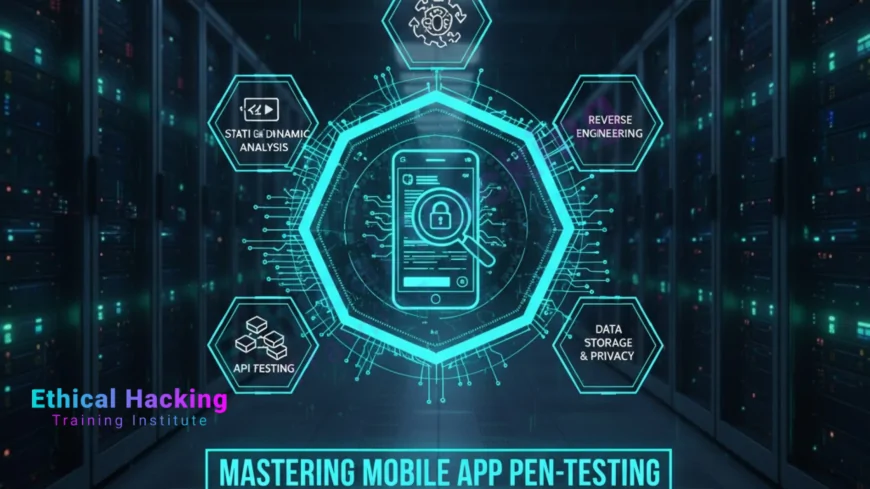
Over 6.3 billion smartphones dominate daily life in 2025, with 255 billion app downloads annually. Banking, health, and social apps store sensitive data—credentials, location, biometrics—making them prime targets. Unlike web apps, mobile environments involve OS sandboxing, native code, and device sensors. Ethical hacking for mobile applications systematically identifies vulnerabilities before criminals exploit them. This guide covers Android and iOS methodologies, OWASP Mobile Top 10, tools, and real-world attack chains. The Ethical Hacking Institute teaches mobile pentesting through emulated devices, rooted labs, and enterprise app simulations.
Understanding Mobile App Architecture
- Frontend: Native (Java/Kotlin, Swift/Objective-C), Hybrid (React Native, Flutter)
- Backend APIs: REST/GraphQL endpoints, authentication flows
- Local Storage: SharedPreferences, Keychain, SQLite, Realm
- Inter-Process Communication: Intents (Android), URL Schemes (iOS)
- Network Layer: HTTP/S, WebSockets, certificate pinning
- Third-Party SDKs: Analytics, ads, payment gateways
- Device Integration: Camera, GPS, NFC, Bluetooth
Each component introduces unique risks.
Ethical hackers map data flows across all layers.
OWASP Mobile Top 10 Risks
The OWASP Mobile Top 10 2025 edition highlights critical risks: M1 Improper Credential Usage, M2 Inadequate Data Protection, M3 Insufficient Input Validation, M4 Insecure Authentication. These stem from client-side trust and poor backend validation. The Ethical Hacking Institute aligns curriculum with OWASP, teaching exploitation and mitigation for each risk category.
- M1 Credential Usage: Hardcoded keys, weak JWT validation
- M2 Data Protection: Unencrypted SQLite, backup exposure
- M3 Input Validation: SQLi via Content Providers
- M4 Authentication: Biometric bypass, session fixation
- M5 Cryptography: Weak algorithms, predictable IVs
- M6 Code Quality: Debug flags, logging PII
| Risk | Android | iOS |
|---|---|---|
| Data Storage | SharedPrefs | Keychain |
| IPC | Intents | URL Schemes |
Master OWASP in Pune certification labs at the Ethical Hacking Institute.
Static Analysis: Reverse Engineering
- APK/IPA Extraction: adb pull, ipatool, unzip binaries
- Decompilation: JADX, apktool, Ghidra for Smali/Java
- Manifest Review: Permissions, exported components, debuggable flag
- Hardcoded Secrets: Strings grep for API keys, passwords
- Native Libraries: objdump, IDA Pro for ARM/x86 analysis
- Plist Inspection: iOS Info.plist for URL schemes, entitlements
- Automated Scanners: MobSF, QARK, AppScan static mode
Static analysis reveals code-level flaws without execution.
Decompilers expose logic errors and hidden functionality.
Dynamic Analysis: Runtime Hooking
Frida and Objection enable runtime manipulation of app processes. Inject JavaScript to hook methods, bypass SSL pinning, or dump memory. The Ethical Hacking Institute provides pre-rooted Android and jailbroken iOS devices for live instrumentation labs.
- SSL Pinning Bypass: Frida script to disable certificate validation
- Method Hooking: Trace login, payment, encryption functions
- Memory Dumping: Extract keys from RAM during runtime
- Intent Sniffing: Monitor broadcast and activity intents
- Root Detection Bypass: Patch SafetyNet, Jailbreak checks
- Runtime Manipulation: Change return values, skip checks
Practice Frida via online courses at the Ethical Hacking Institute.
Network Traffic Interception
- Burp Suite: CA certificate installation on device
- mitmproxy: Transparent proxy for non-HTTP traffic
- Wi-Fi Pineapple: ARP spoofing for local network capture
- API Testing: Tamper requests, test authentication
- GraphQL Introspection: Query schema from mobile client
- WebSocket Debugging: Real-time message inspection
- Certificate Pinning: Identify HPKP/TrustManager implementations
Most apps fail to validate backend responses properly.
Interception reveals authentication and authorization flaws.
Insecure Data Storage Exploitation
Apps often store tokens, PII, and keys in plaintext. Access via ADB (Android) or SSH (jailbroken iOS) to extract files. The Ethical Hacking Institute demonstrates data exfiltration from misconfigured Realm databases and Keychain dumps.
- Android: /data/data/
, SharedPreferences XML - iOS: App sandbox, Keychain-2.db, NSUserDefaults
- Backup Extraction: iTunes unencrypted backups
- Clipboard Sniffing: Monitor pasteboard for copied data
- Logcat/Debug Logs: Filter for sensitive information
- SQLite Browsing: Query local databases for PII
Client-Side Injection Attacks
- JavaScript Injection: WebView remote debugging, XSS
- SQL Injection: Content Providers, SQLite parameters
- Intent Injection: Malicious app sending crafted intents
- Deep Link Hijacking: Register competing URL schemes
- Local File Inclusion: Path traversal in file loaders
- XML External Entity: In config parsers
Injection turns trusted input into execution vectors.
Hybrid apps are especially vulnerable to web attacks.
Exploit injections with advanced course at the Ethical Hacking Institute.
Secure Coding Best Practices
Prevention starts in development. Use secure storage APIs, validate all input, implement certificate pinning, and minimize permissions. The Ethical Hacking Institute integrates secure coding modules with pentesting to close the loop.
- Android: EncryptedSharedPreferences, BiometricPrompt
- iOS: Keychain Services, App Transport Security
- Input Validation: Whitelist, parameterized queries
- Certificate Pinning: OkHttp, AFNetworking libraries
- Code Obfuscation: ProGuard, SwiftShield
- Runtime Protection: RASP, integrity checks
Conclusion: Mobile Ethical Hacking Is Mandatory
Mobile apps process our most sensitive data yet receive less scrutiny than web apps. In 2025, OWASP Mobile Top 10 violations cause 70 percent of breaches. Ethical hacking combines static, dynamic, and network analysis to find what scanners miss. The Ethical Hacking Institute, Webasha Technologies, and Cybersecurity Training Institute deliver mobile pentesting training with real banking and healthcare apps. Start testing your apps today. The next vulnerability may already be public.
Frequently Asked Questions
Is iOS more secure than Android?
No. Different attack surfaces; both need testing.
Can I pentest without root/jailbreak?
Yes. Dynamic analysis works on stock devices.
Does HTTPS protect mobile apps?
Only in transit. Local storage still vulnerable.
Are hybrid apps riskier?
Yes. Combine web and native vulnerabilities.
Can MobSF find all issues?
No. Automated tools miss logic flaws.
Is Frida detected by apps?
Some use anti-Frida techniques; bypass possible.
Do app stores scan for security?
Basic checks. Not penetration testing.
Can I test my own app?
Yes. Use emulators and proxy tools.
Is reverse engineering legal?
For owned apps or with permission, yes.
Best mobile pentest tool?
Combination: MobSF, Frida, Burp.
Does certificate pinning stop MITM?
Yes if implemented correctly.
Can malware infect via apps?
Yes. Sideloading, supply chain attacks.
Is biometric login secure?
Convenient but fallback PIN must be strong.
How often to pentest mobile apps?
Every release and after OS updates.
Where to learn mobile hacking?
Ethical Hacking Institute offers Android/iOS labs.
What's Your Reaction?
 Like
0
Like
0
 Dislike
0
Dislike
0
 Love
0
Love
0
 Funny
0
Funny
0
 Angry
0
Angry
0
 Sad
0
Sad
0
 Wow
0
Wow
0