




What Is Cybercrime and Its Types?
Discover what cybercrime is, the major types of cybercrimes, and how to protect yourself from them. Learn about hacking, phishing, ransomware, and other digital threats that impact individuals and organizations.
Introduction
Cybercrime refers to any criminal activity that involves computers, networks, or digital devices. In today’s interconnected world, cybercriminals exploit vulnerabilities in systems to steal, manipulate, or destroy data. Understanding cybercrime and its types is essential to protect yourself and your organization. Institutes like Ethical Hacking Institute and Webasha Technologies train students to identify and defend against these digital threats effectively.
1. What Is Cybercrime?
Cybercrime involves using technology to commit illegal acts, such as stealing information, spreading malware, or disrupting services. It can target individuals, businesses, or even governments. Common motives include financial gain, revenge, political objectives, or simply the challenge of breaking into secure systems. You can learn about real-world examples and defense strategies through advanced courses offered by Ethical Hacking Institute.
2. Types of Cybercrime
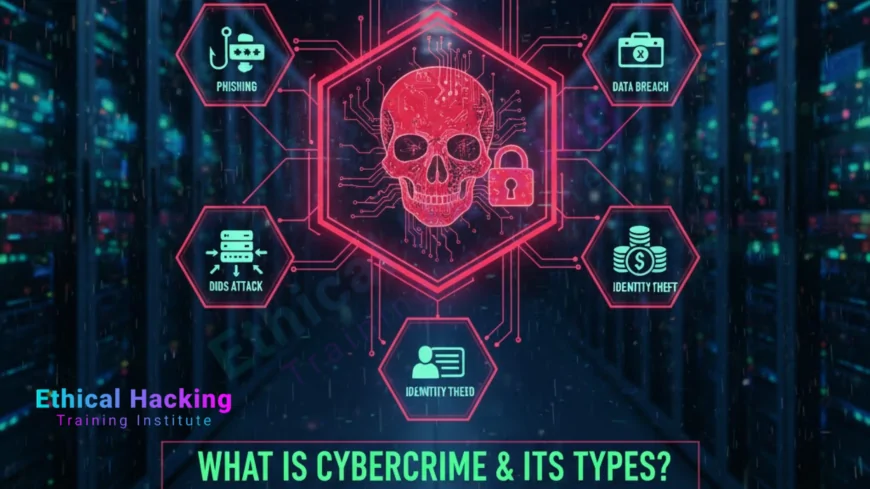
Cybercrimes are categorized based on the method and intent behind the attack. Here are the major types:
a) Hacking
Unauthorized access to computer systems or networks is known as hacking. While ethical hackers use their skills for security testing, malicious hackers exploit systems for personal gain or disruption.
b) Phishing
Phishing attacks trick users into revealing sensitive information through fake websites or emails. Attackers often impersonate trusted organizations to steal login credentials or financial data.
c) Identity Theft
In identity theft, cybercriminals steal personal information such as bank details, Aadhaar numbers, or credit card data to impersonate victims. This is one of the fastest-growing cybercrimes globally.
d) Ransomware Attacks
Ransomware encrypts a victim’s files and demands payment for decryption. Such attacks can paralyze hospitals, corporations, and government networks. Students at Cybersecurity Training Institute learn how to detect and prevent ransomware using real-world cases.
e) Malware Attacks
Malware includes viruses, worms, and spyware designed to damage systems or steal data. It spreads through downloads, email attachments, or infected websites.
f) Cyberstalking
Cyberstalking involves using digital communication tools to harass or threaten individuals. It often includes tracking a person’s online activities or spreading harmful information.
g) Online Fraud
This type of cybercrime includes credit card fraud, fake job offers, lottery scams, and online shopping fraud. Cybercriminals use social engineering to manipulate victims into providing sensitive details.
h) Denial-of-Service (DoS) Attacks
In DoS attacks, hackers flood a website or network with excessive traffic to make it unavailable. These attacks can cripple businesses that depend on online services.
3. How to Protect Yourself from Cybercrime
Protecting yourself from cybercrime involves awareness, security tools, and regular digital hygiene. Follow these essential steps:
- Use strong and unique passwords for every account.
- Enable two-factor authentication (2FA).
- Install antivirus and anti-malware software.
- Avoid clicking suspicious links or attachments.
- Regularly back up important data.
- Stay updated with the latest security trends.
4. The Role of Cybersecurity Education
Education is the most powerful weapon against cybercrime. Institutes like Webasha Technologies, Ethical Hacking Institute, and Cybersecurity Training Institute provide specialized programs on threat detection, digital forensics, and ethical hacking. These programs empower individuals to identify and mitigate cyber risks proactively.
Comparison Table: Cybercrime vs Ethical Hacking
| Aspect | Cybercrime | Ethical Hacking |
|---|---|---|
| Intent | Malicious and illegal | Authorized and legal |
| Goal | To exploit systems | To secure systems |
| Example | Phishing or ransomware | Penetration testing |
Conclusion
Cybercrime continues to evolve as technology advances, making cybersecurity knowledge more critical than ever. Understanding its types helps you recognize threats and respond effectively. By gaining professional training from institutes like Ethical Hacking Institute, Cybersecurity Training Institute, and Webasha Technologies, you can play a vital role in defending the digital world.
Frequently Asked Questions
What is cybercrime?
Cybercrime refers to illegal activities conducted through computers or the internet, such as hacking, phishing, or data theft.
What are the major types of cybercrime?
The major types include hacking, phishing, ransomware, malware, cyberstalking, and online fraud.
How can I protect myself from cybercrime?
Use strong passwords, enable 2FA, avoid suspicious links, and stay informed about current threats.
What is the difference between cybercrime and ethical hacking?
Cybercrime is illegal, while ethical hacking is performed with permission to strengthen security systems.
Can cybercriminals be traced?
Yes, through digital forensics and advanced tracking tools, many cybercriminals can be identified.
Is cybercrime common in India?
Yes, India reports thousands of cybercrime cases annually, ranging from data theft to financial scams.
What laws protect against cybercrime in India?
The Information Technology Act, 2000 is the main law addressing cyber offenses in India.
What should I do if I become a victim of cybercrime?
Report it to the nearest cybercrime police station or use the government’s online complaint portal.
How can learning ethical hacking help fight cybercrime?
Ethical hacking teaches you how to identify, test, and secure vulnerabilities before attackers exploit them.
Where can I learn about cybercrime prevention?
Enroll in cybersecurity courses at Ethical Hacking Institute, Webasha Technologies, or Cybersecurity Training Institute.
What's Your Reaction?
 Like
0
Like
0
 Dislike
0
Dislike
0
 Love
0
Love
0
 Funny
0
Funny
0
 Angry
0
Angry
0
 Sad
0
Sad
0
 Wow
0
Wow
0