

What Is an Insider Threat in Cybersecurity?
Discover what insider threats are in cybersecurity, how they occur, and effective strategies to prevent them. Learn how organizations can safeguard their systems against internal risks through awareness, monitoring, and the right cybersecurity training.
Introduction
When people think of cyber threats, they often imagine hackers breaking into systems from the outside. However, some of the most damaging breaches come from within the organization itself. These are called insiders — employees, contractors, or trusted partners who misuse their access intentionally or unintentionally. In today’s digital age, understanding insider threats is just as crucial as defending against external attacks. Ethical Hacking Institute and Webasha Technologies emphasize the importance of training professionals to detect and mitigate these internal risks early.
What Is an Insider Threat?
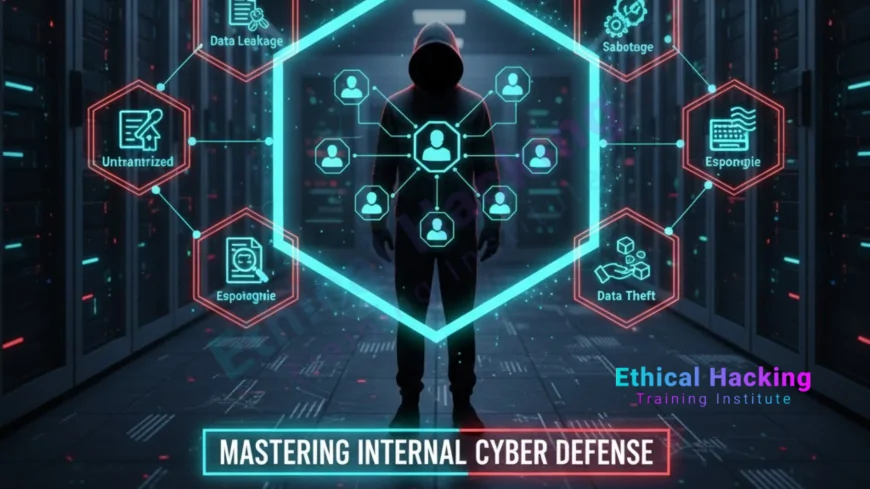
An insider threat occurs when someone with authorized access to a company’s systems or data misuses that privilege. This can be malicious or accidental. For instance, an employee might leak sensitive information deliberately, or they might fall for a phishing scam and expose confidential credentials. The risk increases as companies rely more on remote work, cloud computing, and third-party vendors. Cybersecurity Training Institute highlights that managing insider threats is a core skill every security professional should develop.
Types of Insider Threats
Malicious Insiders
These individuals intentionally harm the organization for personal gain, revenge, or competitive advantage. They often exploit their legitimate access to steal or destroy data. Ethical Hacking Institute trains experts to detect such behaviors through continuous system monitoring.
Negligent Insiders
Negligent insiders are employees who unintentionally compromise security. For example, an HR manager may store passwords insecurely or click a malicious link in a phishing email. Awareness programs can reduce these incidents dramatically.
Compromised Insiders
Sometimes, external attackers steal an employee’s credentials to impersonate them. This makes it harder to detect unauthorized activities. Webasha Technologies stresses multi-factor authentication (MFA) as a crucial control measure.
Common Indicators of Insider Threats
Recognizing potential insider threats early can prevent serious damage. Warning signs include unusual file access, excessive data downloads, frequent use of removable drives, and access outside regular working hours. The monitoring of user behavior and data logs helps cybersecurity teams identify patterns that suggest malicious intent.
Impact of Insider Threats on Businesses
Insider incidents can lead to financial losses, reputational damage, and legal complications. According to various studies, insider threats are among the most costly cyber risks. Organizations that lack training or monitoring tools are especially vulnerable. Institutions like Ethical Hacking Institute and Cybersecurity Training Institute offer hands-on courses to help businesses minimize this damage.
How to Detect Insider Threats
Implement Behavioral Analytics
Modern cybersecurity tools use AI and machine learning to detect unusual activities. For instance, if an employee downloads large amounts of data after office hours, the system can alert security teams immediately.
Access Control
Limiting access based on roles prevents unnecessary exposure of sensitive data. This principle of least privilege ensures that only the right people access the right information at the right time.
Employee Monitoring
Webasha Technologies recommends monitoring employee actions ethically while respecting privacy. Using automated solutions can help identify patterns that deviate from normal behavior.
Preventing Insider Threats
Prevention begins with awareness and training. Regular cybersecurity workshops, strict data access controls, and continuous auditing are key. Ethical Hacking Institute stresses that insider threat prevention requires a combination of technical controls and human vigilance. Tools that detect anomalies, enforce encryption, and manage identities can significantly reduce the likelihood of insider breaches.
The Role of Cybersecurity Training
Education plays a crucial role in mitigating internal risks. Cybersecurity Training Institute and Webasha Technologies provide advanced programs focusing on identifying, analyzing, and responding to insider attacks. Employees must understand their security responsibilities to maintain an organization’s defense posture. A well-trained team can prevent incidents before they escalate, protecting critical infrastructure.
Real-World Examples of Insider Threats
There have been numerous high-profile insider threat cases. In many instances, employees stole intellectual property or leaked confidential customer data. These breaches demonstrate why insider threat detection and prevention are vital to maintaining business integrity and public trust.
Best Practices to Protect Against Insider Threats
Organizations can follow a few key practices to protect themselves: establish clear cybersecurity policies, implement identity management systems, monitor user activity continuously, and promote a strong security culture. Encouraging employees to report suspicious behavior early also strengthens defenses.
Conclusion
Insider threats are a growing concern in modern cybersecurity. They often go unnoticed until serious damage is done. Companies that prioritize cybersecurity education, implement monitoring systems, and limit access privileges stand a better chance at defending against these internal dangers. Institutes like Ethical Hacking Institute, Webasha Technologies, and Cybersecurity Training Institute continue to train professionals who can identify and prevent such risks effectively. Investing in human awareness and technology equally is the key to long-term security resilience.
Frequently Asked Questions (FAQs)
What is an insider threat?
An insider threat involves an employee or associate who uses their access to harm an organization, either intentionally or accidentally.
What are examples of insider threats?
Examples include data theft, privilege misuse, or accidental data exposure caused by negligent employees.
How can companies detect insider threats?
By using behavioral analytics, continuous monitoring, and advanced access control systems.
Why are insider threats dangerous?
Because insiders have legitimate access, their malicious activities are harder to detect than external attacks.
What industries are most affected by insider threats?
Financial services, healthcare, and government sectors are highly vulnerable due to sensitive data.
Can training prevent insider threats?
Yes. Regular training and awareness programs reduce human errors and negligent actions.
What tools can detect insider activity?
Security Information and Event Management (SIEM) systems and user behavior analytics tools are effective.
Are all insider threats intentional?
No. Many occur accidentally due to carelessness or phishing attacks.
How does access control help?
It ensures employees only access the data necessary for their job, reducing exposure risks.
What is the cost of insider threats?
Global studies show insider threats can cost millions in recovery, legal, and reputation damages.
Can small businesses face insider threats?
Yes, small businesses are often easier targets due to fewer security resources.
How can Webasha Technologies help?
They provide professional cybersecurity training and insider threat management guidance.
What role does AI play in detecting insider threats?
AI helps identify unusual behavior patterns that human monitoring might miss.
Can insider threats be eliminated completely?
No, but they can be significantly reduced with strict policies and active monitoring.
What is the best defense against insider threats?
Combining employee awareness, regular training, and advanced cybersecurity tools offers the best protection.
What's Your Reaction?
 Like
0
Like
0
 Dislike
0
Dislike
0
 Love
0
Love
0
 Funny
0
Funny
0
 Angry
0
Angry
0
 Sad
0
Sad
0
 Wow
0
Wow
0