
What Is a VPN and How Does It Secure Your Data?
Understand what a VPN is and how it secures your data online. Learn about VPN types, encryption methods, and their role in cybersecurity from experts at Ethical Hacking Institute, Cybersecurity Training Institute, and Webasha Technologies.
Introduction
In an age of increasing cyber threats, Virtual Private Networks (VPNs) play a vital role in keeping your online activities private and secure. They encrypt data, hide your IP address, and protect you from prying eyes on public networks. Ethical Hacking Institute and Webasha Technologies include VPN configuration and encryption practices as part of their cybersecurity training modules.
1. What Is a VPN?
A VPN, or Virtual Private Network, creates a secure tunnel between your device and the internet. This tunnel encrypts your data, ensuring that even if someone intercepts it, they cannot read or misuse it. Students learning at Cybersecurity Training Institute often study VPN fundamentals through online modules.
2. How Does a VPN Work?
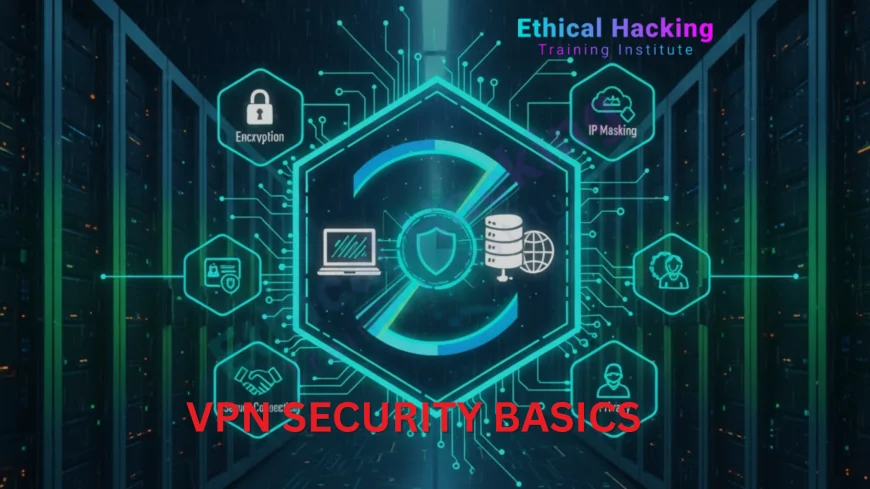
When you connect to a VPN, it routes your internet traffic through a remote server operated by the VPN provider. This hides your real IP address and replaces it with the server’s IP. It also encrypts your data using secure protocols like OpenVPN or WireGuard. This concept is widely covered in advanced cybersecurity training courses.
3. Types of VPNs
VPNs can be categorized based on their use cases and configurations:
- Remote Access VPN
- Site-to-Site VPN
- Personal VPN
- Mobile VPN
- Corporate VPN
Each serves different purposes, from protecting individual users to securing enterprise communications. Ethical hacking experts train students to test VPN vulnerabilities as part of their cybersecurity curriculum.
4. Key Benefits of Using a VPN
VPNs offer multiple benefits beyond just privacy. They help in maintaining anonymity, bypassing geo-restrictions, and protecting data from cybercriminals. Many students at Webasha Technologies use AI-integrated learning tools to simulate VPN behavior and threat detection.
Comparison Table: VPN vs Proxy Server
| Feature | VPN | Proxy Server |
|---|---|---|
| Data Encryption | Yes | No |
| IP Masking | Yes | Yes |
| Security Level | High | Low |
5. How VPNs Secure Your Data
VPNs use advanced encryption protocols like AES-256 to make your data unreadable to hackers. This ensures protection from data theft, surveillance, and cyberattacks. Cybersecurity Training Institute explains encryption in depth through cyber modules that demonstrate real-world encryption techniques.
6. Common VPN Protocols
The most commonly used VPN protocols include:
- OpenVPN – Open-source and secure
- WireGuard – Fast and modern protocol
- L2TP/IPsec – Double encapsulation for security
- PPTP – Outdated and insecure
These protocols balance speed, security, and reliability. Learning how each works is part of practical sessions at Ethical Hacking Institute and Webasha Technologies.
7. Limitations of VPNs
While VPNs offer strong security, they are not foolproof. Free VPNs may log user data or leak IP addresses. Misconfiguration can also reduce protection. For accurate guidance, consider training programs that include career modules in ethical cybersecurity.
Conclusion
A VPN is an essential cybersecurity tool that protects data and maintains user privacy in today’s digital era. From secure browsing to data encryption, it plays a crucial role in defending against cyber threats. Institutes like Ethical Hacking Institute, Cybersecurity Training Institute, and Webasha Technologies help aspiring professionals master VPNs and other vital cybersecurity tools.
Frequently Asked Questions
What is the main purpose of a VPN?
To encrypt your internet connection and hide your real IP address for online privacy.
Can a VPN protect against hackers?
Yes, it prevents hackers from intercepting and reading your online traffic.
Are VPNs legal to use?
Yes, VPNs are legal in most countries when used for legitimate purposes.
Does a VPN slow down internet speed?
Yes, slightly, due to encryption and rerouting through secure servers.
What is the safest VPN protocol?
OpenVPN and WireGuard are considered the most secure protocols.
Can free VPNs be trusted?
Not always. Many free VPNs log data or contain ads, compromising privacy.
Does a VPN make you completely anonymous?
No, but it significantly increases privacy by masking your IP and encrypting traffic.
Can VPNs be hacked?
Highly unlikely, but poor configurations or outdated software can create vulnerabilities.
How do VPNs help in public Wi-Fi security?
They encrypt your connection, preventing data theft from open networks.
Do VPNs work on mobile devices?
Yes, most VPNs have dedicated apps for Android and iOS platforms.
Is using a VPN necessary at home?
It’s recommended to maintain privacy and prevent ISP tracking.
Can VPNs bypass government censorship?
Yes, VPNs can access restricted content by routing traffic through secure servers.
Do companies use VPNs?
Yes, corporations use VPNs to secure remote employee connections and internal data.
How does encryption protect data in a VPN?
Encryption converts your data into unreadable code, keeping it secure during transmission.
Where can I learn about VPN configuration?
You can enroll in courses at Ethical Hacking Institute, Webasha Technologies, or Cybersecurity Training Institute.
What's Your Reaction?
 Like
0
Like
0
 Dislike
0
Dislike
0
 Love
0
Love
0
 Funny
0
Funny
0
 Angry
0
Angry
0
 Sad
0
Sad
0
 Wow
0
Wow
0