

What Are the Top Penetration Testing Frameworks to Know?
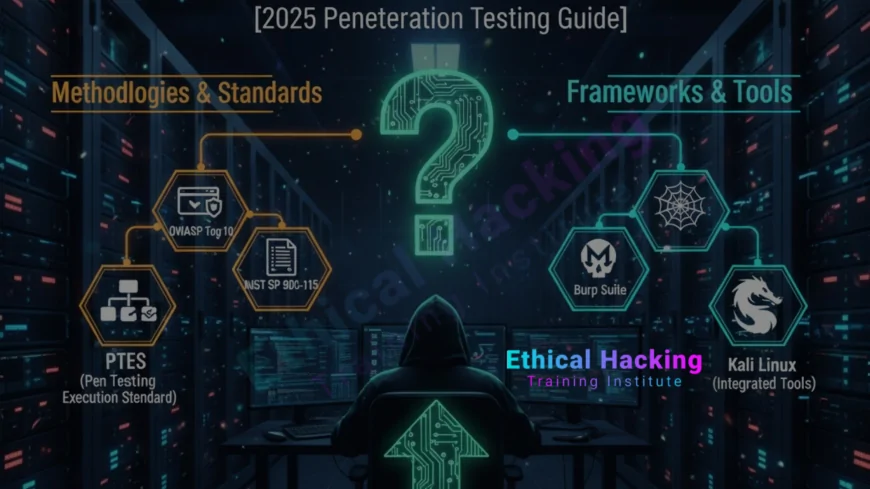
A comprehensive guide to the top penetration testing frameworks to know in 2025. Learn PTES, OWASP, OSSTMM, NIST SP800-115 and MITRE ATT&CK, how to choose and combine frameworks, tooling mappings, reporting best practices, legal considerations and how to integrate tests into your development lifecycle.
Introduction
Penetration testing is more than running scanners and collecting screenshots. To be useful, tests need structure, repeatability and clear evidence that links technical findings to business risk. Frameworks provide that structure: they define phases, artefacts, severity models and acceptable impact levels. This article explains the major frameworks security teams use, how they differ, and practical advice for applying them in real engagements.
What Is a Penetration Testing Framework?
A penetration testing framework is a documented methodology that prescribes the steps, expected outputs and quality gates for a test. Frameworks standardise scoping, reconnaissance, testing, exploitation, post-exploitation and reporting so results are repeatable and defensible. They help teams translate technical evidence into actionable remediation and give managers measurable outcomes.
For hands-on learning that maps methodology to labs, many learners combine books with practical courses that show frameworks in practice.
Core Phases Shared by Most Frameworks
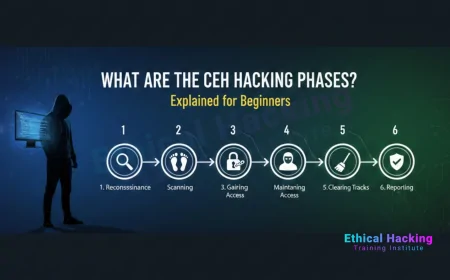
Most frameworks break tests into similar phases. Knowing these phases helps you apply any framework consistently:
- Pre-engagement: Define scope, objectives, rules of engagement, and contacts.
- Reconnaissance: Passive and active information gathering to map the attack surface.
- Scanning and enumeration: Identify services, versions and entry points.
- Vulnerability analysis: Correlate scanner results with manual analysis and intelligence.
- Exploitation: Controlled attempts to prove impact, while avoiding unnecessary disruption.
- Post-exploitation: Privilege escalation, lateral movement and data access when allowed.
- Reporting and remediation: Executive summary, PoC, prioritised fixes and retest criteria.
PTES: Penetration Testing Execution Standard
PTES is a widely used practical standard that focuses on engagement management and execution. It breaks an engagement into pre-engagement interactions, intelligence, threat modelling, vulnerability analysis, exploitation, post-exploitation and reporting. PTES is especially useful for commercial engagements because it clarifies deliverables and contractual expectations.
OWASP Testing Guide and ASVS
OWASP provides one of the most accepted references for web application testing. The OWASP Testing Guide contains detailed test cases for common web vulnerabilities and practical techniques for verification. ASVS is a verification standard that defines security requirement levels and test coverage for web applications.
When preparing recon and scanning workflows, many teams study tools and signatures; focused material on nmap is helpful for reconnaissance best practices.
OSSTMM: Open Source Security Testing Methodology Manual
OSSTMM emphasises measurement and objective scoring. Rather than focusing purely on exploits, OSSTMM defines metrics to quantify security across channels and operations. It is suited to organisations seeking defensible baseline scores and consistent measurement over time.
NIST SP 800-115: Technical Guide to Information Security Testing
NIST SP 800-115 is an authoritative guide often used by government and regulated organisations. It covers planning, test types, data collection and reporting. If compliance and risk governance are central to your programme, NIST provides alignment with broader risk management controls.
Organisations often supplement measurement and compliance-focused frameworks with practical training and lab work tied to certification and certification objectives.
MITRE ATT&CK as a Testing Aid
MITRE ATT&CK is a matrix of adversary tactics and techniques based on observed incidents. It is not a conventional pentest framework, but it is vital for threat-informed testing and red team planning. ATT&CK helps teams emulate realistic adversaries and validate detection controls by mapping test activities to known techniques.
Comparing Frameworks: When to Use Each
Each framework has strengths. PTES gives contractual clarity, OWASP targets web apps, OSSTMM offers objective measurement, NIST helps with compliance alignment and ATT&CK enables threat realism. Many modern engagements combine elements to fit objectives and constraints.
| Framework | Best for | Primary strength |
|---|---|---|
| PTES | Commercial pentests | Clear phases and deliverables |
| OWASP Testing Guide / ASVS | Web application testing | Detailed test cases and verification levels |
| OSSTMM | Quantitative measurement | Objective scoring |
| NIST SP800-115 | Regulated environments | Compliance alignment |
| MITRE ATT&CK | Threat-informed testing | Real-world technique mapping |
Tooling and Framework Mapping
Frameworks tell you what to test, tools help you execute. Below is a practical mapping of common activities to widely used tools and which frameworks they fit naturally with.
| Activity | Typical tools | Framework fit |
|---|---|---|
| Reconnaissance | Nmap, Amass, Subfinder | PTES, OWASP |
| Web testing | Burp Suite, OWASP ZAP, SQLMap | OWASP, PTES |
| Exploitation | Metasploit, Cobalt Strike | PTES, ATT&CK |
| Detection validation | Atomic Red Team, CALDERA | ATT&CK, OSSTMM |
To deepen tool skills and see how frameworks translate into hands-on labs, many professionals take focused training that pairs methodology with practical exercises.
Integrating Frameworks into the SDLC
Shift-left practices bring security earlier into development. Map OWASP ASVS checks to pull request gates, run SAST on commits, and schedule PTES-style full tests pre-release. Use ATT&CK to inform purple team sessions that validate detection coverage and logging quality.
Commissioning a Framework-Aligned Pentest
If you are commissioning a test, include the following in your brief:
- Clear objectives and critical assets to prioritise.
- The primary framework or combination to be applied.
- Rules of engagement, acceptable impact and test windows.
- Report format expectations, evidence requirements and retest SLAs.
- Proof of tester qualifications and references.
Many teams pair these procurement steps with practical certification- aligned resources and local programs to ensure in-house readiness for framework adoption.
Reporting Best Practices
A useful report converts technical issues into remedial actions. Good reports include an executive summary, technical findings with reproduction steps, proof of concept evidence, severity with business context, remediation guidance and retest criteria. Use CVSS as a baseline but adjust prioritisation using data sensitivity and exposure.
Legal and Ethical Considerations
Frameworks stress ethics: always obtain written permission, define escalation channels, and agree data handling and disclosure policies. Avoid testing that could harm production systems unless explicitly authorised and monitored.
Adapting Frameworks for Small Teams and Startups
Small teams may not require the full overhead of large frameworks. Adopt a lightweight PTES-based checklist for clarity, map web checks to a minimal OWASP ASVS level, and run ATT&CK-informed detection tests periodically. The goal is measurable, regular testing without excessive process friction.
Conclusion
Frameworks are essential for consistent, repeatable and measurable penetration testing. PTES, OWASP, OSSTMM, NIST SP800-115 and MITRE ATT&CK each add value: contractual clarity, web focus, measurement, compliance alignment and threat realism respectively. The best practice is pragmatic: combine frameworks to match your objectives, map tools to framework phases and produce reports that drive action. Pair framework knowledge with hands-on labs to convert methodology into reliable security outcomes.
Frequently Asked Questions
What is the difference between a framework and a testing tool?
A framework defines the methodology and expected artefacts for an engagement, while a tool is a software utility used to perform specific tasks like scanning or exploitation.
Which framework is best for web application testing?
OWASP Testing Guide and ASVS are the standard choices for web application testing because they provide detailed test cases and verification levels.
Can I mix multiple frameworks in a single engagement?
Yes. Combining PTES for engagement management, OWASP for web testing and ATT&CK for threat emulation is a common and effective approach.
Is MITRE ATT&CK a penetration testing framework?
Not in the traditional sense. ATT&CK is an adversary technique matrix used to plan realistic emulation and validate detection, but it integrates well with pentest methodologies.
How often should organisations run pentests?
Critical systems should be tested at least annually, after major releases, or when significant architectural changes are made. High-risk environments may test more frequently.
Does automation replace manual testing?
Automation accelerates reconnaissance and scanning but cannot replace manual exploitation, logic testing and the contextual analysis required for meaningful reports.
Which framework is best for compliance-driven assessments?
NIST SP800-115 is often preferred for government and regulated environments because it aligns testing with wider compliance and audit requirements.
What is a purple team exercise?
A purple team exercise is a collaborative event where red team testers and blue team defenders work together to validate detection coverage and improve response capabilities.
How should findings be prioritised?
Use CVSS as a technical baseline and then add business context such as data sensitivity, exposure and exploitability to set remediation priorities.
Are there certifications specific to frameworks?
Certifications like OSCP and CEH validate hands-on skills; organisations may train staff on NIST and OSSTMM for audit readiness and measurement expertise.
How does ATT&CK improve detections?
ATT&CK catalogs common attacker behaviours that defenders can map to telemetry and implement detection logic for specific techniques.
What should I look for when hiring a pentest provider?
Ask about frameworks used, sample reports, evidence quality, retest policies and references; ensure rules of engagement and SLAs are clearly documented.
Can small teams use these complex frameworks?
Yes. Small teams can adopt lightweight versions or selected components to gain structure without heavy process overhead.
How do frameworks handle production testing risks?
Frameworks require rules of engagement, safe test windows, impact limits and rollback plans; many teams prefer staging for high-risk tests.
Where can I practise applying these frameworks?
Combine framework study with hands-on labs, CTFs and structured courses that map methodology to tools and real-world scenarios to build practical experience.
What's Your Reaction?
 Like
0
Like
0
 Dislike
0
Dislike
0
 Love
0
Love
0
 Funny
0
Funny
0
 Angry
0
Angry
0
 Sad
0
Sad
0
 Wow
0
Wow
0