





What Are the Top Cybersecurity Trends in India?
Discover the latest cybersecurity trends shaping India’s digital future. Learn how AI, cloud security, ethical hacking, and zero trust models are transforming the cybersecurity landscape in 2025.
Introduction
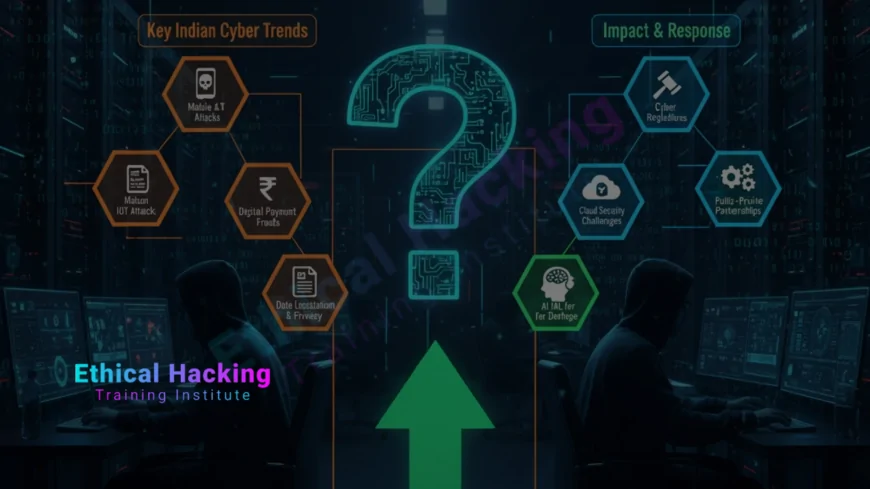
India’s rapid digital transformation has opened up immense opportunities but also new vulnerabilities. As businesses, startups, and government projects increasingly depend on digital infrastructure, cybersecurity has become a top national priority. In 2025, India’s cybersecurity landscape is driven by technological innovations, regulatory changes, and the growing sophistication of cyber threats. Understanding these trends helps individuals and organizations prepare for what lies ahead.
AI and Machine Learning in Cybersecurity
Artificial Intelligence (AI) and Machine Learning (ML) are revolutionizing the way Indian companies detect and respond to cyber threats. AI-driven systems can analyze massive datasets in real time, detect anomalies, and respond to suspicious activities before damage occurs. Organizations are using AI to predict attack patterns and automate incident response. To understand how hackers also leverage AI tools, explore this insightful guide on AI tools hackers are using in ethical hacking and penetration testing.
Rise of Cloud Security and Data Protection
With the growing adoption of cloud computing, Indian companies are investing heavily in cloud security solutions. Cloud Security Posture Management (CSPM) and encryption-based safeguards ensure data privacy and compliance with India’s data protection laws. Businesses are now realizing the need to balance scalability with security by implementing strong access controls and automated compliance checks. To build practical cybersecurity skills, check out online hacking courses designed for beginners and professionals alike.
Zero Trust Architecture Becoming the New Standard
The Zero Trust model is gaining traction among Indian enterprises, especially after several high-profile data breaches in recent years. This approach assumes that no one, whether inside or outside the network, can be trusted by default. Continuous verification, micro-segmentation, and least-privilege access are the core elements of this strategy. Organizations in BFSI, healthcare, and government sectors are adopting Zero Trust to secure sensitive information and maintain compliance.
Growing Demand for Ethical Hackers and Security Experts
As cyber threats rise, so does the demand for certified ethical hackers in India. Ethical hackers identify vulnerabilities before cybercriminals exploit them. The demand for skilled professionals with CEH, OSCP, or CISSP certifications has never been higher. If you want to join this growing field, consider taking a certified ethical hacking course to develop real-world penetration testing expertise.
Increasing Focus on Cybersecurity Awareness and Education
India is seeing a national push toward cybersecurity literacy. Educational institutions, corporates, and government bodies are promoting awareness campaigns to teach employees and students about phishing, ransomware, and secure online behavior. Building a culture of security from the ground up is key to reducing human errors, which remain the top cause of breaches. Those interested in structured learning can explore complete ethical hacking programs for comprehensive education in cybersecurity fundamentals.
Adoption of IoT Security Solutions
With the boom in smart devices, IoT security is becoming critical for India’s digital infrastructure. From smart factories to connected healthcare systems, IoT devices are potential gateways for attackers. Organizations are integrating endpoint protection and network segmentation to protect connected devices. You can read more about securing such systems in the context of penetration testing through Nmap mastery guides to learn how ethical hackers identify vulnerabilities in IoT devices.
Government Regulations and Data Protection Framework
The Digital Personal Data Protection (DPDP) Act of India emphasizes responsible data handling and privacy protection. Businesses are now required to comply with stricter data usage and storage policies. The Indian government is also strengthening national cyber defense mechanisms by establishing specialized CERT-In units and cybersecurity task forces. These initiatives mark a major step toward creating a secure digital ecosystem for all citizens.
| Trend | Impact Area | Adoption Rate in India (2025) |
|---|---|---|
| AI in Cybersecurity | Threat Detection | High |
| Cloud Security | Data Protection | High |
| Zero Trust Architecture | Network Security | Moderate |
Role of Startups in India’s Cybersecurity Innovation
Indian startups are driving cybersecurity innovation by developing homegrown tools for penetration testing, endpoint protection, and AI-driven analysis. These startups are attracting global investment and playing a vital role in securing India’s IT infrastructure. Budding cybersecurity professionals can gain valuable skills through immersive ethical hacker bootcamps that combine theory with practical application.
Conclusion
India’s cybersecurity ecosystem in 2025 is dynamic, forward-thinking, and rapidly evolving. As threats become more sophisticated, AI, Zero Trust, IoT security, and ethical hacking will play pivotal roles in defense strategies. Businesses and individuals must embrace these advancements while prioritizing awareness and continuous education. Staying proactive, informed, and prepared will be key to navigating the digital future securely.
Frequently Asked Questions (FAQs)
What are the top cybersecurity trends in India for 2025?
AI-driven security, Zero Trust, and cloud protection are among the top trends shaping India’s cybersecurity ecosystem.
Why is AI important in cybersecurity?
AI helps automate threat detection and reduce response time to cyberattacks, making defense systems more efficient.
How does the Zero Trust model improve security?
It assumes no user or device can be trusted, ensuring strict verification at every access point.
What is the DPDP Act in India?
The Digital Personal Data Protection Act enforces responsible handling and storage of personal data in India.
Are there good ethical hacking courses in India?
Yes, several institutes offer certified ethical hacking programs that help build strong cybersecurity careers.
What are the common cyber threats for Indian businesses?
Phishing, ransomware, and insider attacks are common cyber threats faced by Indian organizations.
How does cloud security protect Indian companies?
It secures data stored on cloud servers using encryption, monitoring, and compliance automation tools.
Why is IoT security critical in India?
Because the growth of smart devices increases attack surfaces, making IoT protection a key priority.
What role do startups play in cybersecurity?
They innovate tools for penetration testing, malware analysis, and digital threat management.
How can one start a cybersecurity career in India?
Begin with online courses, gain certifications like CEH or OSCP, and practice ethical hacking skills.
Are cybersecurity jobs in demand in India?
Yes, with increasing digitalization, cybersecurity roles are among the most sought-after in IT.
What sectors are investing most in cybersecurity?
Finance, healthcare, and government sectors are leading in cybersecurity investments.
Does India have cybersecurity laws?
Yes, India has laws like the IT Act and DPDP Act to ensure digital safety and data privacy.
How do awareness programs help prevent attacks?
They train individuals to identify phishing and social engineering tactics effectively.
Will AI replace cybersecurity professionals?
No, AI enhances human efforts but cannot replace human judgment and creativity in cybersecurity.
What's Your Reaction?
 Like
0
Like
0
 Dislike
0
Dislike
0
 Love
0
Love
0
 Funny
0
Funny
0
 Angry
0
Angry
0
 Sad
0
Sad
0
 Wow
0
Wow
0