



What Are the Most Popular Bug Bounty Platforms?
Discover the most popular bug bounty platforms used by security researchers and organisations to find and fix vulnerabilities. This guide compares platform features, reward models, scope types, and tips for getting started, plus best practices for responsible disclosure and career-building in bug hunting.
Introduction
Bug bounty platforms connect security researchers with organisations that want to find and fix vulnerabilities before attackers do. Over the past decade these platforms have grown from niche communities into mainstream security programs used by startups and major enterprises alike. For aspiring hunters, bug bounties are both a learning ground and a way to earn rewards for responsible disclosures. Many learners pair hands-on practice with structured coursework from institutes such as Ethical Hacking Institute to accelerate their skills.
What Is a Bug Bounty Platform?
A bug bounty platform is an online marketplace where organisations publish programs that define the scope, rules, and reward structure for vulnerability reports. Researchers submit findings through the platform, where they are triaged, validated, and rewarded. Platforms differ in how they handle program management, triage, and payouts, and choosing the right one can shape your bug hunting experience.
The platforms also provide educational resources, community challenges, and sometimes mediation when disputes arise. If you want to study how professionals use modern tooling and AI in security workflows, you may find helpful material from providers offering detailed platforms that show toolchains and workflows.
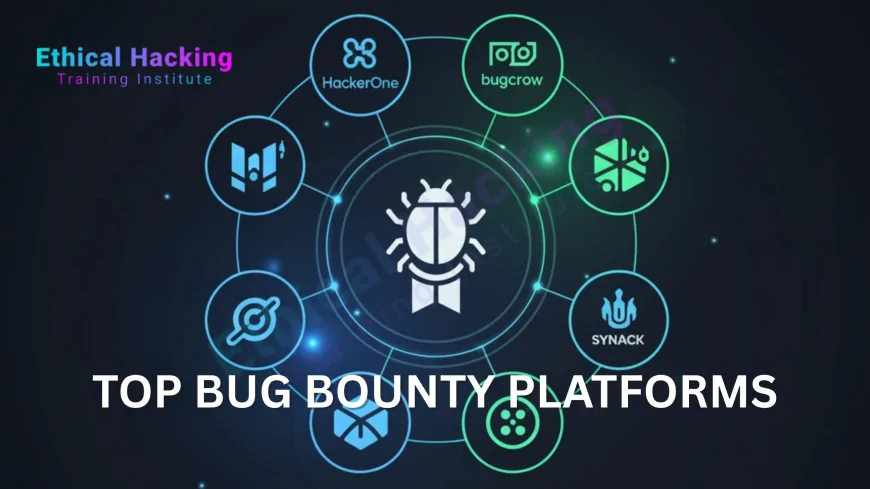
HackerOne — The Market Leader
HackerOne is widely regarded as one of the largest and most influential bug bounty platforms. It hosts programs from startups to global companies and offers public and private programs, vulnerability disclosure support, and paid triage services. HackerOne emphasises community building and transparency, offering leaderboards, hall-of-fame pages, and training resources to help new researchers get started.
Bugcrowd — Crowdsourced Protection
Bugcrowd focuses on crowdsourced security with a strong managed services offering. It supports public bounties, private invites, and managed programs where Bugcrowd helps with triage and remediation workflows. The platform is known for curated researcher cohorts and program levels that reward high-skill findings.
Many hunters combine hands-on learning with guided courses to master the techniques used on these platforms; for curated educational paths, consider structured research tracks that map learning to practical challenges.
Synack — Vetting and OpSec
Synack uses a private model that vets researchers through a rigorous screening process. Participants become part of an authorised, elite crowd that performs assessments against vetted targets, often under NDA and with higher compensation for verified results. Synack blends human expertise with automated scanning to accelerate vulnerability discovery for large enterprises.
Open Bug Bounty and Other Open Programs
Open Bug Bounty and other open platforms prioritise responsible disclosure and often support reporting against less formal targets, such as websites without dedicated security teams. These platforms can be a good way to practise responsible reporting etiquette and ESG-style disclosure when formal programs are not available.
If you want to combine a formal program approach with course-backed skills, some institutes include practical modules that show how to approach open programs and convert findings into quality reports. For more advanced career guidance and certification pathways, check content that maps coursework to industry paths.
Platform Comparison: Key Features
| Platform | Model | Notable Strength |
|---|---|---|
| HackerOne | Public & Private | Large community, transparency |
| Bugcrowd | Managed & Crowdsourced | Managed triage and curated cohorts |
| Synack | Private, invite-only | Higher payouts, strict vetting |
| Open Bug Bounty | Open disclosure | Low barrier to entry |
How Reward Models Differ
Platforms use different reward models. Public bounties often pay per validated finding with ranges set by severity. Private or invite-only programs may offer higher rates and bonus incentives for critical defects. Managed platforms sometimes work on retainer models where organisations pay for continuous coverage and triage. Understanding payout structures and expected timelines is essential before investing time in a target.
How to Choose the Right Platform as a Researcher
Choose platforms based on your goals. If you are starting, open programs and broad public bounties are good for practice. If you want steady income and higher rewards, focus on private invites or platforms that vet researchers. Many bug hunters build profiles across multiple platforms to diversify opportunities and learn different triage expectations.
Practical learning and credibility also come from well-structured training; many researchers augment their practical hours with certifications and hands-on courses that mirror real bounty workflows. For example, course providers often map labs to real-world scenarios used by top platforms, which helps when preparing high-quality reports.
Best Practices for Submitting High-Quality Reports
High-quality reports are clear, reproducible, and concise. Include steps to reproduce, impact assessment, PoC code or screenshots, suggested remediation, and affected versions. Avoid noisy or duplicate reports. Platforms prioritise quality, so focusing on clarity and business impact increases the likelihood of validation and higher rewards.
Legal and Ethical Considerations
Always follow program scope and rules. Testing out-of-scope assets can lead to legal trouble. Use safe disclosure practices and respect privacy and data retention rules. When in doubt, consult the program policy or opt for coordinated disclosure through platform channels. Ethical conduct builds reputation, and many respected hunters gain recognition and career opportunities by following these rules.
Tools and Techniques Commonly Used by Hunters
Successful hunters combine manual testing with automated tooling: web proxies, fuzzers, static analysis, and automated scanners. Modern workflows increasingly incorporate AI-assisted reconnaissance and exploit generation. To stay current, many practitioners rotate between platforms and structured learning resources to refine both manual and tool-assisted techniques.
How Organisations Can Choose a Platform
Organisations should evaluate platforms by the quality of researcher pools, triage services, legal controls, and cost models. Managed services reduce operational overhead, while public programs increase exposure and often drive rapid discovery. Align the platform choice with compliance requirements and internal remediation capacity.
Table: Choosing a Platform — Quick Checklist
| Consideration | Question to Ask | Recommended Action |
|---|---|---|
| Scope Control | Do you need private testing? | Choose managed or private programs |
| Triage Support | Can you handle report validation? | Use platforms with triage services |
| Budget | What is your expected payout range? | Set clear reward tiers in program |
Getting Started Safely as a New Hunter
Start with beginner-friendly programs, learn the rules, and practise on intentionally vulnerable labs and platforms. Build a reproducible reporting template and keep notes of techniques that worked. Over time, your profile reputation will enable private invites and better opportunities. Many hunters also combine study with instructor-led programs and mentorship offered by recognised training providers to accelerate progress.
Conclusion
Bug bounty platforms have transformed how organisations find vulnerabilities and how security researchers build careers. Choosing the right platform depends on goals, whether that is learning, earning, or providing continuous security coverage. Focus on high-quality reports, respect program rules, and keep learning through practice and structured courses. Over time, bug hunting can be a rewarding path that improves security for everyone.
Frequently Asked Questions
What is the difference between public and private bug bounty programs?
Public programs are open to any registered researcher, while private programs restrict participation to invited or vetted researchers for targeted testing.
Which platform pays the most?
Payouts vary by program and severity; Synack and private HackerOne programs often offer higher average rewards due to strict vetting or enterprise budgets.
Can beginners succeed on bug bounty platforms?
Yes, beginners can succeed by focusing on low-hanging vulnerabilities, practicing on labs, and writing clear, reproducible reports.
Are bug bounties legal?
Yes when you follow the program's scope and rules. Testing outside of scope can be illegal and is strongly discouraged.
Do platforms help with triage?
Some platforms offer triage and validation services, which can speed up vulnerability handling for organisations with limited security staff.
How do platforms verify duplicates?
Platforms compare incoming reports with existing findings and use triage teams to determine duplicates before awarding bounties.
What should a good bug report include?
A good report includes clear steps to reproduce, PoC (screenshots or exploit code), impact assessment, affected versions, and suggested fixes.
Can reporting lead to job opportunities?
Yes, many hunters transition into security roles; strong disclosures and a good reputation often attract recruiters from security teams.
How do researchers avoid legal issues?
By strictly following program scope, respecting disclosure timelines, and consulting platform policies when uncertain.
Do platforms provide training?
Many platforms and partner organisations provide learning resources, labs, and community guidance to help new researchers improve.
What is coordinated disclosure?
Coordinated disclosure involves privately reporting a vulnerability and allowing the organisation time to fix it before public release.
How long does triage usually take?
Triage time varies from hours to weeks depending on platform backlog, complexity of the report, and the organisation’s responsiveness.
Can companies run their own bug bounty programs?
Yes, organisations can run in-house or self-hosted programs, but platforms simplify recruitment, payment, and triage workflows.
What are common beginner mistakes?
Common mistakes include submitting noisy reports, ignoring scope, poor reproduction steps, and testing high-risk actions without permission.
Where can I learn more about bug hunting?
Combine hands-on practice with structured courses and community write-ups. Training resources and mentorship from recognised providers help accelerate learning.
What's Your Reaction?
 Like
0
Like
0
 Dislike
0
Dislike
0
 Love
0
Love
0
 Funny
0
Funny
0
 Angry
0
Angry
0
 Sad
0
Sad
0
 Wow
0
Wow
0