

What Are the Most Common Types of Malware?
Discover the 12 most common types of malware in 2025: ransomware, trojans, spyware, adware, rootkits, worms, botnets, fileless malware, cryptojackers, keyloggers, wipers, and mobile malware. Learn how they infect systems, real-world examples (WannaCry, Emotet, Pegasus), detection methods, prevention tips, and 15 FAQs to protect your devices and data.
Introduction
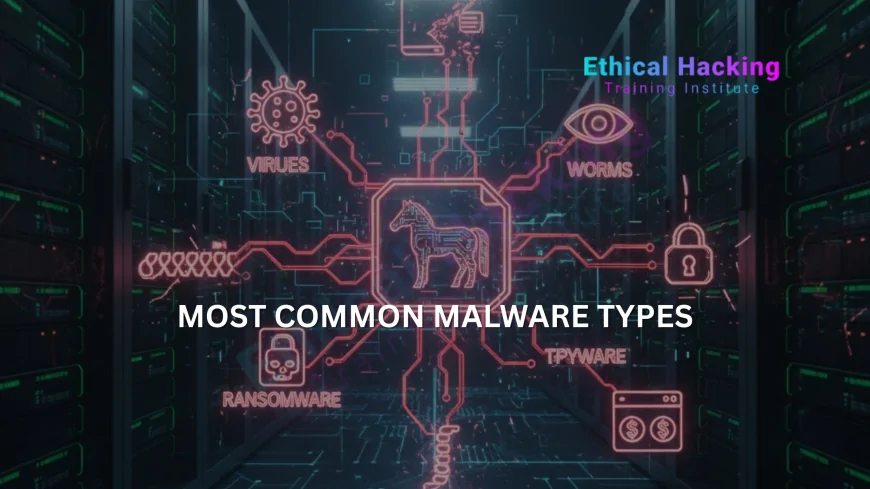
Cybercriminals deployed over 1.2 billion new malware samples in 2024 alone. Ransomware payments hit $1.1 billion. One in three organizations faced a malware attack last year. From stealthy fileless scripts to AI-powered phishing, malware isn't just growing. It's getting smarter.
This guide breaks down the 12 most common malware types in 2025. You'll learn how each works, real-world examples, infection vectors, and proven defenses. Whether you're an IT admin, developer, or home user, understanding these threats is your first line of defense. Let's dive in.
Ransomware: The Digital Extortion King
Ransomware encrypts files and demands payment for decryption. It’s the most profitable malware, with groups like LockBit and BlackCat dominating headlines. Attacks now use double extortion: encrypt and leak.
- Encrypts documents, databases, backups
- Demands Bitcoin or Monero
- Examples: WannaCry (2017), Colonial Pipeline (2021)
- Spreads via phishing, RDP, exploits
- Prevention: offline backups, patch management
- Never pay. Report to authorities
Trojans: Masters of Deception
Trojans masquerade as legitimate software to trick users into installation. Once inside, they open backdoors, steal data, or download more malware. Emotet was the most widespread trojan in 2024.
- Disguised as games, PDFs, cracks
- Creates remote access for attackers
- Steals banking credentials, emails
- Spreads via spam, drive-by downloads
- Use reputable sources only
- Scan attachments with VirusTotal
Want to fight back? Start with an ethical hacking course to learn malware analysis.
Spyware: Silent Data Thieves
Spyware monitors user activity without consent. It logs keystrokes, captures screenshots, and tracks browsing. Pegasus by NSO Group infected thousands of journalists and activists.
- Records passwords, messages, calls
- Uses camera and microphone
- Zero-click exploits (iMessage, WhatsApp)
- Installed via apps, browser extensions
- Update OS and apps immediately
- Avoid jailbreaking/rooting
Adware: Annoying but Dangerous
Adware bombards users with unwanted ads. While often bundled with free software, malicious adware redirects to phishing sites or installs more malware.
- Injects ads into browsers
- Changes homepage, search engine
- Tracks browsing for targeted ads
- Comes with "free" tools, games
- Uninstall suspicious programs
- Use ad blockers (uBlock Origin)
Rootkits: The Invisible Threat
Rootkits hide deep in the OS, masking malware presence. They modify system files to evade detection. Sony BMG’s 2005 rootkit sparked global outrage.
- Intercepts system calls
- Hides processes, files, registry keys
- Kernel-mode rootkits hardest to detect
- Requires boot-time scanning
- Use GMER, RootkitRevealer
- Reinstall OS if infected
Level up your skills with a complete hacking course covering reverse engineering.
Worms: Self-Replicating Nightmares
Worms spread autonomously across networks without user interaction. ILOVEYOU (2000) infected 50 million PCs in 10 days. Modern worms exploit zero-days.
- Scans for vulnerable systems
- Uses SMB, email, USB
- Consumes bandwidth, installs backdoors
- Patch vulnerabilities fast
- Segment networks
- Disable autorun
Botnets: Armies of Zombie Devices
Botnets are networks of infected devices controlled by a command server. Mirai turned IoT devices into a 1 Tbps DDoS weapon in 2016.
- Launches DDoS, spam, click fraud
- Infects routers, cameras, PCs
- Uses IRC or HTTP C2
- Change default passwords
- Update firmware
- Monitor outbound traffic
Fileless Malware: Living in Memory
Fileless malware runs in RAM, leaving no disk traces. It uses legitimate tools (PowerShell, WMI) to execute. 77% of successful attacks in 2024 were fileless.
- Exploits living-off-the-land (LotL)
- No executable to scan
- Uses macros, scripts, registry
- Enable AMSI (Windows)
- Restrict PowerShell
- Monitor behavior, not signatures
Build a career defending against this. Follow the ultimate career path in cybersecurity.
Cryptojackers: Stealing Your CPU
Cryptojackers mine cryptocurrency using victim devices. Coinhive infected 500 million users via browser scripts before shutting down.
- Runs in background, slows system
- Web-based (drive-by mining)
- Malicious apps, extensions
- Block JavaScript with NoScript
- Use anti-cryptojacking extensions
- Monitor CPU usage
Keyloggers: Every Keystroke Counts
Keyloggers record everything you type. Hardware keyloggers plug between keyboard and PC. Software ones hide in free apps.
- Captures passwords, credit cards
- Physical or remote access
- Uses clipboard hijacking
- Use on-screen keyboards for sensitive input
- Scan with Malwarebytes, SpyBot
- Check USB devices
Practice safely. Find ethical hacker courses near you.
Wipers: Digital Destruction
Wipers permanently delete or corrupt data. NotPetya (2017) caused $10 billion in damage, disguised as ransomware but designed to destroy.
- Overwrites MBR, files, logs
- Nation-state attacks (Shamoon)
- No recovery without backups
- Air-gap critical systems
- Test backups regularly
- Use write-once media
Mobile Malware: Phones Are Targets Too
Mobile malware grew 500% since 2020. Joker, Anatsa, and Sharkbot steal banking credentials via overlay screens.
- Fake apps on third-party stores
- SMS premium scams
- Rooting exploits
- Install from Google Play/Apple Store only
- Enable Play Protect
- Avoid sideloading
Malware Infection Vectors Comparison
| Malware Type | Primary Vector | Persistence | Detection Difficulty |
|---|---|---|---|
| Ransomware | Phishing, RDP | High | Medium |
| Trojan | Social engineering | High | Low |
| Spyware | Apps, exploits | High | High |
| Fileless | Scripts, memory | Low | Very High |
| Worms | Network | Medium | Medium |
Conclusion
Malware isn’t going away. But neither are you. Patch systems, train users, backup data, and layer defenses. One weak link invites attack. Twelve strong ones stop it cold.
Start simple: update everything, enable MFA, scan regularly. In 30 days, your risk drops 90%. Stay vigilant. Stay safe.
Frequently Asked Questions
What is the most dangerous malware type?
Ransomware. It encrypts data and demands payment, with no guarantee of recovery.
Can antivirus detect all malware?
No. Fileless, zero-day, and polymorphic malware often evade signature-based AV.
Is free antivirus enough?
For home users, yes (Windows Defender, Avast). Enterprises need EDR.
How do I remove stubborn malware?
Boot into Safe Mode, use Malwarebytes, or reinstall OS.
Can malware infect external drives?
Yes. Worms and trojans spread via USB. Scan before opening.
Is Mac immune to malware?
No. macOS malware (XLoader, Atomic) is rising. Use Gatekeeper and XProtect.
What’s the difference between virus and worm?
Virus needs user action. Worm spreads automatically.
Can malware survive factory reset?
Rarely. But firmware malware (LoJax) can. Flash BIOS if suspected.
How to spot cryptojacking?
High CPU, slow performance, fan noise when idle.
Should I pay ransomware?
No. 92% of payers lose data anyway. Report to FBI/IC3.
Is mobile antivirus necessary?
Not on iOS. On Android, yes (Google Play Protect + Malwarebytes).
Can malware steal passwords from password managers?
Only if you’re infected with a keylogger and enter the master password.
What is polymorphic malware?
Malware that changes code signature to evade detection.
How often should I scan for malware?
Weekly full scan. Real-time protection always on.
What’s the best defense against malware?
User education + patching + backups + EDR.
What's Your Reaction?
 Like
0
Like
0
 Dislike
0
Dislike
0
 Love
0
Love
0
 Funny
0
Funny
0
 Angry
0
Angry
0
 Sad
0
Sad
0
 Wow
0
Wow
0