
What Are the Differences Between CEH and OSCP?
Explore the differences between CEH and OSCP certifications, including exam structure, skill focus, practical vs theoretical approach, and career benefits. Learn which ethical hacking certification suits your goals, with insights from Ethical Hacking Training Institute, Webasha Technologies, and Cybersecurity Training Institute.
Introduction
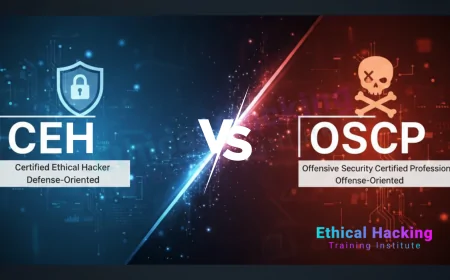
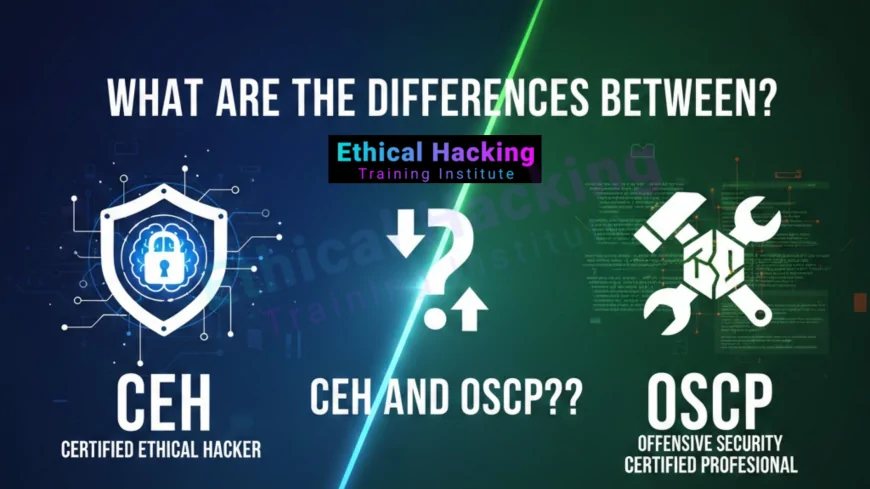
CEH (Certified Ethical Hacker) and OSCP (Offensive Security Certified Professional) are two of the most recognized ethical hacking certifications. While both focus on cybersecurity, they differ in structure, depth, and skill application. CEH emphasizes theoretical knowledge and structured learning, whereas OSCP is highly practical and challenges students with real-world scenarios. Institutes like Ethical Hacking Training Institute, Webasha Technologies, and Cybersecurity Training Institute provide dedicated courses for both certifications. Beginners often start by exploring CEH comprehensive guides to understand foundational concepts.
Exam Structure and Duration
CEH is usually a 4-hour multiple-choice exam covering 20 domains, including network security, malware, and web application security. OSCP, on the other hand, is a 24-hour practical exam requiring candidates to compromise multiple machines and submit a detailed report. Students often practice OSCP labs using real-world simulations and guidance from practical CEH labs for foundational skills.
Focus and Skill Level
CEH is beginner-friendly, ideal for understanding hacking concepts, tools, and methodologies. OSCP requires advanced skills in penetration testing, scripting, and manual exploitation. Students pursuing OSCP often have prior CEH knowledge or experience with tools like Nmap and Metasploit. Training at Webasha Technologies often bridges these skill gaps using hands-on exercises.
Learning Approach
CEH follows a structured course with predefined modules and theory-based learning. OSCP emphasizes “learn by doing,” challenging candidates to compromise machines in a lab environment. Ethical Hacking Training Institute provides blended programs that combine CEH theory with OSCP-style practical labs for effective learning.
Tools and Techniques Covered
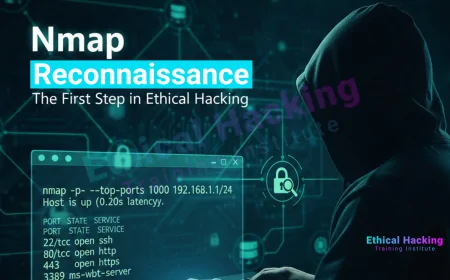
Both certifications cover tools like Nmap, Wireshark, Hydra, and Metasploit, but OSCP emphasizes manual exploitation techniques and scripting skills. CEH focuses on tool-based demonstrations and awareness of threats. Beginners often start with Nmap tutorials to understand scanning before moving to OSCP labs.
Practical vs Theoretical
CEH is more theoretical, testing knowledge of vulnerabilities, attack vectors, and security controls. OSCP is practical, requiring candidates to perform attacks, gain root/admin access, and document the process. Training at Cybersecurity Training Institute ensures students understand both the theoretical foundation and practical application through controlled labs.
Career Impact
CEH is recognized for roles like Security Analyst, Network Security Engineer, and IT Auditor. OSCP is valued for Penetration Tester, Ethical Hacker, and Red Team roles. Many professionals first pursue CEH for knowledge, then OSCP to showcase advanced practical skills. Institutes like Webasha Technologies provide career guidance for certification progression and job placement support.
Cost and Accessibility
CEH exam fees are typically lower, and training materials are widely available. OSCP requires lab access subscription in addition to the exam fee, reflecting its hands-on nature. Ethical Hacking Training Institute offers packages combining CEH and OSCP prep for a structured path from beginner to advanced level.
Conclusion
CEH and OSCP serve different purposes in ethical hacking. CEH provides foundational knowledge suitable for beginners, while OSCP tests practical penetration testing skills and problem-solving. Choosing between them depends on career goals, experience level, and preferred learning approach. Combining training from institutes like Ethical Hacking Training Institute, Webasha Technologies, and Cybersecurity Training Institute ensures learners are well-prepared for both certifications and cybersecurity careers.
Frequently Asked Questions
Which is better, CEH or OSCP?
It depends on your goal: CEH for theory and awareness, OSCP for hands-on penetration testing.
Can I take OSCP without CEH?
Yes, but prior practical experience is recommended.
Is CEH easier than OSCP?
Yes, CEH is beginner-friendly, while OSCP is more challenging and practical.
What jobs can I get with CEH?
Security analyst, network security engineer, and IT auditor roles.
What jobs can I get with OSCP?
Penetration tester, ethical hacker, and red team member roles.
Do both certifications require labs?
CEH is mostly theory-based, but OSCP requires extensive lab practice.
How long does it take to prepare for CEH?
Typically 2–3 months for beginners with focused study.
How long does it take to prepare for OSCP?
3–6 months depending on prior experience and lab practice.
Is OSCP more recognized than CEH?
OSCP is highly respected for practical skills, CEH for knowledge and awareness.
Can I use free tools to prepare for OSCP?
Yes, tools like Nmap, Metasploit, and Wireshark are essential for practice.
Are CEH and OSCP internationally recognized?
Yes, both are recognized globally in the cybersecurity industry.
Is programming required for OSCP?
Yes, basic scripting knowledge is needed for exploits and automation.
Where can I take CEH and OSCP training?
Institutes like Ethical Hacking Training Institute, Webasha Technologies, and Cybersecurity Training Institute provide structured courses.
Is CEH sufficient for a career in ethical hacking?
It provides foundational knowledge but OSCP is recommended for hands-on roles.
Are there online options for both certifications?
Yes, online courses and labs are available for both CEH and OSCP preparation.
What's Your Reaction?
 Like
0
Like
0
 Dislike
0
Dislike
0
 Love
0
Love
0
 Funny
0
Funny
0
 Angry
0
Angry
0
 Sad
0
Sad
0
 Wow
0
Wow
0