

What Are the Best Online Platforms to Practice Ethical Hacking?
Discover the best online platforms to practice ethical hacking, from beginner friendly labs and CTFs to advanced exploit development environments. Learn which platforms suit your level, how to choose safely, and practical tips to accelerate your skills and build a portfolio employers will notice.
Introduction
Practical experience is the fastest route to becoming a competent ethical hacker. Theory helps, but hands on labs, Capture The Flag challenges, and intentionally vulnerable machines teach you how to think like an attacker and how to defend systems. The good news is there are many online platforms tailored to different skill levels, learning styles, and career goals. This guide walks through the best options, how they differ, and how to use each platform to build a strong, job ready portfolio.
Why Practice Matters for Ethical Hackers
The difference between reading about an exploit and successfully executing it in a live environment is large. Practice builds muscle memory for enumeration, tooling, and pivoting, and it helps you learn how to document findings and produce clear reports. Practical exercises also expose gaps in your knowledge so you can target study. Many professionals start with basic scanning and progress to advanced exploitation and post exploitation workflows. Tools that reveal real network and host behavior, like Nmap, are often the first items in a learner’s toolkit and are used across most platforms.
Types of Platforms and What They Teach
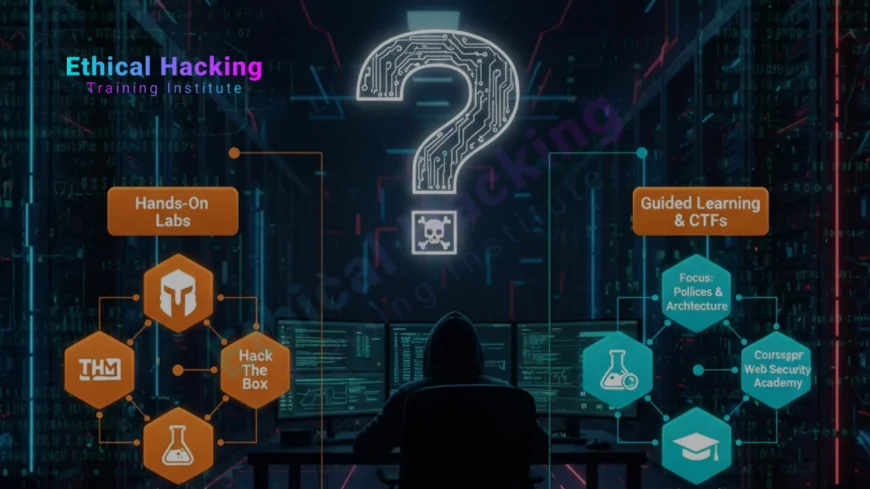
Platforms generally fall into a few categories: guided learning labs, hands on boxes and VMs, CTFs, and challenge marketplaces. Guided platforms teach concepts step by step, while box based platforms give you a target and expect you to find the path. CTFs emphasize speed and creative problem solving with short challenges that focus on one skill. Challenge marketplaces offer dedicated scenarios and walkthroughs. Choosing the right mix helps you build foundational skills first, then test creativity and endurance under pressure.
Best Beginner Friendly Platforms
Beginners should use platforms that teach fundamentals with guided tasks and explanations. Popular beginner platforms offer progressive tracks, friendly interfaces, and community help. Look for interactive lessons that explain networking basics, HTTP, authentication, and common vulnerabilities so you get immediate feedback while practicing. Many learners combine guided rooms with small, intentionally vulnerable VMs to reinforce concepts. For structured, stepwise learning that complements hands on practice, a full course can be a useful companion to labs.
Top Intermediate and Advanced Practice Platforms
After mastering basics, move to platforms that host realistic, hard boxes and simulated networks. These sites present real world-like scenarios: multi host labs, pivoting, chained exploits, and hardened services. They push you to research, script, and improvise. Advanced platforms demand persistence and emphasize reporting and clean evidence capture. If you aim for certifications like OSCP, these platforms are essential for building the practical skills and time management needed to pass a long form, hands on exam. Platforms that provide full lab networks and time limited objectives are especially valuable for exam readiness.
Capture The Flag Platforms and Competitions
CTF platforms focus on discrete, solvable challenges across categories such as web, crypto, reversing, forensic, and binary exploitation. They are great for building specific technical skills and learning how to think laterally. CTFs can be beginner friendly or highly advanced. Participating in CTFs also helps you build a public profile through write ups and scores, which employers like to see. For continuous improvement, alternate between guided labs and CTF puzzles to train both breadth and depth of your skill set.
Platforms for Building a Portfolio and Reporting Skills
Employers value not only the ability to find vulnerabilities but also the ability to document them clearly. Some platforms include reporting workflows and scoring based on evidence and remediation suggestions. Use these to practice writing professional reports, generating proof of concept artifacts, and creating reproducible steps. Sharing write ups or a public report portfolio on GitHub or a personal blog demonstrates your thought process and can distinguish you during hiring. Many bootcamps and training providers also offer mentorship focused on building a polished portfolio and interview readiness.
Home Labs, Virtual Machines, and Local Practice
In addition to hosted platforms, running vulnerable virtual machines locally gives you maximum control and privacy. Tools like vulnerable lab distributions, intentionally insecure VMs, and containerized challenges let you practice exploit development and debug without network constraints. Combine local labs with cloud snapshots for scalable practice. Use automation to reset lab states and document your steps. If you want instructor led or location based options, check local training that sometimes provide dedicated lab environments and mentor feedback.
How to Choose the Right Platform for Your Goals
Match platforms to goals and learning style. If you are new, choose guided platforms with learning tracks and strong community support. If you plan to be a pentester, prioritize labs that simulate enterprise networks and offer privilege escalation and pivoting practice. For red teaming and exploit development, pick platforms with binary exploitation and reverse engineering challenges. Consider cost, ease of use, available hints, and whether the platform encourages reporting. Also check whether the platform supports certifications or provides official preparation material for exams like OSCP or CEH.
Safety, Legality, and Ethical Guidelines
Practice only on authorized platforms or your own lab. Unauthorized testing on third party systems is illegal and unethical. Use the platform’s legal scope, respect rules of engagement, and follow responsible disclosure practices when you discover live vulnerabilities. Platforms usually provide clear terms and sandboxed environments, which is why it is important to restrict testing to these venues. As you progress, document permissions, and obtain written authorization before testing any production or third party system.
Practical Study Plan and Progression
Build a study plan that alternates learning modes: theory, guided labs, box hunts, and CTFs. Start with foundational topics like networking, Linux, and web technologies, then practice enumeration and basic exploitation. Gradually increase difficulty and track time to simulate exam conditions. Keep a log of commands, notes, and write ups for each box you solve. Over time, focus on report writing and mitigation suggestions to show employers a full cycle skill set. Many learners also supplement practice with curated certification prep and specialized modules such as web app testing and cloud security modules.
Comparison Table: Popular Platforms at a Glance
| Platform | Best For | Strengths | Cost |
|---|---|---|---|
| TryHackMe | Beginners | Guided rooms, learning paths, easy UI | Free tier, paid plans |
| Hack The Box | Intermediate to advanced | Hard boxes, active community, labs | Paid subscription with free challenges |
| VulnHub | Local VM practice | Download VMs, offline practice, variety | Free |
| CTFtime / CTF platforms | Skill sharpening | Timed challenges, team play, diverse skills | Mostly free |
| Platform Labs (OSCP style) | Exam prep | Realistic networks, long form labs | Paid |
Conclusion
The best online platforms to practice ethical hacking depend on your level and goals. Start with guided sites to learn fundamentals, progress to harder boxes and lab networks to build practical skills, and use CTFs to sharpen problem solving. Always practice ethically and on authorized infrastructure, document your learning with write ups and reports, and continuously challenge yourself with progressively tougher targets. A consistent, mixed approach accelerates both competence and confidence in real world security roles.
Frequently Asked Questions
Which platform should I start with as a complete beginner?
TryHackMe is well suited for beginners because it offers guided rooms, learning paths, and immediate feedback that teach core concepts step by step.
Is Hack The Box only for advanced users?
Hack The Box has content for all levels, but many of its popular boxes target intermediate to advanced users. Start with the beginner tracks or retired machines to build confidence.
Can I practice ethical hacking for free?
Yes. Platforms like VulnHub and many CTF events are free. Free tiers on platforms like TryHackMe let you learn a lot before upgrading to paid plans.
How do CTFs help my learning?
CTFs teach focused skills in short bursts. They force you to learn new techniques quickly and to collaborate, both of which are valuable in real world engagements.
Should I use local VMs or hosted labs?
Both are useful. Local VMs give full control and privacy, while hosted labs provide convenience and realistic networked scenarios. Use a mix for best results.
How many hours per week should I practice?
Consistency matters more than hours. Aim for regular practice, for example 5 to 10 hours per week, and increase as you prepare for certifications or competitions.
How do I build a portfolio from these platforms?
Create detailed write ups for boxes you solve, publish them on GitHub or a personal blog, and include remediation suggestions and lessons learned to show employers your thinking.
Are these platforms safe and legal to use?
Yes, when you use official, sandboxed platforms. Avoid testing third party systems without explicit permission to stay within legal and ethical boundaries.
Can practice on these platforms help me pass certifications?
Yes. Hands on labs and timed challenges are excellent preparation for practical exams like OSCP and useful for lab portions of other certs.
Do platforms provide community support?
Many platforms have active forums, Discord communities, and mentor programs that help beginners and advanced users alike. Use community hints sparingly to improve problem solving.
Should I focus on web, binary, or network challenges first?
Start with web and networking basics because they are most common in real world assessments. Branch into binaries and reversing as your skills mature.
How do I track progress across platforms?
Keep a learning journal, log solved boxes, note techniques learned, and measure improvements in time to solve and breadth of categories covered.
Can employers verify my platform activity?
Some platforms offer public profiles, certificates, or badges that you can share with employers to demonstrate active practice and skills.
Is it better to train solo or in a team?
Both have benefits. Solo work builds deep problem solving skills, while team practice improves communication, division of labor, and exposure to different approaches.
Where can I find recommended guided courses that pair with these platforms?
Many learners combine platforms with comprehensive courses that include labs and mentorship. Explore curated course bundles and local training options for structured paths and classroom support.
What's Your Reaction?
 Like
0
Like
0
 Dislike
0
Dislike
0
 Love
0
Love
0
 Funny
0
Funny
0
 Angry
0
Angry
0
 Sad
0
Sad
0
 Wow
0
Wow
0