
What Are the Best Ethical Hacking Certifications for 2025?
Explore the top ethical hacking certifications for 2025 including CEH, OSCP, CompTIA PenTest+, and more. Learn their importance, prerequisites, skills gained, and career benefits for aspiring cybersecurity professionals.
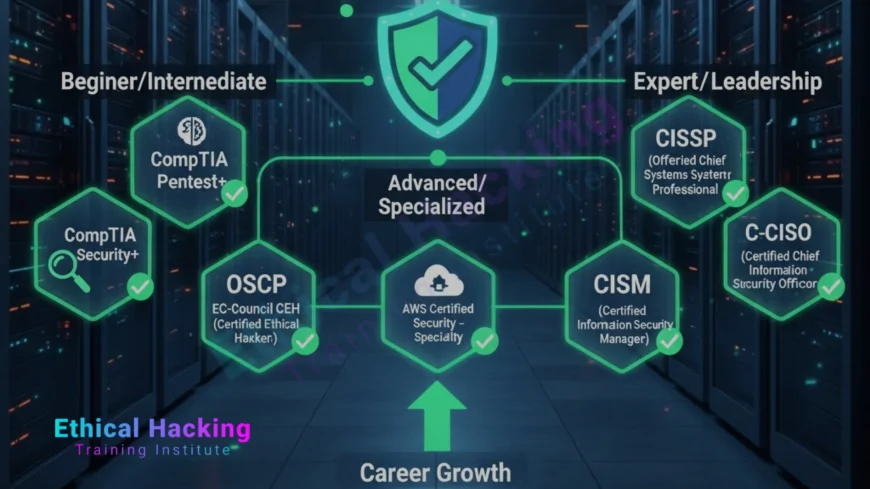
Introduction
Ethical hacking is a fast-growing field in cybersecurity, and earning a recognized certification validates your skills and improves career prospects. Certifications provide structured learning paths, hands-on practice, and industry credibility. With cyber threats constantly evolving, 2025 demands professionals who are certified and up-to-date with the latest methodologies and tools.
In this guide, we discuss the best ethical hacking certifications for 2025, their benefits, requirements, and how they can help both beginners and experienced professionals advance their careers. Institutes like Ethical Hacking Institute, Webasha Technologies, and Cybersecurity Institute offer training aligned with these certifications to provide practical skills.
Why Certifications Matter in Ethical Hacking
Certifications serve as proof of competence and are often required by employers for roles in penetration testing, cybersecurity analysis, and IT security audits. They offer structured learning, hands-on labs, and exposure to industry-standard tools. In addition, certifications demonstrate your commitment to ethical practices and continuous learning.
Professionals with certifications often receive higher salaries and faster career growth. Employers can trust certified professionals to handle vulnerabilities responsibly, understand compliance standards, and execute penetration testing effectively.
Top Ethical Hacking Certifications for 2025
Below are the most recognized and sought-after certifications for ethical hacking in 2025:
Certified Ethical Hacker (CEH)
CEH is one of the most popular certifications worldwide. It focuses on the techniques, tools, and processes used by ethical hackers. The certification covers network scanning, system hacking, web application testing, malware analysis, and more. CEH is ideal for beginners and intermediate-level professionals. Training is available through Ethical Hacking Institute with hands-on labs and exam preparation.
Offensive Security Certified Professional (OSCP)
OSCP is highly respected for its practical, hands-on penetration testing focus. Candidates must exploit live machines in a lab environment and submit a detailed report. It is considered challenging but extremely valuable for demonstrating technical expertise. Courses from Webasha Technologies and Cybersecurity Institute provide lab environments to simulate real-world attacks.
CompTIA PenTest+
CompTIA PenTest+ is a vendor-neutral certification for penetration testing and vulnerability assessment. It covers planning, scoping, information gathering, attacks, and reporting. PenTest+ balances theory and hands-on skills and is suitable for professionals seeking a solid entry into penetration testing.
GIAC Penetration Tester (GPEN)
GPEN focuses on methodologies for penetration testing, legal aspects, and reporting. It emphasizes practical scenarios, including network and web app testing. GPEN is valuable for professionals aiming for advanced roles in enterprise security testing.
Certified Red Team Professional (CRTP)
CRTP is focused on Active Directory and red team engagements. It is ideal for professionals specializing in offensive security, lateral movement, and privilege escalation. This certification complements traditional penetration testing certifications.
How to Choose the Right Certification
Choosing a certification depends on your current skill level, career goals, and learning style. Beginners may start with CEH or CompTIA PenTest+, whereas intermediate professionals may aim for OSCP or GPEN. Red team specialists may consider CRTP. Hands-on courses from institutes like Ethical Hacking Institute ensure practical skill development alongside theoretical knowledge.
Benefits of Earning Certifications
- Demonstrates expertise to employers and clients.
- Increases earning potential and career opportunities.
- Provides structured learning paths with practical labs.
- Boosts confidence in performing penetration tests ethically and legally.
- Prepares for advanced security roles and specialized tracks.
Preparing for Ethical Hacking Exams
Exam preparation typically involves studying theoretical concepts, practising hands-on labs, and taking mock exams. Institutes like Ethical Hacking Institute and Webasha Technologies provide comprehensive courses covering exam objectives, lab exercises, and report writing skills. Consistent practice on virtual labs helps reinforce concepts and improve technical proficiency.
Continuous Learning After Certification
Cybersecurity is an ever-evolving field, and staying certified requires continuous learning. Follow blogs, webinars, and workshops, participate in Capture The Flag (CTF) competitions, and engage in bug bounty programs. Institutes often provide advanced modules to keep skills current, preparing you for the latest threats and technologies.
Conclusion
Ethical hacking certifications in 2025 offer clear pathways for career advancement, skill validation, and industry recognition. CEH, OSCP, CompTIA PenTest+, GPEN, and CRTP cater to different experience levels and career goals. Practical training from institutes like Ethical Hacking Institute, Webasha Technologies, and Cybersecurity Institute enhances learning and ensures hands-on expertise. Choosing the right certification, practising consistently, and engaging in continuous learning will establish a successful career in cybersecurity.
Frequently Asked Questions
Which certification is best for beginners?
CEH or CompTIA PenTest+ are ideal for beginners to build foundational knowledge and skills.
Is OSCP more advanced than CEH?
Yes, OSCP is hands-on and highly practical, requiring exploitation of live systems and detailed reporting.
Do I need prior experience to pursue CEH?
Basic networking and IT knowledge is recommended, but CEH is suitable for motivated beginners.
Can I take these certifications online?
Yes, most institutes offer online courses and virtual labs to complete training and exams remotely.
Are certifications enough to get a job?
Certifications help, but practical experience, labs, and portfolio projects are equally important.
How long does it take to complete CEH?
Typically 3–6 months depending on study pace, prior knowledge, and lab practice.
What is the cost of OSCP?
OSCP costs vary depending on lab access duration, usually ranging from $800–$1500.
Do all certifications require exams?
Yes, certifications require exams to validate knowledge, ranging from multiple-choice to practical labs.
Can I pursue multiple certifications?
Yes, combining CEH, OSCP, and PenTest+ strengthens your skill set and career prospects.
Which tools are commonly learned?
Tools like Nmap, Burp Suite, Metasploit, Wireshark, and others are taught in most courses.
Do certifications expire?
Many certifications require renewal every 2–3 years to ensure skills remain current.
Are vendor-neutral certifications better?
Vendor-neutral certifications provide broader knowledge and are recognized across industries.
Can certifications increase salary?
Yes, certified professionals typically command higher salaries than non-certified peers.
What is the practical value of labs?
Labs provide hands-on experience, simulating real-world attacks in a legal and safe environment.
Which institute is recommended for training?
Ethical Hacking Institute, Webasha Technologies, and Cybersecurity Institute offer high-quality training aligned with certifications.
What's Your Reaction?
 Like
0
Like
0
 Dislike
0
Dislike
0
 Love
0
Love
0
 Funny
0
Funny
0
 Angry
0
Angry
0
 Sad
0
Sad
0
 Wow
0
Wow
0