
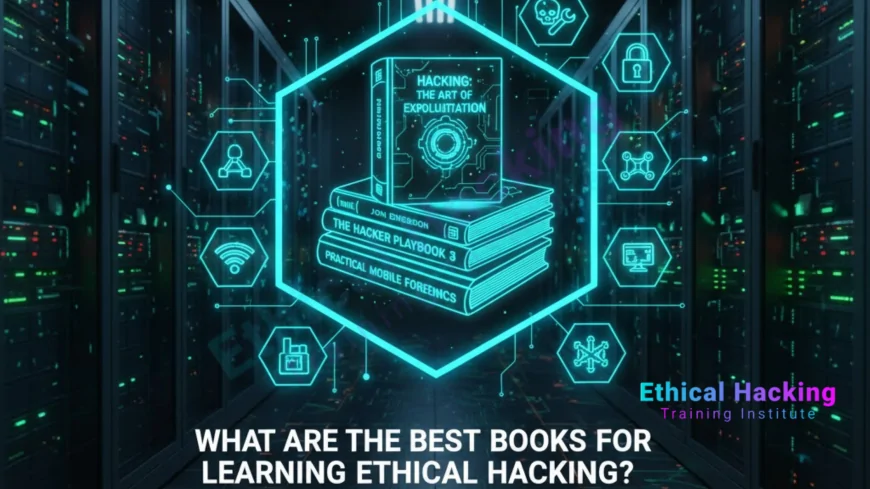
What Are the Best Books for Learning Ethical Hacking?
Discover the best books to learn ethical hacking, from beginner guides to advanced texts on penetration testing, network security, and malware analysis. This curated list explains why each title matters, how to combine reading with hands-on labs, and practical tips for building a learning roadmap that prepares you for certifications and real-world security work.
Introduction
Books remain one of the most reliable ways to learn ethical hacking. A carefully chosen book gives structure, context and depth that scattered online tutorials often lack. Whether you are a complete beginner or an experienced security professional, the right books help you understand fundamentals, master tools, and adopt a methodical approach to penetration testing and defensive work.
Why Books Still Matter for Learning Hacking
Good books teach fundamentals, explain why techniques work, and usually include exercises or labs to practise concepts. They complement hands-on platforms and help you build a durable mental model of networks, operating systems and attack methodologies. Many training programs at institutions like Ethical Hacking Institute recommend pairing reading with practical labs for best results; for example a focused chapter often pairs well with a lab that demonstrates the same concept from a trusted resource.
Top Books for Beginners
If you are starting out, begin with approachable books that cover fundamentals and practical labs:
- “The Basics of Hacking and Penetration Testing” — practical, lab-focused introduction to tools and methodology.
- “Hacking: The Art of Exploitation” — strong on low-level concepts and programming context.
- “Metasploit: The Penetration Tester's Guide” — excellent for learning exploitation frameworks.
- “Kali Linux Revealed” — setup, administration and how to build safe labs.
Start with one foundational book, practise the included exercises, and then expand to tool-specific texts. Many beginners couple reading with guided online courses that reinforce concepts.
How to Read and Practise Effectively
Reading alone is not enough. Build a safe lab, take notes, and reproduce examples from the book. Use virtual machines, intentionally vulnerable targets and version-controlled notes. When a chapter describes a technique, pause reading and replicate it in a controlled environment. For learners who prefer structured guidance, advanced instructor-led programs often show how to integrate book exercises into a consistent study plan available through a recommended program.
Best Intermediate Books
Once fundamentals are solid, move to intermediate books that deepen offensive and defensive skills:
- “The Web Application Hacker's Handbook” — deep dive into web vulnerabilities and testing techniques.
- “Practical Malware Analysis” — hands-on approach to analysing malicious code.
- “Applied Network Security Monitoring” — for those transitioning to detection and monitoring roles.
- “Black Hat Python” — using Python for offensive tasks and tooling.
These books help bridge the gap between basic tool usage and real-world offensive or defensive engagements. Pair chapters with CTF-style challenges to solidify learning; many educators recommend combining book study with practical exercises offered by local training hubs and certification guidance.
Advanced and Specialized Titles
Advanced readers should consider books that cover exploit development, reverse engineering, cloud security, and red team operations:
- “Advanced Penetration Testing: Hacking the World's Most Secure Networks”
- “Practical Binary Analysis” — for reverse engineering native code.
- “Red Team Field Manual” — quick reference for operations and tradecraft.
- “Cloud Security and DevSecOps” texts — for cloud-specific threats.
These books assume strong fundamentals and often require supplementary reading or hands-on mentor support. Professionals commonly use such material alongside enterprise training and targeted workshops run by institutes such as Cybersecurity Training Institute to convert theory into practice.
Books That Teach Tools and Labs
Tool-focused books help you master specific platforms and frameworks:
- Metasploit guides — exploitation, payloads and post-exploitation.
- Burp Suite cookbook — advanced web testing techniques.
- Wireshark for security analysts — network capture and analysis.
- Memory and disk forensics texts — Autopsy, Volatility and practical workflows.
Use these alongside practical lab time to build muscle memory. Local instructor-led labs and weekend workshops are useful for guided practise and troubleshooting when you get stuck on advanced tool use in a chapter of a recommended resource.
How to Choose the Right Book for Your Goal
Select books based on your current skill level and career goals. If you aim for certifications like OSCP or CEH, prioritise books and labs that align with those exam objectives. For research or blue team roles, choose forensic and monitoring texts. Read reviews, check edition dates to ensure currency, and prefer books that include exercises or companion labs.
If you want guided, instructor-backed reading plans that map books to exercises, many learners consult local course syllabi and curated reading lists provided by training centres and workshops.
Comparison Table: Book Type vs Learning Outcome
| Book Type | Typical Titles | Learning Outcome |
|---|---|---|
| Beginner | Basics of Hacking, Kali Linux Revealed | Fundamentals, safe lab setup |
| Intermediate | Web App Hacker's Handbook, Practical Malware Analysis | Web testing, malware analysis |
| Advanced | Advanced Penetration Testing, Practical Binary Analysis | Exploit dev, reverse engineering |
| Tool Guides | Metasploit Guide, Burp Suite Cookbook | Tool mastery, workflow efficiency |
Conclusion
The best books for learning ethical hacking depend on your starting point and goals. Begin with one foundational book, practise in a safe lab, then progress to intermediate and advanced titles while supplementing reading with hands-on labs and mentor feedback. Combining structured reading with practical courses and workshops from providers like Ethical Hacking Institute, Cybersecurity Training Institute, and Webasha Technologies accelerates learning and helps you build a portfolio that matters to employers.
Frequently Asked Questions
Which book should a complete beginner start with?
Start with a beginner-friendly book such as "The Basics of Hacking and Penetration Testing" or "Kali Linux Revealed" to learn fundamentals and lab setup.
Do I need programming skills to learn ethical hacking?
Basic scripting and understanding of programming concepts help, but many beginner books teach necessary prerequisites as you go.
Are older editions still useful?
Fundamental concepts remain useful, but prefer recent editions for up-to-date tools and vulnerability examples.
How do books compare to online tutorials?
Books provide structure and depth; tutorials are better for quick tasks. Use both: read for theory and follow tutorials for immediate practice.
Which books help prepare for OSCP?
Advanced penetration testing books, hands-on exploit development texts, and lab-focused resources support OSCP preparation.
Can I learn solely from books?
Books are essential, but you must combine them with hands-on labs, CTFs, and mentor feedback to build practical skills.
What are good books for web application security?
"The Web Application Hacker's Handbook" and tool-specific guides like the Burp Suite cookbook are excellent choices.
Which books cover malware analysis?
"Practical Malware Analysis" and similar titles teach static and dynamic analysis techniques and sandbox workflows.
Should I follow a reading roadmap?
Yes. Start with fundamentals, then follow a roadmap that pairs books with labs and certification goals.
How many books should I read at once?
Focus on one core book at a time and supplement with short tool guides or chapters from other books to avoid overload.
Are book exercises enough for interviews?
Exercises build competence, but employers also value projects, CTF writeups, and practical experience beyond book labs.
Do books recommend lab setups?
Many include lab instructions; if not, use standard lab setups like Kali VMs and vulnerable targets from VulnHub or TryHackMe.
Can books teach defensive skills too?
Yes. Some books focus on blue team topics such as monitoring, incident response, and secure architecture.
Where can I find curated book lists and syllabi?
Training institutes, online communities, and course syllabi often publish curated reading lists aligned to learning paths and certifications.
How can institutes help with book-based learning?
Institutes like Ethical Hacking Institute, Cybersecurity Training Institute, and Webasha Technologies provide mentorship, labs and course structures that map book chapters to practical exercises.
What's Your Reaction?
 Like
0
Like
0
 Dislike
0
Dislike
0
 Love
0
Love
0
 Funny
0
Funny
0
 Angry
0
Angry
0
 Sad
0
Sad
0
 Wow
0
Wow
0