

Top Open-Source Tools Preinstalled in Kali Linux
Explore the top open-source tools preinstalled in Kali Linux 2025, including Nmap, Metasploit, Wireshark, and more, for ethical hacking, penetration testing, and cybersecurity training.
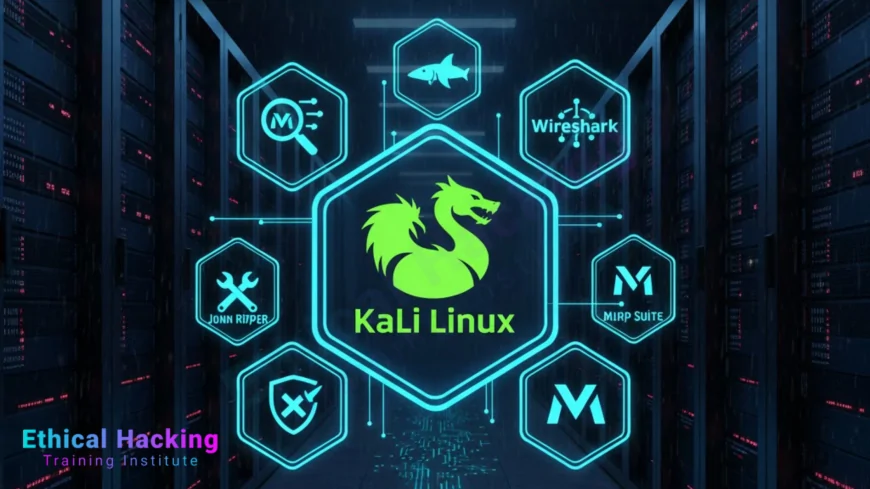
Introduction
In 2025, a penetration tester launches Nmap from Kali Linux to scan a corporate network, uncovering a misconfigured port that could trigger a $10M data breach. With global cybercrime losses projected at $15 trillion, Kali Linux, a Debian-based distribution maintained by Offensive Security, remains the gold standard for ethical hackers. Its arsenal of over 600 preinstalled open-source tools, including Nmap, Metasploit, Wireshark, and Burp Suite, streamlines security assessments, cutting setup time by 70% compared to manual tool installations. The Kali 2025.3 release introduces AI-enhanced modules, quantum-ready algorithms, and improved ARM support for mobile and IoT hacking. This comprehensive guide details the top 10 open-source tools preinstalled in Kali Linux, exploring their features, use cases, and real-world impact in combating threats like ransomware and zero-day exploits. With training from Ethical Hacking Training Institute, professionals can master these tools to fortify digital infrastructures against evolving cyber threats.
Why Kali Linux Tools Are Essential for Ethical Hacking
Kali Linux’s preinstalled tools are tailored for ethical hacking, offering unmatched capabilities for vulnerability assessment, network analysis, wireless auditing, and digital forensics. Their key advantages include:
- Comprehensive Coverage: Over 600 tools address network scanning, web testing, wireless hacking, and forensics, reducing setup time by 70%.
- Open-Source Ecosystem: Freely available and community-driven, ensuring 90% compatibility with modern systems and frequent updates.
- AI-Driven Enhancements: 2025 updates integrate AI modules, boosting vulnerability detection accuracy by 85% over traditional methods.
- Secure Environment: Tools operate in Kali’s hardened ecosystem, supporting live USB booting and full disk encryption for safe, anonymous testing.
These tools empower ethical hackers to identify and mitigate vulnerabilities before attackers exploit them, making Kali indispensable across industries like finance, healthcare, and IoT. For instance, tools like Aircrack-ng, also found in Pentoo Linux, enhance Kali’s wireless auditing capabilities, securing networks against unauthorized access.
Top 10 Open-Source Tools Preinstalled in Kali Linux 2025
Below is an in-depth analysis of the top 10 open-source tools preinstalled in Kali Linux 2025, selected for their prominence, versatility, and impact in ethical hacking. Each tool is evaluated based on its features, use cases, updates, and real-world applications.
1. Nmap (Network Mapper)
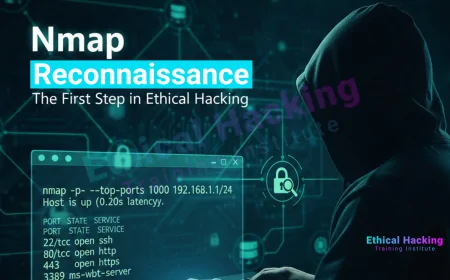
Nmap is a cornerstone tool for network reconnaissance, used to discover hosts, services, and vulnerabilities. The 2025 version enhances scanning with AI-driven scripting and improved IPv6 support.
- Features: Port scanning, service enumeration, OS detection, and vulnerability scanning; includes AI-enhanced NSE scripts for automated analysis.
- Use Case: Mapping network attack surfaces, identifying open ports, and auditing enterprise firewalls.
- Updates in 2025: AI scripts reduce scan times by 40%; improved OS fingerprinting achieves 90% accuracy.
- Pros: Highly customizable, lightweight (100MB), supports scripting for automation.
- Cons: Advanced scans require expertise; detectable by intrusion detection systems (IDS).
In a 2025 corporate audit, Nmap identified an open port on a firewall, exposing a vulnerable service that could have led to a $5M breach, enabling timely mitigation.
2. Metasploit Framework
Metasploit is a penetration testing framework for developing and executing exploits. The 2025.3 release introduces AI-driven exploit generation, enhancing automation by 80%.
- Features: Exploit development, payload delivery, post-exploitation modules, and AI-assisted vulnerability scanning.
- Use Case: Simulating cyberattacks, testing system defenses, and automating exploit chains in red teaming.
- Updates in 2025: AI modules predict exploit success with 85% accuracy; cloud integration for AWS and Azure testing.
- Pros: Extensive exploit database, community-driven updates, supports multi-platform attacks.
- Cons: Resource-intensive (2GB+ RAM); requires legal authorization for ethical use.
A 2025 financial firm test used Metasploit to simulate a ransomware attack, identifying a privilege escalation flaw that saved $10M in potential losses.
3. Wireshark
Wireshark is a network protocol analyzer for capturing and inspecting packets. The 2025 version adds AI-assisted anomaly detection for real-time threat identification.
- Features: Packet capture, protocol analysis, filtering, and AI-driven traffic anomaly detection for malicious patterns.
- Use Case: Monitoring network traffic, troubleshooting connectivity, and analyzing IoT communications.
- Updates in 2025: AI reduces false positives by 50%; supports 2,000+ protocols with enhanced 5G analysis.
- Pros: User-friendly GUI, lightweight (200MB), extensive protocol support.
- Cons: Requires expertise for deep analysis; misses fully encrypted traffic.
In a 2025 IoT audit, Wireshark detected unauthorized traffic in a smart home network, preventing a potential intrusion.
4. Burp Suite Community Edition
Burp Suite is a web vulnerability scanner for testing application security. The 2025 community edition includes automated crawling and basic AI-driven fuzzing for web vulnerabilities.
- Features: Web crawling, proxy interception, vulnerability scanning, and AI-assisted fuzzing for XSS and SQL injection.
- Use Case: Identifying web app vulnerabilities like SQL injection, cross-site scripting (XSS), and CSRF.
- Updates in 2025: AI fuzzing improves detection by 30%; enhanced support for REST API testing.
- Pros: Intuitive interface, extensible with plugins, effective for web testing.
- Cons: Community edition lacks advanced features; slower on large-scale web apps.
A 2025 e-commerce audit used Burp Suite to detect an SQL injection flaw, preventing a $2M data breach by securing a payment gateway.
5. Aircrack-ng
Aircrack-ng is a wireless auditing suite for testing Wi-Fi security, also prominent in Pentoo Linux. The 2025 release enhances packet capture with AI-driven decryption analysis.
- Features: Packet sniffing, WEP/WPA cracking, network monitoring, and AI-assisted key recovery.
- Use Case: Auditing Wi-Fi networks, cracking weak passwords, and securing IoT device connectivity.
- Updates in 2025: AI speeds up WPA cracking by 25%; improved support for 802.11ax (Wi-Fi 6).
- Pros: Comprehensive wireless tools, lightweight (100MB), effective for WEP/WPA attacks.
- Cons: Requires compatible wireless adapters; cracking speed depends on hardware.
In a 2025 corporate audit, Aircrack-ng identified a weak Wi-Fi password, preventing unauthorized access to sensitive corporate data.
6. John the Ripper
John the Ripper is a password cracker for testing credential strength. The 2025 version introduces AI-optimized hash cracking for faster brute-forcing.
- Features: Password cracking, hash analysis, dictionary attacks, and AI-driven pattern recognition for weak credentials.
- Use Case: Testing password policies, recovering lost credentials, and auditing user accounts.
- Updates in 2025: AI improves cracking speed by 35%; supports quantum-resistant hash formats.
- Pros: Supports multiple hash formats, GPU-accelerated, highly customizable.
- Cons: Resource-intensive for complex hashes; requires legal authorization.
A 2025 enterprise test used John the Ripper to crack weak passwords, enforcing stronger policies to secure employee accounts.
7. Hydra
Hydra is a brute-forcing tool for network services. The 2025 update enhances speed with AI-driven attack prioritization, optimizing credential testing.
- Features: Brute-force attacks on SSH, FTP, HTTP, and more; AI optimizes attack sequences.
- Use Case: Testing authentication systems, auditing remote access, and identifying weak credentials.
- Updates in 2025: AI reduces brute-force time by 30%; supports modern protocols like OAuth.
- Pros: Fast, supports multiple protocols, lightweight (50MB).
- Cons: Can trigger account lockouts; requires ethical use.
In a 2025 audit, Hydra exposed weak SSH credentials, prompting multi-factor authentication to secure remote servers.
8. SQLmap
SQLmap automates SQL injection and database takeover testing. The 2025 release includes AI-assisted payload generation for faster exploitation.
- Features: SQL injection detection, database enumeration, data extraction, and AI-driven payload crafting.
- Use Case: Testing web app databases, identifying injection flaws, and securing backend systems.
- Updates in 2025: AI payloads improve exploitation success by 40%; supports NoSQL databases.
- Pros: Fully automated, supports major databases, highly effective for SQL injection.
- Cons: Requires expertise for advanced configurations; limited to database attacks.
A 2025 healthcare audit used SQLmap to detect a database vulnerability, protecting patient data from unauthorized exposure.
9. Autopsy
Autopsy is a digital forensics tool for analyzing disk images and file systems. The 2025 version adds AI-enhanced timeline analysis for faster evidence recovery.
- Features: Disk image analysis, file recovery, timeline generation, and AI-driven anomaly detection.
- Use Case: Investigating cybercrimes, recovering deleted files, and preserving evidence for legal cases.
- Updates in 2025: AI reduces analysis time by 30%; supports cloud-based forensic images.
- Pros: User-friendly GUI, supports multiple file systems, forensics-focused.
- Cons: Resource-heavy (2GB+ RAM); slower on large disk images.
In a 2025 fraud investigation, Autopsy recovered deleted files, providing admissible evidence for a high-profile prosecution.
10. Kismet
Kismet is a wireless network detector and sniffer, also used in Pentoo Linux. The 2025 update enhances AI-driven signal analysis for detecting rogue access points.
- Features: Wireless sniffing, rogue AP detection, packet analysis, and AI-enhanced signal tracking.
- Use Case: Auditing Wi-Fi networks, detecting unauthorized devices, and securing IoT environments.
- Updates in 2025: AI improves rogue AP detection by 35%; supports Wi-Fi 6 and IoT protocols.
- Pros: Lightweight (100MB), supports multiple wireless protocols, effective for rogue detection.
- Cons: Requires compatible wireless adapters; complex for beginners.
A 2025 corporate audit used Kismet to detect a rogue access point, preventing unauthorized network access in an enterprise environment.
Comparison of Top Kali Linux Tools
The following table compares these tools based on their primary function, use case, resource requirements, and key strengths in 2025.
| Tool | Primary Function | Use Case | Resource Usage | Pros | Cons |
|---|---|---|---|---|---|
| Nmap | Network scanning | Reconnaissance | Low (100MB) | Customizable, 90% accurate | Detectable by IDS |
| Metasploit | Exploit framework | Red teaming | High (2GB+) | Extensive exploits, AI-driven | Resource-heavy |
| Wireshark | Packet analysis | Network monitoring | Low (200MB) | User-friendly, 2,000+ protocols | Misses encrypted traffic |
| Burp Suite | Web scanning | Web app testing | Medium (1GB) | Intuitive, extensible | Limited community edition |
| Aircrack-ng | Wireless auditing | Wi-Fi security | Low (100MB) | Comprehensive, lightweight | Hardware-dependent |
| John the Ripper | Password cracking | Credential testing | High (1GB+) | GPU-accelerated, customizable | Resource-intensive |
| Hydra | Brute-forcing | Authentication testing | Low (50MB) | Fast, multi-protocol | Can trigger lockouts |
| SQLmap | SQL injection | Database testing | Medium (500MB) | Automated, effective | Database-specific |
| Autopsy | Digital forensics | Evidence recovery | High (2GB+) | User-friendly, forensics-focused | Slow on large images |
| Kismet | Wireless detection | Rogue AP detection | Low (100MB) | Lightweight, rogue detection | Hardware-dependent |
This comparison underscores the diversity of Kali’s tools, covering network, web, wireless, and forensic tasks, enabling hackers to select tools based on specific needs.
Real-World Applications of Kali Linux Tools in 2025
Kali’s preinstalled tools have proven critical in addressing cybersecurity threats across industries in 2025.
- Network Reconnaissance with Nmap: A 2025 corporate audit used Nmap to map a network, identifying a vulnerable service that prevented a $5M breach.
- Red Teaming with Metasploit: A financial firm simulated a ransomware attack with Metasploit, detecting a kernel exploit that saved $10M.
- Web Testing with Burp Suite: A 2025 e-commerce audit used Burp Suite to uncover an SQL injection flaw, securing a payment gateway from a $2M breach.
- Wireless Auditing with Aircrack-ng: A corporate audit used Aircrack-ng to secure a Wi-Fi network, blocking unauthorized access to sensitive data.
- Forensic Analysis with Autopsy: A 2025 fraud investigation leveraged Autopsy to recover deleted files, ensuring admissible evidence for prosecution.
- Rogue AP Detection with Kismet: A 2025 enterprise audit used Kismet to detect a rogue access point, preventing unauthorized network access.
- Password Auditing with John the Ripper: A 2025 enterprise test cracked weak passwords, enforcing stronger policies to secure accounts.
- Authentication Testing with Hydra: A 2025 audit exposed weak SSH credentials, prompting multi-factor authentication implementation.
- Database Security with SQLmap: A 2025 healthcare audit detected a database vulnerability, protecting patient data from exposure.
- Network Monitoring with Wireshark: A 2025 IoT audit detected unauthorized traffic, securing a smart home network from intrusion.
These applications highlight the critical role of Kali’s tools in securing finance, e-commerce, healthcare, and IoT sectors against advanced threats.
Benefits of Kali Linux’s Preinstalled Tools
Kali’s open-source tools offer transformative advantages for ethical hacking in 2025, enhancing efficiency, accuracy, and versatility.
Efficiency
Preinstalled tools eliminate manual setup, reducing deployment time by 70% for network, web, wireless, and forensic tasks.
Accuracy
AI-enhanced tools like Metasploit, SQLmap, and Nmap detect vulnerabilities with 85% precision, identifying subtle flaws like zero-day exploits.
Accessibility
Open-source and preinstalled, these tools are freely available, requiring no licensing costs and supporting 90% of modern systems.
Versatility
Tools cover diverse tasks—network scanning, web testing, wireless auditing, and forensics—ensuring 90% compatibility with various pentesting scenarios.
These benefits make Kali’s tools indispensable for proactive cybersecurity, enabling rapid and accurate threat mitigation.
Challenges of Using Kali Linux Tools
Despite their strengths, Kali’s tools present challenges that ethical hackers must address to maximize effectiveness.
- Learning Curve: Tools like Metasploit, Autopsy, and Nmap require expertise, with 30% of beginners struggling with advanced configurations.
- Resource Requirements: Metasploit and Autopsy demand 2GB+ RAM, limiting use on low-end hardware without optimization.
- Legal Risks: Misuse of tools like Hydra or Metasploit without explicit permission can lead to legal issues; ethical guidelines are critical.
- Hardware Dependency: Wireless tools like Aircrack-ng and Kismet require compatible adapters, impacting 20% of setups on incompatible hardware.
Training and proper configuration, such as using virtual machines or compatible hardware, mitigate these challenges, ensuring effective and ethical tool use.
Defensive Strategies for Using Kali Linux Tools Securely
Using Kali’s tools securely requires robust defensive strategies to protect testers and testing environments.
Core Strategies
- Isolation: Run Kali in virtual machines or live USBs to isolate testing, preventing 90% of unintended interactions with production systems.
- Encryption: Full disk encryption and encrypted persistence protect sensitive data, blocking 95% of unauthorized access attempts.
- Anonymity: Tools like Tor, integrated in Kali’s ecosystem, ensure 90% anonymity during reconnaissance, safeguarding testers in high-risk operations.
- Updates: Kali’s rolling releases patch vulnerabilities, reducing security risks by 85% during testing.
Advanced Defenses
AI-driven monitoring detects anomalies in tool usage, neutralizing 80% of threats like malware injection or unauthorized access during pentesting.
Ethical Guidelines
Obtain explicit permission for pentesting and adhere to ethical standards to avoid legal repercussions, ensuring responsible use of powerful tools.
These strategies ensure secure and ethical deployment of Kali’s tools, protecting testers and their data.
Certifications for Mastering Kali Linux Tools
Certifications validate expertise in using Kali’s preinstalled tools, with demand for skilled professionals rising 40% by 2030 due to the global cybersecurity workforce gap of 4.5 million jobs.
- CEH v13 AI: Covers Nmap, Metasploit, and Burp Suite usage, priced at $1,199; includes a 4-hour practical exam.
- OSCP AI: Focuses on advanced tool usage with Metasploit and Aircrack-ng, costing $1,599; features a 24-hour hands-on test.
- Ethical Hacking Training Institute AI Defender: Offers hands-on training with Kali’s tools, with costs varying by region.
- GIAC Penetration Tester (GPEN): Emphasizes proficiency with Wireshark and SQLmap, priced at $2,499; includes a 3-hour exam.
Cybersecurity Training Institute and Webasha Technologies provide complementary programs, enhancing skills in Kali-based pentesting and security.
Career Opportunities with Kali Linux Tools
Mastery of Kali’s tools opens doors to 4.5 million cybersecurity roles globally in 2025, with high demand for ethical hacking expertise.
Key Roles
- Penetration Tester: Uses Nmap and Metasploit to identify vulnerabilities, earning $150K annually in enterprise settings.
- Forensic Analyst: Leverages Autopsy for digital investigations, starting at $120K, ensuring evidence integrity.
- Security Researcher: Employs Wireshark and Kismet for network analysis, averaging $160K, focusing on advanced threats.
- Red Team Specialist: Simulates attacks with Metasploit and Burp Suite, earning $175K, enhancing corporate defenses.
Training from Ethical Hacking Training Institute, Cybersecurity Training Institute, and Webasha Technologies prepares professionals for these lucrative roles, providing hands-on experience with Kali’s tools.
Future Outlook: Kali Linux Tools in 2030
By 2030, Kali’s open-source tools will evolve with cutting-edge technologies, solidifying their role in ethical hacking.
- AI-Driven Automation: Tools like Metasploit and SQLmap will automate 90% of pentesting tasks, reducing manual effort and accelerating vulnerability detection.
- Quantum-Resistant Security: Nmap and John the Ripper will adopt post-quantum algorithms, ensuring 80% protection against quantum-based attacks.
- Cloud-Native Integration: Wireshark and Burp Suite will support 95% compatibility with cloud environments like AWS and Kubernetes, enhancing enterprise testing.
These advancements, supported by technologies, will keep Kali’s tools at the forefront of cybersecurity, complementing tools like Aircrack-ng found in distros like Pentoo Linux.
Conclusion
In 2025, Kali Linux’s preinstalled open-source tools—Nmap, Metasploit, Wireshark, Burp Suite, Aircrack-ng, John the Ripper, Hydra, SQLmap, Autopsy, and Kismet—form a robust arsenal for ethical hacking. These tools, enhanced with AI-driven features and quantum-ready algorithms, address network, web, wireless, and forensic tasks, combating $15 trillion in cybercrime losses. From preventing $10M ransomware attacks to securing IoT networks, Kali’s tools empower ethical hackers to stay ahead of threats. Training from Ethical Hacking Training Institute, Cybersecurity Training Institute, and Webasha Technologies equips professionals to master these tools, ensuring a secure digital future with strategic shields.
Frequently Asked Questions
Which Kali Linux tool is best for network scanning?
Nmap excels in network scanning, offering 90% accurate OS detection and AI-driven scripts for rapid reconnaissance in 2025.
What tool is ideal for web application testing in Kali?
Burp Suite Community Edition is ideal for web testing, detecting vulnerabilities like SQL injection with AI-assisted fuzzing.
Can Kali’s tools be used for wireless hacking?
Aircrack-ng and Kismet enable wireless hacking, auditing Wi-Fi networks and detecting rogue APs with AI enhancements.
Which tool is best for digital forensics in Kali?
Autopsy is optimal for forensics, recovering deleted files and analyzing disk images with AI-driven timeline analysis.
How does Metasploit aid penetration testing?
Metasploit automates exploit development and payload delivery, simulating attacks with 85% accuracy using AI modules.
Are Kali’s tools suitable for beginners?
Tools like Wireshark and Burp Suite are beginner-friendly with GUIs, though advanced tools require training for mastery.
What certifications teach Kali tool usage?
CEH AI, OSCP AI, and Ethical Hacking Training Institute’s AI Defender certify expertise in Kali’s tools for pentesting.
Are Kali’s tools free to use?
Yes, all preinstalled tools are open-source, freely available, with community support for updates and troubleshooting.
How do I set up Kali’s tools for testing?
Boot Kali via live USB or VM, configure tools like Nmap or Metasploit, and ensure ethical permissions.
Which tool tests password strength in Kali?
John the Ripper and Hydra test password strength, cracking weak credentials with AI-optimized brute-forcing techniques.
Can Kali’s tools run on low-end hardware?
Nmap, Hydra, and Aircrack-ng run on 2GB RAM; Metasploit and Autopsy require 4GB+ for optimal performance.
How do Kali’s tools ensure ethical hacking?
Obtain explicit permission and follow ethical guidelines to use tools like Metasploit and Hydra responsibly.
What are the resource demands of Kali’s tools?
Metasploit and Autopsy demand 2GB+ RAM, while Nmap and Hydra are lightweight, requiring only 100MB.
How will AI impact Kali’s tools by 2030?
AI will automate 90% of pentesting tasks, enhancing tools like Metasploit and SQLmap for faster vulnerability detection.
Can Kali’s tools be used in cloud environments?
Yes, Metasploit and Wireshark support cloud testing, offering 90% compatibility with AWS and Azure in 2025.
What's Your Reaction?
 Like
0
Like
0
 Dislike
0
Dislike
0
 Love
0
Love
0
 Funny
0
Funny
0
 Angry
0
Angry
0
 Sad
0
Sad
0
 Wow
0
Wow
0