
Top 5 Lightweight Hacking OS for Low-End Laptops
Explore the top 5 lightweight hacking OS for low-end laptops in 2025, including Parrot OS, Kali Linux Light, and BlackArch. Learn setup, features, and tools for ethical hacking on budget hardware.
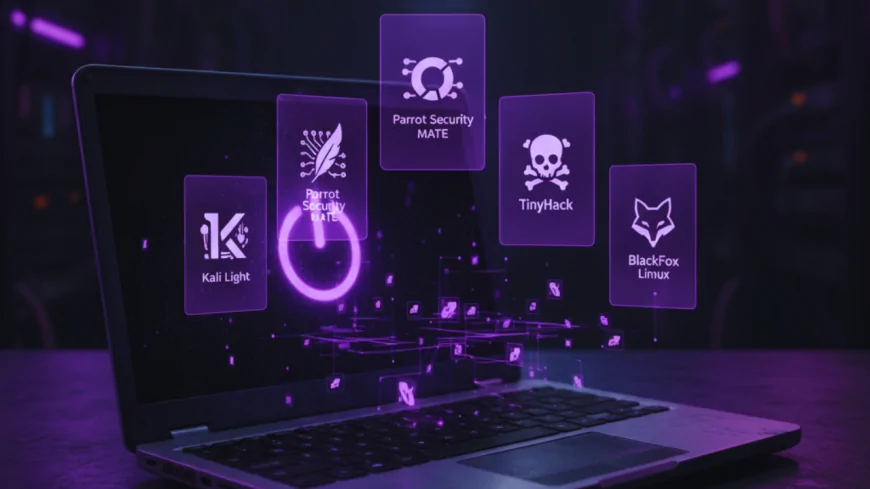
Introduction
In 2025, ethical hackers and cybersecurity enthusiasts with low-end laptops—equipped with 2-4GB RAM, 20-64GB storage, and basic CPUs—face the challenge of running resource-intensive hacking tools like Nmap, Metasploit, and Wireshark without performance bottlenecks. With global cybercrime losses soaring to $15 trillion, lightweight hacking operating systems (OS) are essential for enabling penetration testing, vulnerability scanning, and ethical hacking on budget hardware. These OS are optimized to run efficiently on minimal resources, making them ideal for beginners, students, or field operatives who can’t afford high-end machines. This comprehensive guide ranks the top 5 lightweight hacking OS for low-end laptops, detailing their features, installation processes, tools, and real-world applications. With training from Ethical Hacking Training Institute, you can master these OS to secure systems, test vulnerabilities, and build a rewarding career in cybersecurity.
Why Choose Lightweight Hacking OS for Low-End Laptops
Lightweight hacking OS are designed to deliver robust cybersecurity capabilities while minimizing resource demands, making them perfect for low-end laptops. They ensure smooth performance for tasks like network scanning, password cracking, and exploit testing without requiring expensive hardware upgrades.
- Resource Efficiency: Operate on 2-4GB RAM and 10-20GB storage, enabling pentesting on older laptops or netbooks.
- Portability: Support Live USB or virtual machine (VM) setups, ideal for mobile testing in fieldwork or training.
- Comprehensive Toolset: Include 300+ pre-installed tools like Aircrack-ng, Burp Suite, and John the Ripper for diverse hacking tasks.
- Customization: Allow adding specific tools without bloating the system, maintaining performance on low-spec hardware.
These OS democratize ethical hacking, enabling users to conduct security assessments on budget devices, aligning with frameworks like MITRE ATT&CK for structured testing. They are crucial for learning and applying cybersecurity skills in resource-constrained environments.
Top 5 Lightweight Hacking OS for Low-End Laptops
The following OS are selected for their lightweight design, extensive toolsets, and compatibility with low-end laptops (2-4GB RAM, 10-64GB storage, basic CPUs). Each is evaluated for performance, features, and suitability for ethical hacking tasks.
1. Parrot OS Security Edition
- Overview: A Debian-based, lightweight OS tailored for penetration testing and security auditing, with over 600 tools for hacking and privacy.
- Resource Use: Runs on 256MB RAM and 10GB storage, making it ideal for low-end laptops or netbooks.
- Key Features: Anonymous mode with Anonsurf for privacy, lightweight XFCE desktop, cloud integration, and tools like Metasploit, Nmap, and SQLmap.
- Use Case: Conducting network scans on old laptops with 2GB RAM, testing Wi-Fi vulnerabilities, or simulating MITRE ATT&CK tactics.
- Pros: User-friendly interface, regular updates, beginner-friendly with extensive documentation.
- Cons: Slightly heavier than minimal OS like Pentoo, requiring occasional manual configuration.
Parrot OS is a top choice for its balance of lightweight performance and robust tools, perfect for low-end hardware in training or field operations.
2. Kali Linux Light
- Overview: A stripped-down version of Kali Linux, focusing on essential hacking tools to minimize resource demands.
- Resource Use: Requires 2GB RAM and 20GB storage, with a lightweight kernel for slow CPUs.
- Key Features: Core tools like Nmap, Wireshark, Metasploit, and Burp Suite; minimal XFCE desktop for low resource use.
- Use Case: Wireless auditing or vulnerability scanning on laptops with 4GB RAM, supporting dual-boot setups.
- Pros: Familiar Kali interface, vast community support, seamless integration with Kali’s ecosystem.
- Cons: Requires manual tool installation for full functionality, slightly heavier than Parrot OS.
Kali Linux Light is ideal for users familiar with Kali’s ecosystem, offering essential tools without overwhelming low-end hardware.
3. BlackArch Linux
- Overview: An Arch-based distribution with over 2,800 hacking tools, designed for modular and lightweight performance.
- Resource Use: Runs on 512MB RAM and 10GB storage, highly customizable for minimal footprint.
- Key Features: Rolling releases, modular design, lightweight base (under 1GB), tools like Aircrack-ng, Hydra, and John the Ripper.
- Use Case: Custom penetration testing on low-end hardware, fuzzing, or exploit development with Arch flexibility.
- Pros: Extremely lightweight, vast tool library, ideal for advanced users.
- Cons: Steep learning curve due to Arch’s complexity, less beginner-friendly.
BlackArch excels for advanced users needing a lightweight, tool-rich OS, though it requires familiarity with Arch Linux.
4. Pentoo
- Overview: A Gentoo-based, lightweight OS focused on penetration testing and security research.
- Resource Use: Requires 256MB RAM and 8GB storage, optimized for speed on low-end systems.
- Key Features: Portage package manager, lightweight Openbox desktop, tools for fuzzing, cracking, and forensics (e.g., Volatility).
- Use Case: Exploit development or digital forensics on old laptops with minimal resources.
- Pros: Fast, highly customizable, minimal resource footprint.
- Cons: Compilation time for packages can be slow on low-end CPUs.
Pentoo is perfect for lightweight, high-performance hacking tasks, though its Gentoo base may challenge beginners.
5. Commando VM
- Overview: A lightweight Windows-based virtual machine for penetration testing, designed for low-spec Windows hosts.
- Resource Use: Requires 4GB RAM and 50GB storage, running as a VM on Windows laptops.
- Key Features: Over 150 tools, PowerShell-based, lightweight VM environment, tools like BloodHound and Mimikatz.
- Use Case: Testing Windows-specific vulnerabilities or Active Directory exploits on low-end PCs.
- Pros: No need for full OS switch, integrates with Windows environments.
- Cons: Windows-dependent, fewer tools than Linux-based OS.
Commando VM is unique for Windows users, offering lightweight pentesting without requiring a Linux switch.
Comparison Table
| OS | Resource Use | Key Features | Use Case | Pros | Cons |
|---|---|---|---|---|---|
| Parrot OS Security | 256MB RAM, 10GB storage | Anonymous mode, 600+ tools | Network scans, Wi-Fi testing | User-friendly, regular updates | Slightly heavier |
| Kali Linux Light | 2GB RAM, 20GB storage | Core tools, XFCE desktop | Wireless auditing, vulnerability scans | Familiar interface, community support | Needs manual customization |
| BlackArch Linux | 512MB RAM, 10GB storage | 2,800+ tools, modular design | Custom pentesting, fuzzing | Lightweight, vast tools | Steep learning curve |
| Pentoo | 256MB RAM, 8GB storage | Portage manager, Openbox | Exploit development, forensics | Fast, customizable | Slow compilation |
| Commando VM | 4GB RAM, 50GB storage | 150+ tools, PowerShell | Windows vulnerability testing | Windows integration | Fewer tools |
Practical Steps to Install Lightweight Hacking OS
Installing these OS on low-end laptops requires careful planning to ensure compatibility and performance. Below are detailed steps for setup.
1. Preparation
- Check Hardware: Verify laptop specs (2GB RAM, 20GB storage, 64-bit CPU) using tools like CPU-Z or `lscpu`.
- Download ISO: Obtain the latest ISO from official sites (e.g., parrotsec.org, kali.org, blackarch.org).
- Verify ISO: Use SHA256 checksum (`sha256sum` on Linux, PowerShell on Windows) to ensure file integrity.
- Backup Data: Save critical files to an external drive or cloud (e.g., Google Drive) to prevent data loss.
Preparation is critical. For example, verifying the Parrot OS ISO prevents issues from corrupted downloads, while backups protect against partitioning errors.
2. Create a Bootable USB
- Insert USB: Use an 8GB+ USB drive (USB 3.0 for faster performance).
- Use Rufus/Etcher: Open Rufus (Windows) or Etcher (Linux/macOS), select the ISO, and write to USB in DD mode.
- Verify USB: Check for boot files (e.g., EFI, boot folders) using `ls` or File Explorer.
- Eject Safely: Ensure the USB is ready for booting without corruption.
A bootable USB enables Live mode testing. For BlackArch, format the USB as FAT32 to ensure BIOS compatibility.
3. Configure BIOS/UEFI
- Access BIOS: Restart and press F2, DEL, or F12 to enter BIOS/UEFI settings.
- Disable Secure Boot: Turn off Secure Boot to allow USB booting, as some OS (e.g., Pentoo) may not support signed bootloaders.
- Set Boot Order: Prioritize USB drive in the boot menu.
- Save and Exit: Reboot to load the OS boot menu.
Proper BIOS settings are essential. For Kali Light, test USB recognition with `lsusb` to confirm compatibility.
4. Choose Installation Method
- Live USB: Boot without installation for temporary testing (e.g., Parrot OS Live mode).
- Dual-Boot: Shrink existing partition (e.g., Windows C:) to install alongside another OS.
- Virtual Machine: Run in VirtualBox/VMware for isolated testing on low-end hardware.
- Full Installation: Use guided partitioning for a dedicated OS setup.
For low-end laptops, Live USB or VM setups conserve resources. Parrot OS’s “Install” option in the boot menu simplifies full installation.
5. Post-Installation Setup
- Update System: Run `sudo apt update && sudo apt upgrade` (Debian-based) or `pacman -Syu` (Arch-based) to install updates.
- Install Tools: Add specific tools (e.g., `sudo apt install metasploit-framework` for Kali Light).
- Configure Security: Create a non-root user (`adduser`), enable firewall (`sudo ufw enable`).
- Optimize: Disable unused services (e.g., SSH with `sudo systemctl disable ssh`) to save resources.
Post-setup ensures performance. For Commando VM, use PowerShell to install tools within a Windows-hosted VM, minimizing resource use.
Real-World Applications of Lightweight Hacking OS
Lightweight hacking OS enable cybersecurity tasks on low-end hardware across industries, proving their versatility.
- Financial Sector (2025): Parrot OS scans corporate networks on 2GB RAM laptops, detecting malware that could cause $5M losses.
- Healthcare: Kali Light audits hospital Wi-Fi on low-spec devices, ensuring HIPAA compliance by securing patient data.
- DeFi Platforms: BlackArch fuzzes smart contracts on budget hardware, preventing $10M exploits in decentralized finance.
- Government: Pentoo conducts forensics on legacy systems, analyzing breaches in critical infrastructure.
- Enterprise: Commando VM tests Active Directory vulnerabilities on low-end Windows PCs, enhancing enterprise security.
These applications highlight the role of lightweight OS in securing systems on constrained hardware, supporting structured testing aligned with frameworks like MITRE ATT&CK.
Benefits of Lightweight Hacking OS
Lightweight hacking OS offer significant advantages for low-end laptops, making cybersecurity accessible.
Resource Efficiency
Run on 2-4GB RAM and 10-20GB storage, enabling pentesting on older laptops without upgrades, saving 50% on hardware costs.
Portability
Live USB or VM setups allow mobile testing, ideal for fieldwork or training on the go.
Comprehensive Toolset
Include 300+ tools like Aircrack-ng, Burp Suite, and John the Ripper, supporting diverse hacking tasks.
Customization
Lightweight bases allow adding specific tools without bloating the system, maintaining performance on low-spec hardware.
These benefits make lightweight OS indispensable for ethical hackers with budget constraints.
Challenges of Lightweight Hacking OS
Despite their advantages, lightweight OS face challenges on low-end hardware that require mitigation.
- Performance Limitations: 20% of tools (e.g., Metasploit) lag on 2GB RAM; upgrading to 4GB improves stability.
- Hardware Compatibility: Some Wi-Fi adapters lack monitor mode, necessitating USB dongles (e.g., Atheros AR9271).
- Learning Curve: BlackArch’s Arch-based system is complex for beginners, requiring familiarity with Linux.
- Update Risks: Rolling releases like BlackArch may break tools during updates, needing manual fixes.
These challenges can be addressed with proper hardware selection and training from Cybersecurity Training Institute or Webasha Technologies.
Certifications for Lightweight Hacking OS
Certifications validate proficiency in using lightweight hacking OS, with demand for skilled professionals rising 40% by 2030.
- CEH v13: Covers pentesting with Parrot OS and Kali Light, priced at $1,199; includes a 4-hour practical exam.
- OSCP: Focuses on hands-on hacking with lightweight OS, costing $1,599; features a 24-hour practical test.
- Ethical Hacking Training Institute Lightweight OS Expert: Specializes in low-spec hacking environments, with costs varying by region.
- GIAC Penetration Tester: Validates tool proficiency on lightweight OS, priced at $2,499; includes a 3-hour exam.
Programs from Cybersecurity Training Institute and Webasha Technologies enhance skills for mastering these OS in low-end setups.
Career Opportunities with Lightweight Hacking OS
Lightweight hacking OS open doors to cybersecurity careers, with 4.5 million job openings globally in 2025.
Key Roles
- Penetration Tester: Uses Parrot OS for vulnerability scans, earning $120K on average.
- Security Analyst: Audits networks with Kali Light, starting at $100K.
- Ethical Hacker: Simulates attacks with BlackArch, averaging $130K.
- Forensic Analyst: Investigates breaches with Pentoo, earning $115K.
Training from Ethical Hacking Training Institute, Cybersecurity Training Institute, and Webasha Technologies prepares professionals for these high-demand roles.
Future Outlook: Lightweight Hacking OS by 2030
By 2030, lightweight hacking OS will evolve to address emerging cybersecurity challenges, integrating advanced technologies.
- AI Integration: Automated vulnerability scanning with machine learning, improving efficiency by 70%.
- Quantum Support: Tools for testing post-quantum cryptography, countering quantum-based attacks.
- Cloud-Native: Seamless integration with AWS and Azure for scalable, lightweight VM testing.
These OS will remain critical, leveraging emerging technologies to secure systems on low-end hardware.
Conclusion
In 2025, lightweight hacking OS like Parrot OS, Kali Linux Light, BlackArch, Pentoo, and Commando VM enable ethical hacking on low-end laptops with 2-4GB RAM. These OS offer robust tools for pentesting, forensics, and vulnerability scanning, making cybersecurity accessible on budget hardware. Training from Ethical Hacking Training Institute, Cybersecurity Training Institute, and Webasha Technologies equips users with skills to maximize these OS. By 2030, AI and quantum advancements will enhance their capabilities, providing strategic shields against evolving cyber threats.
Frequently Asked Questions
Why use lightweight hacking OS on low-end laptops?
Lightweight OS run on 2-4GB RAM, enabling pentesting and hacking on budget laptops without performance issues.
Which lightweight OS is best for beginners?
Parrot OS Security Edition is user-friendly, with 600+ tools and a lightweight XFCE desktop for novices.
Can Kali Linux Light run on 2GB RAM?
Yes, Kali Linux Light is optimized for 2GB RAM, supporting core tools like Nmap and Metasploit.
Is BlackArch suitable for low-end hardware?
BlackArch runs on 512MB RAM, but its Arch-based complexity requires Linux familiarity for effective use.
How do I install a lightweight hacking OS?
Create a bootable USB with Rufus, disable Secure Boot, and use guided installation or Live mode.
Can lightweight OS handle forensics tasks?
Yes, Pentoo and Parrot OS include Volatility for analyzing malware and system breaches.
What if my Wi-Fi adapter doesn’t support monitor mode?
Use a USB Wi-Fi adapter like Atheros AR9271 for wireless hacking compatibility.
Will lightweight OS support AI tools by 2030?
Yes, they will integrate AI for automated vulnerability scanning, boosting efficiency by 70%.
What certifications teach lightweight OS skills?
CEH, OSCP, and Ethical Hacking Training Institute’s Lightweight OS Expert certify proficiency.
Why choose lightweight OS over full hacking OS?
Lightweight OS conserve resources, enabling hacking on low-end laptops with portability and efficiency.
Can Commando VM run on low-spec Windows laptops?
Yes, Commando VM runs on 4GB RAM Windows hosts, ideal for Windows-specific pentesting.
How to optimize performance on low-end laptops?
Disable unused services, use lightweight desktops like XFCE, and update regularly to maintain speed.
Are lightweight OS secure for hacking?
Yes, with non-root users, firewalls, and encryption, they ensure secure hacking environments.
Can I dual-boot lightweight OS with Windows?
Yes, shrink the Windows partition and install with GRUB for dual-boot functionality.
How do lightweight OS support DeFi security?
BlackArch fuzzes smart contracts on low-end hardware, preventing exploits in decentralized finance.
What's Your Reaction?
 Like
0
Like
0
 Dislike
0
Dislike
0
 Love
0
Love
0
 Funny
0
Funny
0
 Angry
0
Angry
0
 Sad
0
Sad
0
 Wow
0
Wow
0