

Is Ethical Hacking Legal in India?
Is ethical hacking legal in India? Yes, but only with written permission. Learn the IT Act rules, penalties for unauthorized hacking, real cases, and how to practice legally as a beginner.
Introduction: The Big Question Every Aspiring Hacker Asks
Picture this: you discover a security flaw in a popular Indian app. You want to report it responsibly. But one wrong move, and you could face jail time. Scary, right?
India sees over 1.1 million cyber incidents every year. Companies need ethical hackers to stay safe. But the line between legal testing and cybercrime is razor-thin.
This guide answers the burning question: Is ethical hacking legal in India? We break down the laws, show real examples, and give you a clear path to hack legally and ethically. Even if you're a complete beginner, you'll understand exactly what to do and what to avoid.
What Is Ethical Hacking, Really?
Ethical hacking means finding weaknesses in systems with permission. You act like a real attacker, but your goal is to help, not harm.
Types of Hackers
- White-hat (ethical): Authorized testers
- Black-hat: Malicious criminals
- Grey-hat: Test without permission, then report
Core Principles of Ethical Hacking
- Get written permission first
- Stay within agreed scope
- Report findings responsibly
- Never cause damage or steal data
In India, only white-hat hacking with consent is legal. Grey-hat actions, even with good intentions, can land you in serious trouble.
The IT Act 2000: India’s Cyber Law Bible
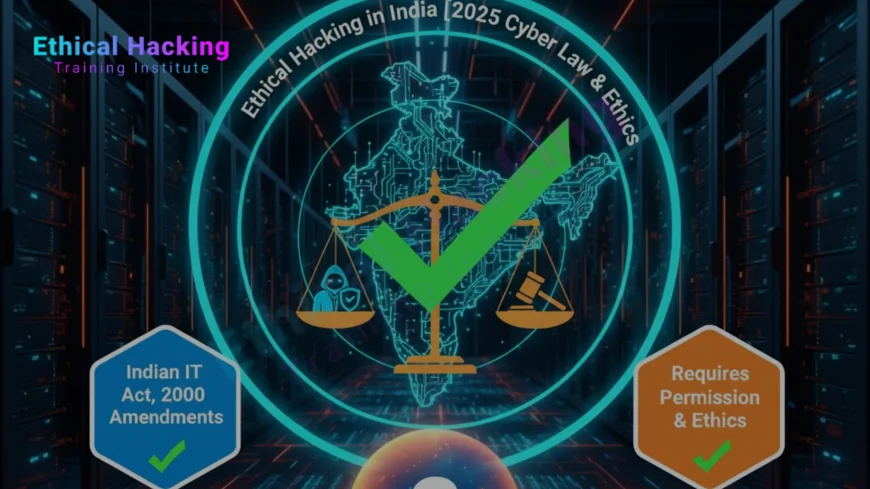
The Information Technology Act, 2000 (amended in 2008) governs all digital activities in India. It doesn't mention "ethical hacking" directly, but it clearly defines what makes hacking illegal.
Key Sections You Must Know
| Section | What It Covers | Punishment |
|---|---|---|
| Section 43 | Unauthorized access, data extraction, or system damage | Compensation up to ₹1 crore |
| Section 66 | Dishonest or fraudulent computer-related acts | Up to 3 years jail + ₹5 lakh fine |
| Section 65 | Tampering with computer source code | Up to 3 years jail + ₹2 lakh fine |
| Section 72A | Unauthorized disclosure of personal data | Up to 3 years jail + ₹5 lakh fine |
With proper authorization, you avoid all these sections. Your actions become legal penetration testing, not hacking.
When Ethical Hacking Becomes Legal in India
Follow these rules, and you're on the right side of the law.
Essential Requirements
- Written contract or permission letter
- Clear scope of work (what you can and cannot test)
- Non-disclosure agreement (NDA)
- Direct reporting to the system owner
Legal Ways to Practice
- Join bug bounty programs (HackerOne, Bugcrowd)
- Work for cybersecurity companies
- Test your own systems or lab setups
- Participate in CTF competitions
Real Cases: What Happens When You Cross the Line
These examples show why permission matters.
Case 1: The "Helpful" Hacker
A student found SQL injection in a government portal. He reported it publicly on social media without permission. Police filed charges under Section 66. The case was dropped only after the department withdrew the complaint.
Case 2: Star Health Data Breach (2021)
Hackers accessed 31 million customer records. They faced charges under Sections 43, 66, and 72A. The case highlighted how even "exposure" without consent is illegal.
Case 3: Legal Bug Bounty Success
An Indian ethical hacker earned ₹40 lakh through a private bug bounty program. He had written permission, followed scope, and reported privately. Completely legal and rewarded.
Indian Penal Code and Other Laws
Besides the IT Act, traditional laws apply.
Relevant IPC Sections
- Section 441: Criminal trespass (digital equivalent)
- Section 420: Cheating and dishonesty
- Section 379: Theft of data
Digital Personal Data Protection Act, 2023
India's new privacy law adds another layer. Unauthorized access to personal data now carries stricter penalties and reporting requirements within 72 hours.
Ethical hackers must now consider both security and privacy compliance during testing.
How to Start Ethical Hacking Legally in India
Follow this beginner-friendly roadmap.
Step 1: Build Skills Safely
- Learn on platforms like TryHackMe, HackTheBox
- Set up your own virtual lab (Kali Linux + vulnerable VMs)
- Never test live systems without permission
Step 2: Get Certified
- CEH (Certified Ethical Hacker)
- CompTIA Security+
- eJPT (Junior Penetration Tester)
Step 3: Find Legal Opportunities
- Join Indian bug bounty platforms
- Apply to cybersecurity firms in Bangalore, Hyderabad, Mumbai
- Register with CERT-In for government projects
Many beginners start by exploring CEH certification courses to gain recognized credentials.
Common Myths vs Reality
Let's clear up confusion.
Myth 1: "If I don't cause damage, it's fine"
Reality: Unauthorized access is illegal even without damage (Section 43).
Myth 2: "Public systems are fair game"
Reality: Government and public websites require explicit permission too.
Myth 3: "Reporting later makes it ethical"
Reality: You must get permission first. Grey-hat actions are still illegal.
Government and CERT-In Guidelines
India's Computer Emergency Response Team provides official guidance.
CERT-In Recommendations
- Organizations should conduct regular penetration tests
- Use authorized third-party testers
- Report incidents within 6 hours (new rule)
- Maintain audit logs of all testing
Bug Bounty Programs
The government encourages private companies to run legal bounty programs. Many Indian startups now offer rewards from ₹5,000 to ₹50 lakh for valid findings.
Conclusion: Yes, But Only With Permission
Ethical hacking is 100 percent legal in India when you follow the rules. The key is simple: get written permission before touching any system that isn't yours.
India needs more skilled ethical hackers. With cyber threats growing daily, your skills can protect millions. Start with legal platforms, get certified, and always document consent.
Remember: the difference between a respected cybersecurity professional and a criminal defendant is one piece of paper, your authorization letter. For hands-on practice, consider an ethical hacker bootcamp with proper legal frameworks. The future of Indian cybersecurity depends on ethical practitioners like you.
Frequently Asked Questions
Is ethical hacking legal without certification in India?
Yes, certification isn't legally required. But written permission is mandatory regardless of credentials.
Can I test my friend's website without formal permission?
No. Even with verbal consent, you risk legal trouble. Always get written authorization.
What if a company ignores my vulnerability report?
Don't go public. Escalate through proper channels or CERT-In. Public disclosure without permission can make you liable.
Are online hacking courses legal in India?
Yes, learning ethical hacking through courses or platforms is completely legal. Many choose to learn ethical hacking online from certified institutes.
Can police arrest me for ethical hacking?
Only if you lack authorization. With proper documentation, police cannot take action.
Is VPN use during testing illegal?
No, but you must disclose it in your testing agreement. Hiding your identity without permission raises red flags.
Do I need a license to practice ethical hacking?
No government license required. But professional certifications add credibility.
Can minors practice ethical hacking legally?
Yes, on their own systems or with parental permission on authorized platforms. Never test third-party systems.
What’s the minimum age for bug bounty programs?
Most require 18+. Some allow 13+ with parental consent.
Is Kali Linux legal to download and use?
Completely legal. It's just a Linux distribution with security tools.
Can I lose my job for reporting vulnerabilities?
Not if you follow proper disclosure. Many companies reward responsible reporting.
How much do ethical hackers earn in India?
Freshers start at ₹4-8 lakh per year. Experienced pentesters earn ₹15-40 lakh+ in top firms.
Should I inform police before testing?
Not required for private companies. For government systems, coordinate through proper channels.
Is social engineering testing legal?
Only with explicit permission covering physical and social vectors.
What if I accidentally cause damage during testing?
Immediately stop and report. Your authorization should include liability clauses for genuine mistakes.
What's Your Reaction?
 Like
1
Like
1
 Dislike
0
Dislike
0
 Love
1
Love
1
 Funny
0
Funny
0
 Angry
0
Angry
0
 Sad
0
Sad
0
 Wow
0
Wow
0