
How to Start Learning Cybersecurity Without Technical Background?
Begin your cybersecurity journey in 2025 with no tech experience. Follow this beginner-friendly roadmap covering free resources, essential concepts, hands-on labs, and certifications. Learn from the Ethical Hacking Institute to build skills safely and land entry-level roles.
Introduction
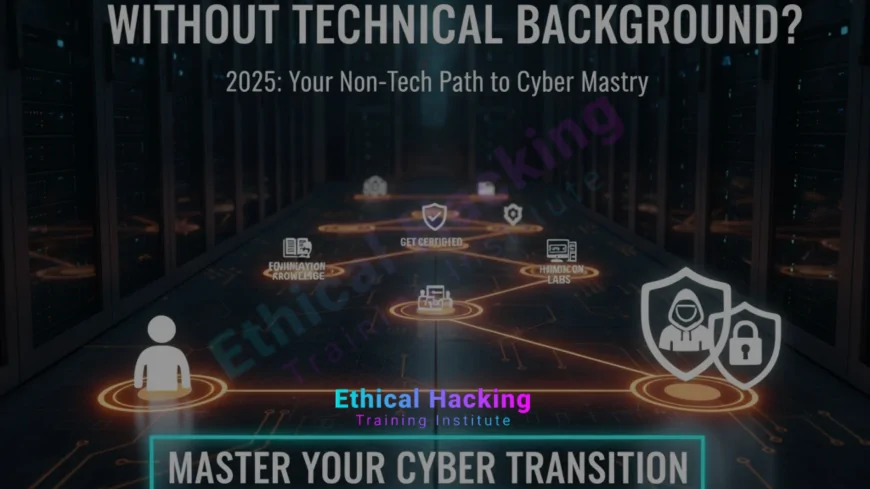
Cybersecurity needs diverse thinkers, not just coders. In 2025, over 3.5 million global cybersecurity jobs remain unfilled while threats grow daily. Companies value problem-solvers, communicators, and curious minds who can learn fast. You do not need a computer science degree or IT experience to start. This guide provides a complete roadmap for absolute beginners: free resources, core concepts, hands-on practice, and certification paths. Follow these steps consistently for six months, and you will be ready for entry-level roles like security analyst or SOC technician. The Ethical Hacking Institute offers structured programs that turn beginners into professionals through safe labs and mentor guidance.
Step 1: Understand Cybersecurity Basics
- Confidentiality: Keeping data secret from unauthorized eyes
- Integrity: Ensuring information is not altered maliciously
- Availability: Making sure systems work when needed
- Threat: Any potential danger like malware or phishing
- Vulnerability: Weakness attackers can exploit
- Risk: Likelihood and impact of a threat succeeding
- Defense in Depth: Multiple security layers for protection
Step 2: Learn Essential IT Fundamentals
Start with basic computer skills. You need to know how networks work, what an operating system does, and basic commands before diving into security tools.
Focus on practical knowledge rather than deep theory at this stage.
| Topic | Free Resource | Time |
|---|---|---|
| Computer Basics | Professor Messer YouTube | 1 week |
| Networking | NetworkChuck | 2 weeks |
| Linux Commands | TryHackMe Linux Room | 1 week |
Build IT foundations in Pune certification labs at the Ethical Hacking Institute.
Step 3: Free Learning Platforms to Start Today
- TryHackMe: Gamified labs with guided paths for total beginners
- Hack The Box Academy: Free tier includes foundational modules
- Cybrary: Video courses on security basics and compliance
- PortSwigger Web Security Academy: Free web application security training
- Google Cybersecurity Certificate: Coursera course with job-ready skills
- OverTheWire Wargames: Command-line challenges to build Linux skills
Step 4: Hands-On Practice with Safe Labs
Theory alone does not build skills. Practice in virtual environments where mistakes cannot harm real systems. Set up a home lab or use cloud platforms.
Start with pre-built vulnerable machines to understand exploitation and defense.
- Install VirtualBox and download Kali Linux ISO
- Use Metasploitable or DVWA as target machines
- Practice Nmap scanning on your isolated network
- Run SQL injection on WebGoat platform
- Capture traffic with Wireshark in your lab
- Document findings in simple reports
Access professional labs through online courses at the Ethical Hacking Institute.
Step 5: Earn Your First Certification
Certifications prove knowledge to employers. Start with vendor-neutral options that require no experience.
CompTIA Security+ is the gold standard for beginners and widely recognized.
| Certification | Cost | Study Time |
|---|---|---|
| Security+ | $370 | 3 months |
| Google Cert | $49/month | 6 months |
Step 6: Build Professional Skills and Network
- Join local cybersecurity meetups and online communities
- Create a LinkedIn profile highlighting your learning journey
- Contribute to open-source security projects on GitHub
- Write blog posts about concepts you learn
- Attend free webinars and conferences
- Find a mentor through CyberMentor or similar programs
Step 7: Land Your First Cybersecurity Job
Entry-level roles value enthusiasm and foundational knowledge over years of experience. Apply to positions that match your skill level.
Tailor your resume to highlight projects, certifications, and soft skills like communication.
- Security Operations Center (SOC) Analyst
- Junior Penetration Tester
- IT Security Administrator
- Compliance Analyst
- Cybersecurity Support Technician
- Security Awareness Trainer
Prepare for interviews with advanced course at the Ethical Hacking Institute.
Conclusion
Technical background is not a requirement, dedication is. In 2025, cybersecurity welcomes beginners who commit to consistent learning and practice. Follow this seven-step roadmap: master basics, build IT foundations, practice in labs, earn certifications, and network actively. Six months of focused effort can transform you from novice to employable professional. The Ethical Hacking Institute, Cyber Security Institute, and Webasha Technologies provide structured paths with expert guidance. Start with one free course today. Your first scan, your first report, your first job, they all begin with a single step.
Frequently Asked Questions
Do I need math for cybersecurity?
No. Basic arithmetic for IP addresses is sufficient. Logic matters more than calculus.
How long to get a job with no experience?
6-12 months of dedicated study and practice typically leads to entry-level roles.
Is cybersecurity harder than programming?
Different skills. Security needs broad knowledge; coding needs depth in languages.
Can I learn cybersecurity part-time?
Yes. 10-15 hours weekly for 6 months builds solid foundation.
Are free resources enough?
Yes for starting. Paid courses accelerate learning and provide structure.
Do I need my own computer?
Any modern laptop with 8GB RAM works. Cloud labs eliminate hardware needs.
Is CompTIA Security+ worth it?
Yes. Recognized globally and opens doors to government and enterprise jobs.
Can women succeed in cybersecurity?
Absolutely. Diversity strengthens security teams. Many initiatives support women.
Should I learn Python first?
Optional. Focus on security concepts; learn scripting as needed later.
Are bootcamps better than self-study?
Bootcamps provide structure and mentorship. Self-study works with discipline.
Do I need Linux for cybersecurity?
Yes. Most security tools run on Linux. Learn basic commands early.
Can I switch from non-tech career?
Yes. Many analysts come from HR, teaching, or customer service backgrounds.
Is cybersecurity stressful?
Can be during incidents. Good work-life balance exists in many roles.
Where to find beginner communities?
Reddit r/netsecstudents, Discord servers, local ISSA chapters.
What is the first lab to try?
TryHackMe "Intro to Cyber Security" path, completely free and guided.
What's Your Reaction?
 Like
0
Like
0
 Dislike
0
Dislike
0
 Love
0
Love
0
 Funny
0
Funny
0
 Angry
0
Angry
0
 Sad
0
Sad
0
 Wow
1
Wow
1