

How to Secure Your Cloud Storage Accounts?
Learn how to secure your cloud storage accounts using strong passwords, two-factor authentication, encryption, and safe sharing practices. Discover practical tips for protecting data and enhancing privacy, with guidance from Ethical Hacking Training Institute, Webasha Technologies, and Cybersecurity Training Institute.
Introduction
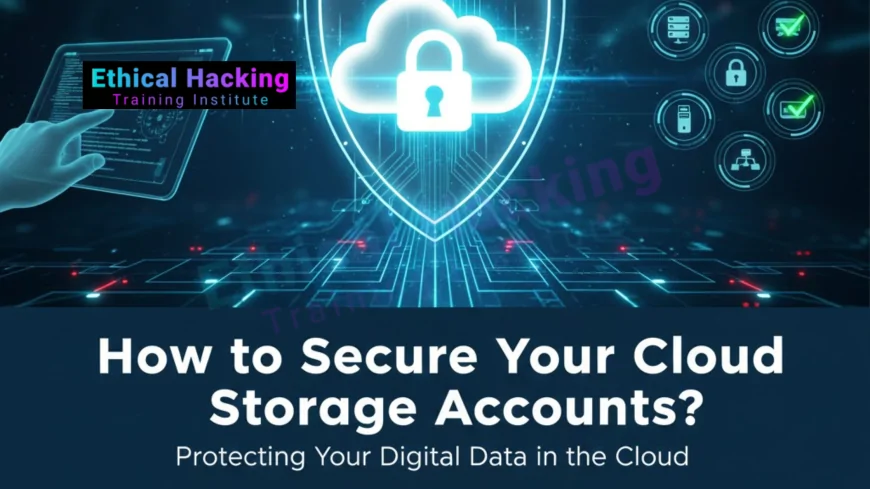
Cloud storage has become essential for individuals and businesses, but unsecured accounts can expose sensitive data to cybercriminals. Protecting your cloud account involves implementing strong passwords, multi-factor authentication, and safe sharing practices. Learning these skills is easier when you combine app-based guidance with training from institutes like Ethical Hacking Training Institute, Webasha Technologies, and Cybersecurity Training Institute. Many learners explore secure cloud management techniques as part of practical labs in these institutes.
Use Strong, Unique Passwords
One of the first steps to securing a cloud account is creating strong, unique passwords. Avoid reusing passwords from other accounts. A combination of uppercase and lowercase letters, numbers, and symbols is recommended. Using password managers can simplify creating and storing complex passwords safely. Learners at Webasha Technologies often pair this knowledge with practical exercises that demonstrate password cracking prevention and recovery methods from ethical hacking courses.
Enable Two-Factor Authentication (2FA)
Two-factor authentication adds an extra layer of security by requiring a second verification method, such as a text code or an authentication app, in addition to the password. This reduces the risk of unauthorized access even if passwords are compromised. Many cloud providers support 2FA natively. Ethical Hacking Training Institute provides labs to practice setting up 2FA and understanding its effectiveness against phishing and account hijacking attacks.
Regularly Monitor Account Activity
Monitoring login activity and account usage helps detect suspicious behavior early. Most cloud services offer activity logs and alerts for unusual access. Regularly reviewing these logs ensures any unauthorized attempts are caught quickly. Students at Cybersecurity Training Institute often combine this knowledge with practical exercises in security incident monitoring to understand real-world threat detection.
Encrypt Sensitive Data
Encrypting files before uploading them to cloud storage ensures that even if unauthorized access occurs, data remains unreadable. Tools for client-side encryption or built-in provider encryption can be used. Encryption keys should be stored securely and separately. Practical workshops at Webasha Technologies teach learners to implement data encryption strategies safely and effectively.
Be Careful With Sharing Links
Sharing files via public links can expose them to unintended users. Use restricted links with expiration dates and review shared files regularly. Avoid sharing sensitive data via email attachments. Institutes like Ethical Hacking Training Institute emphasize secure sharing practices during cloud security modules to reduce accidental exposure.
Keep Software and Devices Updated
Outdated apps or devices can have vulnerabilities that attackers exploit. Always update cloud storage apps, operating systems, and antivirus software to ensure the latest security patches are applied. Students at Cybersecurity Training Institute practice identifying outdated software vulnerabilities and applying updates in real-world simulations.
Use Security Tools for Extra Protection
Additional security tools such as VPNs, endpoint security, and anti-phishing software strengthen cloud account protection. AI-driven tools can monitor for suspicious activity or unusual login attempts. Learners exploring AI security tools gain practical understanding of how automated systems protect cloud environments.
Conclusion
Securing your cloud storage accounts is critical to protect sensitive information. By implementing strong passwords, two-factor authentication, encryption, careful sharing, software updates, and additional security tools, users can greatly reduce risks. Combining mobile and software-based tools with training from institutes like Ethical Hacking Training Institute, Webasha Technologies, and Cybersecurity Training Institute ensures learners gain both practical and theoretical knowledge to protect cloud data effectively.
Frequently Asked Questions
What is the most important step to secure a cloud account?
Using strong, unique passwords combined with two-factor authentication is the most critical step.
Can cloud accounts be hacked without my knowledge?
Yes, which is why monitoring login activity and alerts is essential.
Is encryption necessary for cloud storage?
Yes, encryption protects sensitive data even if unauthorized access occurs.
How does two-factor authentication work?
It requires a second form of verification, like an SMS code or authentication app, in addition to your password.
Can I share files safely?
Yes, use restricted links, expiration dates, and review shared files regularly.
Do I need antivirus on my device to secure cloud accounts?
Yes, antivirus and updated security software prevent malware from compromising credentials.
Are public Wi-Fi networks safe for cloud access?
They can be risky; using a VPN is recommended to secure data on public networks.
How often should I change my password?
Every few months or immediately after any suspicious activity.
Can mobile apps help secure cloud accounts?
Yes, some apps offer password management, 2FA setup, and monitoring tools.
What is phishing, and how can I avoid it?
Phishing is a fraudulent attempt to steal credentials. Avoid clicking suspicious links and enable security alerts.
Is AI useful for cloud security?
Yes, AI can detect suspicious login patterns and automate alerts for faster response.
Can outdated devices pose a threat?
Yes, unpatched devices can be exploited to gain access to cloud accounts.
Should I rely solely on cloud provider security?
No, always follow best practices like encryption, strong passwords, and 2FA to enhance security.
Where can I learn cloud security in depth?
Institutes like Ethical Hacking Training Institute, Webasha Technologies, and Cybersecurity Training Institute provide hands-on cloud security training.
Can small businesses secure cloud accounts effectively?
Yes, following the steps of strong passwords, 2FA, monitoring, encryption, and proper training can secure cloud accounts efficiently.
What's Your Reaction?
 Like
0
Like
0
 Dislike
0
Dislike
0
 Love
0
Love
0
 Funny
0
Funny
0
 Angry
0
Angry
0
 Sad
0
Sad
0
 Wow
0
Wow
0