
How to Perform Ethical Hacking on Windows OS?
Learn how to perform ethical hacking on Windows OS through practical steps, essential tools, best practices, and beginner friendly explanations that make cybersecurity easier to understand. This complete guide helps aspiring ethical hackers explore reconnaissance, scanning, exploitation, security tools, Windows vulnerabilities, and safe testing techniques without using complex jargon.
Introduction
Ethical hacking on Windows OS is the practice of legally and methodically testing Windows hosts, services, and domain environments to discover weaknesses and suggest measurable fixes. Because Windows is widely used across businesses and servers, attackers often target configuration mistakes, legacy protocols, and identity systems, so learning how to test Windows systems helps you protect high value assets. This guide is practical: it explains how to build an isolated lab, which tools to learn first, how to perform reconnaissance and careful scanning, how to validate issues safely using snapshots, how to analyze post compromise impact, and how to communicate findings clearly so organizations can act. The content balances step by step instructions with conceptual explanations so beginners can follow along while progressing toward hands on competency.
Why Windows Testing Matters
Windows runs the majority of user desktops and a large share of servers in enterprises, which makes it a frequent target for malware and ransomware campaigns. Testing Windows reveals platform specific issues such as Active Directory misconfigurations, SMB exposures, RDP weaknesses, and insecure service permissions. Midway through this paragraph I point you to a resource about modern tools and trends that affect reconnaissance and attacker workflows, and you can review the article on top AI tools to understand how automation is changing the field.
Windows Internals You Should Master
To test Windows properly you should learn how the registry, the service control manager, NTFS permissions, access tokens, Group Policy, authentication flows (local and Kerberos), and common server roles such as IIS, MSSQL, SMB, and RDP interact with the operating system. A deep understanding helps you interpret why a misconfiguration leads to privilege escalation or why certain event log entries matter for detection. Mid paragraph I also add a pointer to structured learning that combines theory and labs: see the curated comprehensive online courses which explain internals and hands on practice.
Legal and Ethical Ground Rules
Before you touch any system that you do not own, obtain explicit written authorization that defines scope, targets, time windows, allowed techniques, and data handling expectations. Ethical hacking without permission is illegal and can cause operational harm. Use a signed testing agreement for paid engagements and a lab for learning. Keep authorization records and follow responsible disclosure when reporting real vulnerabilities so owners can patch issues before details are published.
Setting Up a Safe Windows Lab
Build an isolated lab using VirtualBox, VMware Workstation, or Hyper-V. Use host only or internal networks so your attacker VM cannot reach the internet by default, create multiple Windows target VMs (desktop, server, and a domain controller for AD practice), and use intentionally vulnerable images to learn exploitation safely. In the middle of this paragraph you can explore a course that includes lab setup advice and step by step labs: certification course. Always snapshot before risky work so you can revert to a clean state.
- Hypervisor: VirtualBox, VMware, or Hyper-V
- Attacker VM: Kali Linux or Parrot OS
- Target VMs: Windows 10/11 and Windows Server
- Network: host-only or internal to prevent leakage
- Snapshots: take before any intrusive test
Essential Tools for Windows Testing
Learn a balanced toolkit: Nmap for discovery and version scanning, Wireshark for packet analysis, Sysinternals Suite for deep process and service inspection, Metasploit for controlled exploit validation in lab environments, Burp Suite for web testing on IIS, and credential auditing tools like Hashcat and John the Ripper for authorized password analysis. PowerShell is crucial for automation and scripting. In the middle of this paragraph I include a course oriented resource that details tools and paths: complete course.
- Nmap — network and service discovery
- Wireshark — traffic capture and analysis
- Sysinternals — Process Explorer, Autoruns, PsExec
- Metasploit — exploitation framework for lab use
- WinPEAS/PowerUp — privilege escalation enumeration
Reconnaissance Techniques
Start with passive reconnaissance: public DNS records, certificate transparency logs, company metadata, and open source intelligence to map the attack surface without generating traffic. When you have authorization, use active reconnaissance: host discovery, port scans, banner grabbing, and service enumeration. For internal lab targets use PowerShell, net commands, and built in diagnostics and log collection. Mid paragraph you can also read an article that explains how AI and automation help scale recon tasks: AI guide.
- Passive: OSINT, DNS, public certificates
- Active: Nmap host discovery, banner grabbing
- Internal: PowerShell, net user, systeminfo
Scanning and Enumeration
Use Nmap for port and service discovery and then enumerate services for versions and configuration. Focus on SMB, RDP, RPC, LDAP/Active Directory, IIS, and MSSQL because these commonly expose attack vectors in Windows networks. Combine Nmap NSE scripts, smbclient, rpcclient, and crackmapexec for richer data during authorized tests, and save outputs for reproducibility and reporting.
- Port scanning: SYN scans and service detection
- SMB enumeration: shares and ACLs
- AD enumeration: users, groups, policies
Vulnerability Assessment
Validate scanner results manually; automated scanners often report false positives. Check patch levels, service configurations, startup entries, scheduled tasks, and registry keys that may indicate insecure defaults or vulnerability presence. Mid paragraph I include a targeted resource about CEH practical validation methods so you can learn reproducible techniques: CEH practical. Always test in snapshots and avoid destructive or noisy payloads on production systems.
- Confirm CVE applicability for running versions
- Check for missing security updates
- Validate configuration weaknesses manually
Safe Exploitation Practices
When you need to verify an issue, use non destructive proof of concept payloads in a snapshot. Coordinate with operations for any live testing and maintain rollback procedures. Log commands, capture screenshots and evidence, and avoid leaving persistence mechanisms in place. Mid paragraph I add a reference to guided exploit practice resources that emphasize safety and snapshots: training. Use exploit frameworks carefully and prefer minimal, reversible checks.
- Snapshot before running exploits
- Prefer readonly checks that demonstrate presence of issue
- Coordinate with ops and maintain rollback plans
Privilege Escalation Techniques
Privilege escalation commonly leverages weak service permissions, unquoted service paths, writable binaries, scheduled tasks, stored credentials in configuration files or the registry, and vulnerable drivers. Use enumeration tools such as WinPEAS and manual inspection of service ACLs, file permissions, and registry hives to detect exploitable vectors. Mid paragraph you will find a link that explains classroom style escalation training and exam preparation: CEH class. After fixes, re test to ensure mitigation is effective and document acceptance criteria for defenders.
Post Exploitation and Impact Assessment
Post exploitation is about measuring what an attacker could do: data access, credential theft, persistence, and lateral movement. Tools like Mimikatz for credential analysis and BloodHound for Active Directory relationship mapping are useful in labs. Collect logs, evidence, and timestamps and then remove any artifacts you introduced, restoring snapshots before sharing labs. Mid paragraph I include a course oriented resource that covers post exploitation reporting and remediation: CEH online.
- Credential harvesting and validation steps
- Mapping AD attack paths with BloodHound
- Measuring data access and potential impact
Lateral Movement and Domain Considerations
In Active Directory environments, lateral movement techniques such as pass the hash, pass the ticket, Kerberoasting, and remote execution via PsExec or WinRM allow attackers to pivot. Simulate these techniques in a domain lab to evaluate segmentation controls, detection, and service account hygiene. Mid paragraph I link to a career/path resource that also covers AD practice: career path. Fixes include reviewing service accounts, limiting credential exposure, and segmenting critical systems.
Detection, Logging, and Forensics
Detection requires good telemetry: enable Windows Event Logs, configure Sysmon for process creation and network events, and forward telemetry to a SIEM so you can tune alerts. Test detection by generating realistic activity in a lab and measuring alerts and false positives. Mid paragraph I provide a local training pointer that helps teams understand detection tuning in practice: local training. Forensics best practices include collecting volatile memory when needed and preserving timestamps and hashes to support investigations.
Hardening and Remediation
Hardening reduces risk through timely patching, enforcing least privilege and MFA, restricting RDP to bastion hosts or VPNs, disabling SMBv1, removing unnecessary services, and applying Group Policy baselines. Validate hardening changes in a test environment and include rollback plans before production deployment. Mid paragraph I add a resource that outlines practical training and remediation guidance in a structured format: bootcamp guide. Monitoring and automated audits help keep configurations compliant over time.
- Deploy patches and maintain an automated update pipeline
- Require multifactor authentication for remote and privileged access
- Use Group Policy to enforce secure default settings
- Audit service accounts and remove unused privileges
Reporting That Produces Action
Deliver reports that start with an executive summary and follow with prioritized technical findings, reproduction steps, evidence, impact assessment, and remediation guidance with verification steps and timelines. Mid paragraph I include a training resource that helps structure reports and remediation playbooks: CEH guide. Tailor the summary for executives and the technical section for engineers, and include acceptance criteria so fixes can be validated quickly.
Learning Roadmap and Certifications
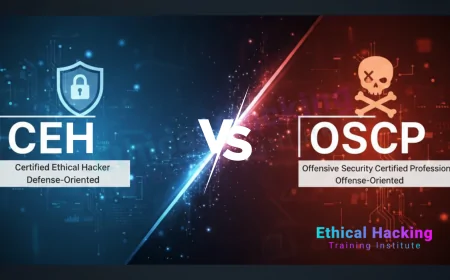
Start with networking basics, Windows fundamentals, and command line skills, then build a lab and practice scanning, enumeration, privilege escalation, and reporting. Structured certifications such as CompTIA Security+ for foundations, CEH for broad knowledge, and OSCP for hands on exploitation may help, but employers often value real demonstrations like CTF wins and detailed lab write ups. Keep a documented portfolio of projects and sanitized reports to show practical ability.
Career Advice and Portfolio Building
Create a portfolio with sanitized lab write ups, CTF solutions, and remediation case studies rather than posting exploit code. Network in local meetups, contribute to community projects, and volunteer for security reviews where permitted. Hiring managers look for evidence of problem solving, reporting clarity, and ethical behavior more than a list of tools, so focus on demonstrating impact in your write ups and sample reports.
Common Mistakes to Avoid
Common beginner mistakes include testing without written permission, using destructive payloads in production, relying exclusively on automated scanners, and failing to document commands and outputs. Practice methodically in labs, snapshot before risky operations, validate findings manually, and prioritize repeatable evidence and remediation steps over flashy exploit demonstrations.
- Never test live systems without signed authorization
- Snapshot VMs before risky tests
- Prefer low impact proofs of concept
- Document reproduction steps and outputs
Common Windows Vulnerabilities Table
| Vulnerability | Description | Impact |
|---|---|---|
| Weak or reused passwords | Simple credentials or reuse across accounts let attackers gain access via brute force or credential stuffing. | Unauthorized access, lateral movement |
| Unpatched services | Outdated system components expose known vulnerabilities that can enable remote code execution or privilege escalation. | Remote compromise, ransomware |
| Misconfigured SMB shares | Excessive permissions on SMB shares leak files and credentials and enable propagation across a network. | Data breach, lateral movement |
| Exposed RDP | RDP endpoints reachable from the internet with weak authentication are frequently brute forced or exploited. | Remote access, credential theft |
| Insufficient logging | Missing or poorly tuned logs reduce the ability to detect and respond to intrusions in a timely manner. | Delayed detection, higher impact |
Conclusion
Ethical hacking on Windows OS requires a blend of technical skills, legal discipline, and clear communication. By building an isolated lab, learning core tools and Windows internals, performing methodical reconnaissance and scanning, validating issues in snapshots, and delivering prioritized remediation oriented reports, you can help organizations reduce risk and develop a career in cybersecurity. Keep practicing, snapshot frequently, document everything, and collaborate with defenders to tune detection and harden systems.
Frequently Asked Questions
What is ethical hacking on Windows?
It is the authorized process of testing Windows systems to find vulnerabilities and recommend fixes to improve security.
Do I need Linux to practice Windows pentesting?
No, Windows supports many tools, but a Linux attacker VM is often used because many frameworks and convenience scripts run on Linux.
How do I get permission to test systems?
Obtain a signed testing agreement or statement of work describing scope, targets, timing, allowed techniques, and data handling procedures.
Which tools should I learn first?
Begin with Nmap for discovery, Wireshark for packet analysis, Sysinternals for Windows internals, and PowerShell for scripting and automation.
Is PowerShell safe to learn?
Yes, in isolated labs; it is powerful for both administration and offensive tasks, so learn defensive logging and execution policies too.
How should I practice privilege escalation?
Use snapshots and intentionally vulnerable VMs, run tools like WinPEAS to locate typical vectors, and validate fixes on patched systems.
What should a pentest report include?
An executive summary, prioritized findings, reproduction steps, evidence, impact assessment, remediation recommendations, timelines, and verification criteria.
Are certifications necessary?
Certifications like CompTIA Security+, CEH, and OSCP help, but practical labs, write ups, and demonstrable skills are often equally important to employers.
How long to become competent?
With steady practice and a structured plan, you can reach practical competence in three to six months; mastery takes longer and requires varied experience.
Can I publish exploit code?
No, do not publish exploit code for live systems; publish sanitized write ups, non reusable proofs of concept, and remediation guidance instead.
Which Windows services are most critical to test?
SMB, RDP, RPC, IIS, LDAP/Active Directory, and MSSQL are high priority due to their frequent impact when misconfigured or vulnerable.
How do defenders use offensive testing?
Defenders run controlled offensive tests to validate detection rules, tune SIEM/EDR, practice incident response, and harden systems based on validated attack paths.
How can I avoid legal trouble?
Always obtain written permission, adhere to the defined scope, avoid destructive payloads in production, and follow responsible disclosure practices when reporting findings.
Where can I practice legally?
Use intentionally vulnerable VMs, community CTF platforms, private labs, and authorized training programs that provide safe and legal practice scenarios.
What's Your Reaction?
 Like
0
Like
0
 Dislike
0
Dislike
0
 Love
0
Love
0
 Funny
0
Funny
0
 Angry
0
Angry
0
 Sad
0
Sad
0
 Wow
0
Wow
0