


How to Conduct Vulnerability Assessment on Web Applications?
A practical, step-by-step guide to performing vulnerability assessments on web applications: planning the scope, using reconnaissance and scanning tools, validating findings, prioritising risks, reporting results, and building a remediation plan that integrates secure development and continuous monitoring.
Introduction
In the digital era, web applications serve as the backbone of online businesses. From e-commerce to banking, most organizations rely heavily on web platforms to interact with users. However, with this convenience comes the challenge of cybersecurity. Vulnerabilities in web applications can expose sensitive data, harm brand reputation, and even result in financial losses. Conducting a vulnerability assessment is one of the most critical steps to safeguard these applications from potential cyber threats.
A vulnerability assessment systematically scans, identifies, and evaluates weaknesses in a web application. The goal is to detect and fix these issues before malicious hackers can exploit them. Ethical hackers and cybersecurity professionals often use specialized tools and frameworks to perform these assessments effectively. Institutions like Ethical Hacking Institute train individuals to perform such assessments using real-world case studies and lab environments.
Understanding Vulnerability Assessment
A vulnerability assessment is the process of discovering and evaluating security flaws within a system or application. It helps in identifying misconfigurations, outdated software, unpatched systems, or insecure coding practices. The assessment focuses on understanding how these weaknesses can lead to data breaches or system compromise.
The purpose is not just to find vulnerabilities but also to prioritize them based on severity and potential impact. By doing this, organizations can allocate their resources efficiently and strengthen their cybersecurity posture. It is often the first step before conducting a penetration test, which simulates real-world attacks to exploit vulnerabilities found during the assessment.
For individuals looking to specialize in this field, advanced courses such as the Complete Ethical Hacking Course provide in-depth insights into vulnerability scanning and exploitation techniques.
Key Steps in Conducting Vulnerability Assessment
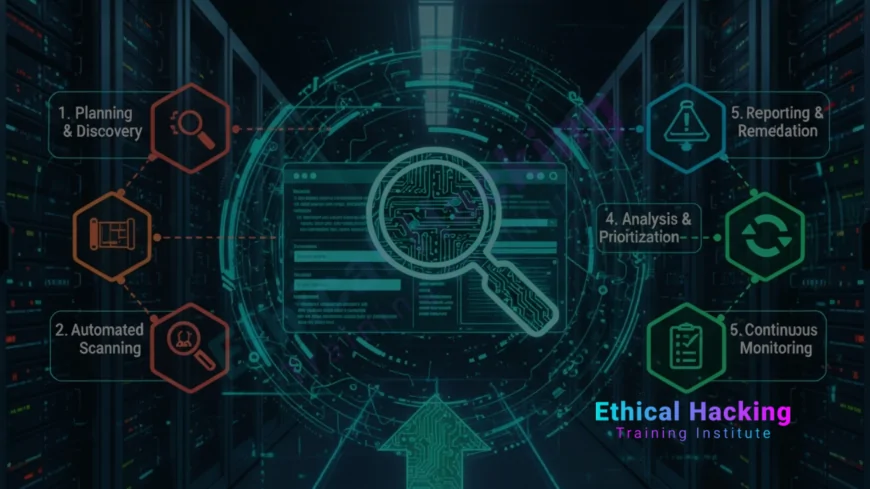
Performing a vulnerability assessment involves a structured process to ensure thorough coverage of all potential risks. The key steps include:
- Planning and Scope Definition: Define the scope of the assessment, including systems, applications, and environments to be tested.
- Information Gathering: Collect information about the target application, such as domains, IPs, and technologies used.
- Vulnerability Scanning: Use automated tools to identify known vulnerabilities.
- Manual Testing: Validate and explore findings manually for accuracy.
- Risk Analysis and Reporting: Analyze vulnerabilities, prioritize risks, and prepare detailed reports with remediation suggestions.
Tools Used for Vulnerability Assessment
Cybersecurity professionals use a variety of tools to identify vulnerabilities efficiently. These tools automate the scanning process and provide detailed reports. Below is a table highlighting some popular tools:
| Tool Name | Purpose | Type |
|---|---|---|
| Nessus | Automated vulnerability scanning and risk analysis | Commercial |
| OpenVAS | Open-source network vulnerability scanner | Free |
| Burp Suite | Web application testing and interception | Commercial |
| Nikto | Web server scanning and vulnerability detection | Free |
To gain practical experience, aspiring professionals can join platforms like Cybersecurity & Ethical Hacking Career Programs offered by top institutes.
Common Vulnerabilities in Web Applications
Web applications are susceptible to a wide range of vulnerabilities that hackers can exploit. Some of the most common include:
- SQL Injection: Attackers manipulate database queries through input fields.
- Cross-Site Scripting (XSS): Inserting malicious scripts to steal user data.
- Cross-Site Request Forgery (CSRF): Forcing users to execute unwanted actions.
- Insecure Deserialization: Exploiting object deserialization flaws.
- Security Misconfigurations: Weak or default settings in servers or applications.
To learn in-depth about identifying and mitigating such vulnerabilities, check out Certified Ethical Hacker Training Courses for 2025.
Manual vs Automated Vulnerability Assessment
Both manual and automated methods have their strengths and limitations. Automated tools provide speed and coverage, while manual testing ensures accuracy and context-based findings. The best approach is to combine both for maximum security assurance.
Automated scanners might miss logic-based vulnerabilities or false positives, which manual testers can catch. On the other hand, automation saves time for large-scale assessments. Understanding when to apply each method is a key skill for every security analyst.
Reporting and Remediation
After identifying vulnerabilities, creating a detailed report is the next crucial step. The report should include vulnerability descriptions, severity ratings, affected components, and recommended fixes. Prioritization helps development teams address the most critical issues first.
Comprehensive training on how to write effective vulnerability reports is available through specialized programs like the CEH Class and Certification Preparation.
Best Practices for Effective Vulnerability Assessment
For an assessment to be successful, following best practices is essential. Here are some key recommendations:
- Regularly update scanning tools and databases.
- Perform both authenticated and unauthenticated scans.
- Integrate assessments into the SDLC (Software Development Life Cycle).
- Reassess after patches and updates.
- Document and track vulnerabilities using management tools.
Institutes like Ethical Hacker Bootcamp provide hands-on practice to master these techniques.
Conclusion
Vulnerability assessments are a vital component of web application security. By proactively identifying and fixing weaknesses, organizations can reduce the risk of cyberattacks and data breaches. Combining manual expertise with automated tools ensures a balanced and effective assessment process. Continuous learning and certification play a major role in staying updated with evolving threats and technologies. Whether you are a cybersecurity student or a professional, investing in quality training programs can help you build a successful career in this domain.
Frequently Asked Questions (FAQs)
What is a vulnerability assessment?
It is a systematic process of identifying and evaluating security weaknesses in systems or applications.
How is a vulnerability assessment different from penetration testing?
Vulnerability assessment focuses on discovering flaws, while penetration testing attempts to exploit them.
Which tools are best for web vulnerability assessment?
Nessus, Burp Suite, OpenVAS, and Nikto are some of the top tools used by professionals.
How often should vulnerability assessments be performed?
Ideally, organizations should conduct them quarterly or after major updates.
Can vulnerability assessment prevent hacking?
It helps minimize risks by identifying and fixing vulnerabilities before hackers exploit them.
Do I need coding skills to perform vulnerability assessments?
Basic programming knowledge helps but is not mandatory.
What are the benefits of regular vulnerability assessments?
They improve security posture, compliance, and trust among customers.
Who conducts vulnerability assessments?
Cybersecurity professionals and ethical hackers typically perform these assessments.
What are the phases of vulnerability assessment?
Planning, scanning, analysis, and remediation are the key phases.
How long does it take to complete an assessment?
Depending on the scope, it may take from a few hours to several days.
Can automated scanners replace manual testing?
No, both methods complement each other for comprehensive results.
What are some common vulnerabilities in web apps?
SQL Injection, XSS, CSRF, and misconfigurations are common.
What is the role of OWASP in vulnerability assessment?
OWASP provides guidelines and a list of top vulnerabilities to focus on.
How can I learn vulnerability assessment?
Join structured programs like CEH or online ethical hacking courses.
Why is vulnerability management important?
It ensures continuous monitoring and fixing of vulnerabilities to maintain security.
What's Your Reaction?
 Like
0
Like
0
 Dislike
0
Dislike
0
 Love
0
Love
0
 Funny
0
Funny
0
 Angry
0
Angry
0
 Sad
0
Sad
0
 Wow
0
Wow
0