

How Long Does It Take to Learn Ethical Hacking?
How long to learn ethical hacking? Get a realistic timeline for beginners: 3 months for basics, 1-2 years for job-ready skills. Includes learning path, daily study tips, and free resources.
Introduction: The Million-Dollar Question
You see ethical hackers earning big salaries, finding zero-day bugs, and protecting companies from cyberattacks. Naturally, you wonder: how long until I can do that?
The truth? There’s no universal answer. Learning ethical hacking depends on your background, daily study time, and goals. But this guide gives you realistic timelines, proven learning paths, and practical tips to speed up your journey.
Whether you want to land a job, win bug bounties, or just understand security better, we break it down step by step. No fluff, just actionable advice even a complete beginner can follow.
Factors That Affect Your Learning Timeline
Before jumping into months and years, understand what influences your speed.
Your Starting Point
- Complete beginner: 0 tech knowledge
- IT background: Knows basics of computers/networks
- Programmer: Already codes in Python or similar
Daily Study Time
- 1-2 hours/day: Slow but steady
- 3-5 hours/day: Full-time learner pace
- 8+ hours/day: Bootcamp intensity
Learning Method
- Self-study: Flexible but requires discipline
- Structured course: Faster with guidance
- Bootcamp: Accelerated 3-6 month programs
Pro tip: consistency beats intensity. Studying 1 hour daily for 6 months beats cramming 10 hours once a week.
Realistic Timelines Based on Goals
Here’s how long it typically takes to reach each milestone.
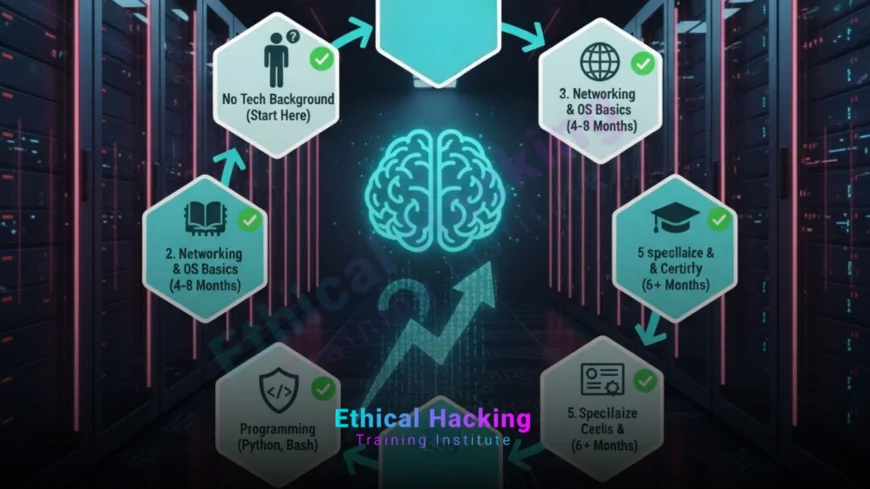
Phase 1: Basic Understanding (1-3 Months)
| Goal | Time Required | What You’ll Learn |
|---|---|---|
| Understand hacking concepts | 1-2 weeks | White-hat vs black-hat, legal boundaries |
| Linux command line basics | 2-4 weeks | Navigation, file management, permissions |
| Networking fundamentals | 3-6 weeks | TCP/IP, OSI model, subnetting |
| Install Kali Linux + basic tools | 1 week | Nmap, Metasploit, Burp Suite intro |
At this stage, you can follow tutorials and understand security news. Many beginners feel confident here, but you’re not job-ready yet.
Phase 2: Practical Skills (3-12 Months)
Now you start hands-on practice. This is where most learners spend the bulk of their time.
Core Skills Breakdown
- Web application testing: 2-4 months
- Network penetration testing: 3-5 months
- Python scripting for automation: 1-3 months
- Vulnerability assessment: 2-3 months
Practice Platforms Timeline
- TryHackMe beginner rooms: 1-2 months
- HackTheBox easy machines: 3-6 months
- PortSwigger Web Academy: 2-4 months
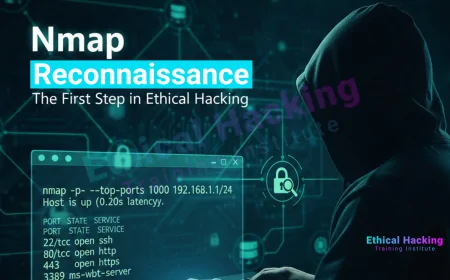
By month 6-9, you should solve medium-difficulty CTF challenges and write basic exploit scripts. Many learners start exploring Nmap mastery for advanced scanning techniques.
Phase 3: Job-Ready Professional (12-24 Months)
This is when you become employable as a junior penetration tester.
Key Milestones
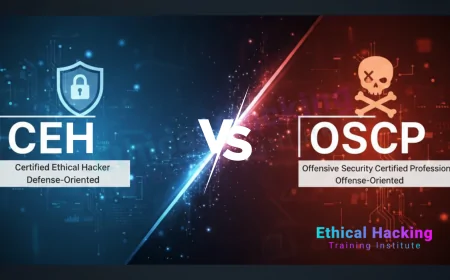
- Complete CEH or similar certification: 2-3 months prep
- Build a portfolio with 5+ detailed reports
- Solve 20+ HackTheBox/Pro labs machines
- Contribute to open-source security tools
Certification Timelines
- CompTIA Security+: 1-2 months
- CEH: 2-3 months study + exam
- eJPT: 1-2 months hands-on prep
- OSCP: 6-12 months intensive practice
Most entry-level jobs require 1-2 years of consistent learning and practice. The OSCP typically takes 6-12 months of dedicated effort after basics.
Daily Study Plan for Fastest Progress
Want to learn in minimum time? Follow this schedule.
3 Hours/Day Plan (12-Month Timeline)
- 30 mins: Theory (videos/articles)
- 1.5 hours: Hands-on labs
- 1 hour: CTF/write-ups/review
Bootcamp Route (3-6 Months)
Intensive programs compress learning. Many students go from zero to job-ready in 12-24 weeks. Consider an ethical hacker bootcamp for structured acceleration.
Common Learning Plateaus and How to Break Them
Everyone hits walls. Here’s how to push through.
Plateau 1: Linux Commands (Week 3-4)
Solution: Use "OverTheWire Bandit" wargame. Complete 1 level daily.
Plateau 2: Networking Confusion (Month 2)
Solution: Draw packet flows on paper. Watch Professor Messer videos.
Plateau 3: Tool Overwhelm (Month 4)
Solution: Master one tool per week (Nmap → Burp → Metasploit).
Plateau 4: No Real Progress (Month 6)
Solution: Start writing blog posts about your labs. Teaching forces mastery.
Free Resources to Speed Up Learning
You don’t need expensive courses to start.
Top Free Platforms
- TryHackMe: Gamified learning paths
- HackTheBox Academy: Structured modules
- PortSwigger Web Security Academy: Free labs
- OverTheWire: Command-line games
- YouTube: NetworkChuck, LiveOverflow
Free Tools to Master
- Kali Linux (free download)
- VirtualBox for labs
- Metasploitable vulnerable VM
- DVWA web app
Signs You’re Making Real Progress
Track these milestones, not just time spent.
Month 3 Checkpoints
- Comfortable in Linux terminal
- Understand TCP 3-way handshake
- Run basic Nmap scans
Month 6 Checkpoints
- Exploit simple web vulnerabilities
- Write Python port scanner
- Solve easy HTB machines
Month 12 Checkpoints
- Pass CEH or eJPT
- 5+ detailed pentest reports
- Interview-ready resume
Conclusion: Your Timeline Starts Today
Learning ethical hacking takes 3 months for basics, 6-12 months for practical skills, and 1-2 years to become job-ready. But the real answer depends on you.
Start small: install Kali Linux this week. Complete one TryHackMe room daily. In 30 days, you’ll know more than 90 percent of beginners.
The field rewards persistence. Every expert was once a beginner staring at a blank terminal. Your journey begins with the first command. For structured guidance, many learners choose to learn ethical hacking online through certified programs. The clock is ticking, start typing.
Frequently Asked Questions
Can I learn ethical hacking in 3 months?
Yes, for basics and simple CTFs. But not job-ready. Most need 12+ months for employment.
Is 1 hour daily enough?
Yes for slow progress. You’ll reach intermediate level in 2-3 years. Increase to 3+ hours for faster results.
Do I need a degree?
No. Certifications and practical skills matter more. Many self-taught hackers land jobs.
How long for OSCP certification?
6-12 months after mastering basics. Requires 1000+ hours of lab practice.
Can I learn while working full-time?
Absolutely. 2 hours daily + weekends = 15 hours/week. Reach job-ready in 18-24 months.
Is Python mandatory?
Not for basics, but essential for automation and advanced exploits. Learn after networking.
How much practice is needed?
Minimum 500 hours of hands-on labs. Quality matters more than quantity.
Are bootcamps worth it?
Yes for acceleration. Cut learning time by 50 percent with mentorship and structure.
Can I start bug bounties early?
After 6 months of practice. Focus on learning platforms first to avoid frustration.
How to stay motivated?
Join Discord communities. Share progress. Celebrate small wins like your first root shell.
Is age a barrier?
No. Students and 40+ career changers succeed daily. Consistency beats starting age.
What’s the fastest path to employment?
Bootcamp (3-6 months) + CEH/eJPT + portfolio + networking = job in under 1 year.
Do I need expensive hardware?
No. Any laptop with 8GB RAM and virtualization support works. Use cloud labs if needed.
How often should I review?
Weekly. Revisit old labs. Write summaries. Teaching yourself cements knowledge.
What if I get stuck?
Ask in forums (Reddit r/netsec, Discord). Read write-ups. Never give up on a box for more than 3 days.
What's Your Reaction?
 Like
0
Like
0
 Dislike
0
Dislike
0
 Love
0
Love
0
 Funny
0
Funny
0
 Angry
0
Angry
0
 Sad
0
Sad
0
 Wow
1
Wow
1