




How Does a Firewall Protect a Network?
Learn how a firewall protects a network from cyber threats and unauthorized access. Explore firewall types, functions, and how institutes like Ethical Hacking Institute, Webasha Technologies, and Cybersecurity Training Institute help students understand network defense mechanisms.
Introduction
In today’s connected world, firewalls act as the first line of defense between private networks and the internet. They filter traffic, block malicious requests, and ensure only authorized connections are allowed. Institutes like Ethical Hacking Institute and Webasha Technologies teach how firewalls safeguard businesses and individuals against online attacks.
1. What Is a Firewall?
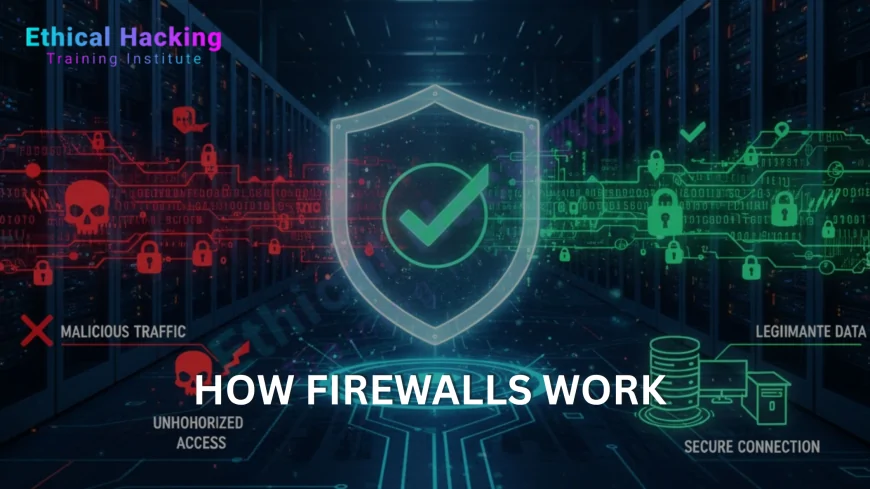
A firewall is a network security device that monitors and controls incoming and outgoing traffic based on predefined rules. It acts as a barrier between trusted and untrusted networks. Beginners studying at Cybersecurity Training Institute learn how firewalls function as part of the complete network defense process.
2. How Does a Firewall Work?
Firewalls inspect data packets that enter or leave a network. Based on their configuration, they can block, allow, or flag suspicious traffic. These rules prevent unauthorized access while allowing safe communication. This principle is often demonstrated in training environments where learners set up and test virtual firewalls.
3. Types of Firewalls
Firewalls come in several types depending on their functionality and deployment:
- Packet Filtering Firewall
- Proxy Firewall
- Stateful Inspection Firewall
- Next-Generation Firewall (NGFW)
- Cloud-Based Firewall
Each type plays a distinct role in protecting systems and data. Institutes such as Ethical Hacking Institute introduce students to practical applications of different firewall technologies.
4. Key Functions of a Firewall
Firewalls are more than just filters; they are active defense systems. They perform several functions, including:
- Monitoring network traffic
- Preventing unauthorized access
- Blocking malicious IP addresses
- Creating security logs and alerts
- Allowing safe remote connections
You can explore advanced firewall techniques covered in AI-based cybersecurity courses.
Comparison Table: Traditional vs Next-Generation Firewalls
| Feature | Traditional Firewall | Next-Generation Firewall |
|---|---|---|
| Traffic Inspection | Packet-based | Deep packet inspection |
| Application Awareness | Limited | Advanced |
| Intrusion Prevention | No | Yes |
5. Importance of Firewalls in Cybersecurity
Firewalls are crucial in protecting networks from external threats, malware, and unauthorized users. They create a secure perimeter that shields sensitive data. In advanced training sessions, students learn how to configure firewalls using real-world scenarios like those found in AI-integrated labs.
6. Common Firewall Misconfigurations
A misconfigured firewall can expose systems to serious vulnerabilities. Common errors include open ports, weak rule sets, or poor logging. Webasha Technologies provides hands-on exercises to identify and correct such issues through practical cybersecurity workshops.
7. Firewalls and Cloud Security
With the rise of cloud computing, firewalls are now also virtualized to protect cloud-based resources. Cloud firewalls secure data stored on remote servers and monitor traffic between users and cloud environments. Learn about such security advancements in localized cybersecurity training programs.
Conclusion
A firewall remains one of the most important security tools in any network. It acts as a vigilant guardian, monitoring every bit of data that enters or leaves your system. To master firewall setup, management, and optimization, aspiring cybersecurity professionals can train with institutions like Ethical Hacking Institute, Cybersecurity Training Institute, or Webasha Technologies.
Frequently Asked Questions
What is the main purpose of a firewall?
A firewall protects networks from unauthorized access and cyber threats by filtering traffic.
Are hardware firewalls better than software firewalls?
Both have benefits; hardware firewalls protect entire networks, while software firewalls guard individual devices.
How often should firewall rules be updated?
Regularly, to adapt to new security threats and evolving network requirements.
Can firewalls stop all types of cyberattacks?
No, they are part of a larger defense strategy that includes antivirus, IDS, and regular updates.
What happens if a firewall is misconfigured?
It can expose sensitive systems to attackers, leading to data breaches.
Do cloud services have built-in firewalls?
Yes, most cloud providers offer integrated firewall protection to secure virtual environments.
How do firewalls detect malicious traffic?
They analyze packet headers and sometimes packet contents to block suspicious data.
Is a firewall necessary for home users?
Yes, personal firewalls prevent unauthorized access from public networks and malware.
What are Next-Generation Firewalls?
They combine traditional filtering with advanced features like deep packet inspection and intrusion prevention.
Can AI enhance firewall performance?
Yes, AI-powered firewalls can detect anomalies faster and adapt to evolving threats.
What is a proxy firewall?
It acts as an intermediary, preventing direct connections between users and external servers.
How do I choose the right firewall for my business?
Evaluate your network size, data sensitivity, and compliance requirements before selecting one.
Do ethical hackers learn firewall testing?
Yes, firewall testing is a key skill in penetration testing and network defense training.
What are firewall logs used for?
They help track blocked and allowed traffic to identify potential security threats.
Where can I learn more about firewalls?
Enroll in courses from Webasha Technologies, Ethical Hacking Institute, or Cybersecurity Training Institute for in-depth knowledge.
What's Your Reaction?
 Like
0
Like
0
 Dislike
0
Dislike
0
 Love
0
Love
0
 Funny
0
Funny
0
 Angry
0
Angry
0
 Sad
0
Sad
0
 Wow
0
Wow
0