
How Do Hackers Exploit Social Media Platforms?
Learn how hackers exploit social media in 2025: phishing, fake profiles, credential stuffing, deepfakes, data scraping, and malware distribution. Real-world tactics and defense strategies from the Ethical Hacking Institute to protect your accounts and privacy.
Introduction
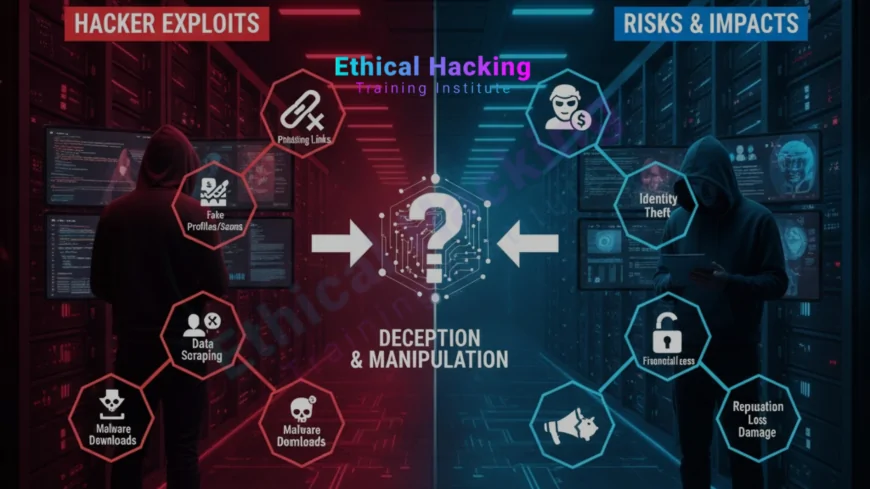
In 2025, over 5.2 billion people use social media daily, making platforms like Instagram, Facebook, LinkedIn, and TikTok prime targets for cybercriminals. Hackers exploit trust, personal data, and weak security to launch phishing, identity theft, and malware campaigns. A single compromised account can lead to financial loss, reputational damage, or corporate espionage. This guide exposes 15 exploitation techniques with real examples and countermeasures. The Ethical Hacking Institute teaches these red team tactics in safe labs, helping users and organizations defend against social media threats.
Phishing via DMs and Fake Login Pages
- Urgent Messages: “Your account is suspended—click to verify”
- Fake Login Portals: Clone Instagram, Facebook login
- Shortened URLs: bit.ly, tinyurl hide phishing sites
- Lookalike Domains: faceb00k.com, instagrarn.com
- OAuth Phishing: “Sign in with Google” to steal tokens
- QR Code Scams: Scan to “recover account”
- Two-Factor Bypass: Steal SMS codes via SIM swap
80 percent of breaches start with phishing.
Always verify sender and URL.
Fake Profiles and Social Engineering
Hackers create realistic profiles to befriend targets, extract info, or spread malware. In 2025, AI generates profile pics and bios. The Ethical Hacking Institute simulates OSINT gathering from fake accounts.
- Catfishing: Romance scams, blackmail
- Impersonation: CEO, colleague, support staff
- AI Avatars: Deepfake photos, voice messages
- Mutual Friends: Clone real connections
- Job Offers: LinkedIn recruitment scams
- Giveaways: “Win iPhone” to steal data
| Platform | Common Scam | Loss |
|---|---|---|
| Brand impersonation | $10M/month | |
| Fake jobs | Credentials |
Learn OSINT defense in Pune certification labs at the Ethical Hacking Institute.
Credential Stuffing and Password Reuse
- Breach Databases: 15 billion credentials on dark web
- Automated Tools: Sentry MBA, OpenBullet
- API Endpoints: Bulk login attempts
- No Rate Limiting: Platforms allow 1000+ tries
- Session Hijacking: Steal cookies post-login
- 2FA Bypass: If SMS or email compromised
One leaked password = multiple account takeovers.
Use unique passwords everywhere.
Malware Distribution via Links and Files
Hackers hide malware in “free Netflix”, “crypto airdrops”, or “leaked content”. TikTok and Instagram Stories are common vectors. The Ethical Hacking Institute analyzes social malware in sandboxes.
- Drive-by Downloads: Click link → auto-download
- APK Files: “TikTok Pro” with spyware
- Document Macros: “Invoice.pdf.exe”
- Image Steganography: Malware in JPG
- Video Codecs: Fake player installs trojan
- Link Shorteners: Hide malicious domains
Practice malware analysis via online courses at the Ethical Hacking Institute.
Deepfakes and AI-Powered Impersonation
- Voice Cloning: 3-second sample → fake audio
- Video Swaps: CEO asking for wire transfer
- Live Deepfakes: Real-time Zoom manipulation
- Celebrity Scams: “Elon Musk” giving crypto
- Political Disinfo: Fake politician speeches
- Verification Abuse: Buy blue check for trust
Data Scraping and Privacy Leaks
- Public Profiles: Phone, email, location exposed
- API Abuse: Scrape friends, posts, metadata
- Graph Search: Facebook relationship mapping
- Photo Metadata: GPS from vacation pics
- Third-Party Apps: “Which Disney princess are you?”
- Shadow Profiles: Data on non-users
Master privacy settings with advanced course at the Ethical Hacking Institute.
Account Takeover via Recovery Bypass
- Email Compromise: Reset via hacked Gmail
- Phone Number: Port-out scams
- Security Questions: “Mother’s maiden name” from OSINT
- Support Scams: Fake “Meta Support” calls
- SIM Swapping: Bribe carrier employee
- Session Persistence: Steal auth tokens
Conclusion: Your Profile Is the Target
Social media is built on trust—and hackers exploit it ruthlessly. In 2025, phishing, fake profiles, credential stuffing, and deepfakes dominate. But strong passwords, MFA, privacy settings, and skepticism stop 99 percent of attacks. The Ethical Hacking Institute, Webasha Technologies, and Cybersecurity Training Institute teach both offense and defense. Lock down your accounts. Verify before you click. Your digital life depends on it.
Frequently Asked Questions
Can 2FA stop all takeovers?
No. SMS is vulnerable to SIM swap. Use app/authenticator key.
Are verified accounts safe?
No. Blue checks can be purchased or phished.
Should I make my profile private?
Yes. Limits data scraping and targeting.
Can hackers access deleted posts?
Sometimes. Use archive removals like Deseat.me.
Is LinkedIn safe for job hunting?
Use caution. Verify recruiters via company domain.
Do link shorteners hide malware?
Yes. Always expand with unshorten.it.
Can I recover a hacked account?
Yes if you act fast. Use official recovery, not DMs.
Are QR codes in stories safe?
No. Scan only from trusted sources.
Should I avoid third-party apps?
Yes. They access more data than needed.
Can deepfakes be detected?
Hard. Look for unnatural blinks, audio sync.
Is TikTok riskier than Instagram?
Similar risks. Both allow file downloads.
How to remove my data?
Use GDPR/CCPA requests, delete old accounts.
Can kids use social media safely?
With parental controls, private accounts, education.
Safe to click “View More”?
No. Often leads to phishing or malware.
Best place to learn social media security?
Ethical Hacking Institute OSINT and phishing labs.
What's Your Reaction?
 Like
0
Like
0
 Dislike
0
Dislike
0
 Love
1
Love
1
 Funny
0
Funny
0
 Angry
0
Angry
0
 Sad
0
Sad
0
 Wow
0
Wow
0