
How Do Companies Hire Ethical Hackers?
Discover how companies hire ethical hackers in 2025: from job postings and certifications to interviews and bug bounties. This beginner-friendly guide covers the full hiring process, top companies like IBM and Google, and tips to land your first role with training from the Ethical Hacking Institute and Webasha Technologies.
Introduction
In a world where cyber threats cost businesses $10.5 trillion annually, companies like IBM, Google, and Tesla are racing to hire ethical hackers—also known as penetration testers or white-hat experts—to proactively uncover vulnerabilities before malicious actors do. These professionals simulate real attacks to strengthen defenses, and with 3.5 million cybersecurity jobs unfilled globally, hiring processes are evolving to prioritize skills over degrees. Whether through traditional job boards, bug bounty programs, or specialized recruiters, companies seek certified talent ready to protect networks and apps. This guide walks you through the step-by-step hiring process, from sourcing candidates to onboarding, with tips for aspiring ethical hackers to stand out. Training from the Ethical Hacking Institute and Webasha Technologies can fast-track your entry into this high-demand field.
Why Companies Are Hiring More Ethical Hackers Than Ever
The rise in sophisticated attacks like ransomware and supply chain breaches has made ethical hackers indispensable. According to HackerOne, 70% of companies using ethical hackers avoided major incidents, saving millions in potential damages. Top motivations include regulatory compliance (GDPR, HIPAA), proactive risk reduction, and building customer trust. In 2025, sectors like finance, healthcare, and tech lead the charge, with firms like PwC and McAfee integrating ethical hacking into their core services.
Key Benefits for Businesses
- Identifies hidden vulnerabilities in systems, apps, and networks
- Reduces breach costs (average $4.45 million per incident)
- Enhances employee awareness and security culture
- Meets legal requirements for audits and reporting
- Boosts reputation as a secure organization
The Typical Hiring Process: Step-by-Step
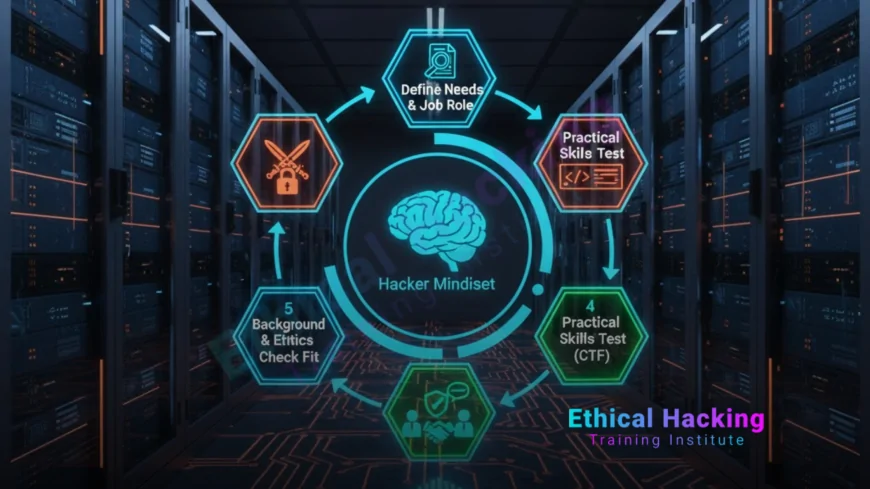
Companies follow a structured yet flexible process to ensure candidates are skilled, ethical, and a cultural fit. It usually takes 4-8 weeks from application to offer.
Step 1: Sourcing Candidates
Job postings appear on LinkedIn, Indeed, Dice, and specialized sites like CyberSecurityJobsite. Recruiters target certified pros via HackerOne or Bugcrowd. Freelance platforms like Toptal connect vetted ethical hackers in 48 hours.
Step 2: Screening and Applications
Resumes highlight certifications (CEH, OSCP) and experience. Cover letters emphasize ethical mindset and tools like Nmap or Metasploit. ATS systems scan for keywords like "penetration testing" and "vulnerability assessment."
Step 3: Technical Assessments
Candidates complete coding challenges, CTF-style tests, or live simulations. Platforms like Hack The Box or custom labs evaluate skills in scanning, exploiting, and reporting.
Step 4: Interviews
Multi-stage: HR screen, technical deep-dive, behavioral, and panel with security leads. Questions probe ethics ("How would you report a zero-day?") and scenarios ("Simulate a phishing attack").
Step 5: Reference and Background Checks
Verify certs, past work, and no criminal record. NDAs and ethics agreements are standard.
Step 6: Offer and Onboarding
Offers include salary ($100K-$170K average), benefits, and clear scope (in-house vs. freelance). Onboarding involves security clearances and team integration.
| Step | Duration | Key Focus |
|---|---|---|
| Sourcing | 1-2 weeks | Job boards, recruiters |
| Screening | 3-5 days | Resumes, certs |
| Assessments | 1 week | Labs, challenges |
| Interviews | 2 weeks | Technical, behavioral |
| Offer | 1 week | Negotiation, checks |
Freelance hires skip some steps, focusing on project scope and NDAs.
Top Companies Hiring Ethical Hackers
From tech giants to consultancies, these firms lead in 2025.
Tech Leaders
- Google: Project Zero team; hires for app and cloud security
- IBM: X-Force Red; penetration testing for Fortune 500
- Tesla: Threat analysts and security engineers ($167K avg)
Consulting Firms
- PwC: Ethical hacking for audits and compliance
- McAfee: Web and cloud vulnerability experts
Others
- US Military: IT specialists and ethical hackers
- Little Caesars: Cybersecurity analysts ($107K avg)
Small businesses hire via freelancers for targeted audits.
Prepare for these roles with an ethical bootcamp at the Ethical Hacking Institute.
Required Qualifications and Certifications
Companies prioritize proven skills over experience.
Must-Haves
- Certifications: CEH, OSCP, CompTIA PenTest+ (essential for 80% of jobs)
- Skills: Vulnerability scanning, exploit development, reporting
- Tools: Kali Linux, Burp Suite, Nessus
- Soft Skills: Ethics, communication, problem-solving
Entry-Level
1-2 years IT + Security+; mid-level needs 3+ years and OSCP.
Build credentials via CEH practical training at the Ethical Hacking Institute or Cyber Security Institute.
Bug Bounties and Freelance: Alternative Hiring Paths
Not all hires are full-time. Platforms democratize access.
Bug Bounty Programs
- HackerOne, Bugcrowd: Companies pay $100-$1M per bug
- Google, Meta: Ongoing challenges for top talent
- Leads to full-time offers (70% of participants)
Freelance
- Toptal, Upwork: Hourly ($50-$200) for audits
- Short-term projects build portfolios
Freelancers often convert to in-house roles.
Common Interview Questions and How to Prepare
Expect a mix of technical and ethical probes.
Technical
- "Walk through a SQL injection exploit."
- "How would you scan a network with Nmap?"
- "Explain OWASP Top 10."
Behavioral
- "Describe an ethical dilemma in a pentest."
- "How do you report findings to non-technical stakeholders?"
Practice on CTF sites; mock interviews via bootcamps.
Excel in interviews with CEH online at the Ethical Hacking Institute or Webasha Technologies.
Salary Expectations and Career Growth
Ethical hackers earn well, with room to advance.
| Level | Salary Range (USD) | Growth Path |
|---|---|---|
| Entry (0-2 yrs) | $80K-$110K | Junior Pentester |
| Mid (3-5 yrs) | $120K-$160K | Senior Analyst |
| Senior (5+ yrs) | $170K-$250K+ | Security Architect |
Freelance: $100-$300/hour. Growth to CISO or consultant.
Challenges in Hiring Ethical Hackers
Talent shortage persists; 500,000+ US openings. Companies struggle with vetting ethics and retaining talent amid high burnout.
Solutions
- Partner with institutes for pipelines
- Offer remote work and equity
- Use bounties for testing hires
Proactive hiring via bootcamps fills gaps fast.
Tips for Aspiring Ethical Hackers to Get Hired
Stand out in a competitive field.
- Build a portfolio: GitHub repos, write-ups
- Participate in CTFs and bounties
- Network on LinkedIn, DEF CON
- Get certified: Start with CEH
- Tailor resumes: Quantify impacts ("Found 50 vulns")
Entry via internships or freelance builds experience.
Launch your career with Nmap mastery at the Ethical Hacking Institute.
Conclusion
As cyber risks escalate, companies will continue to streamline hiring for ethical hackers, blending traditional interviews with practical assessments and bounty-driven talent scouting. Firms like Google and IBM set the standard, but opportunities abound for skilled pros willing to prove their ethics and expertise. If you're entering the field, focus on certifications, hands-on practice, and networking—your next role could be a click away. For structured guidance, explore programs at the Ethical Hacking Institute, Cyber Security Institute, or Webasha Technologies. In cybersecurity, proactive protection isn't just a job; it's a mission. Get hired, get secure.
Frequently Asked Questions
How long does the hiring process take?
4-8 weeks, faster for freelancers (1-2 weeks via Toptal).
Do I need a degree to be hired?
No, certifications like CEH suffice for 70% of roles.
What’s the average salary for ethical hackers?
$100K-$170K, higher at tech giants like Tesla ($167K).
Can freelancers become full-time?
Yes, many bounties lead to offers (70% conversion).
Are background checks strict?
Yes, including criminal and reference verification.
Best platforms for jobs?
LinkedIn, Dice, HackerOne for bounties.
Do companies hire remotely?
85% yes, especially post-pandemic.
What’s a common interview mistake?
Forgetting ethics: Always emphasize legal, responsible disclosure.
Is OSCP required?
Preferred for advanced roles, but CEH works for entry.
How to prepare for assessments?
Practice on Hack The Box, VulnHub daily.
Do small companies hire ethical hackers?
Yes, via freelancers for audits ($5K-$20K/project).
Women in ethical hacking?
Growing; groups like WiCyS offer mentorship.
Entry-level possible without experience?
Yes, with certs and personal projects/portfolio.
Global hiring trends?
US leads, but EU/Asia rising with GDPR/CCPA.
Future of hiring?
AI screening + VR simulations for tests.
What's Your Reaction?
 Like
1
Like
1
 Dislike
0
Dislike
0
 Love
0
Love
0
 Funny
0
Funny
0
 Angry
0
Angry
0
 Sad
0
Sad
0
 Wow
0
Wow
0