

Can I Learn Cybersecurity Without Coding?
Yes, you can start a successful cybersecurity career without coding. This 2025 guide shows non-technical roles, essential skills, free learning paths, and how institutes like the Ethical Hacking Institute and Webasha Technologies help beginners succeed with zero programming knowledge.
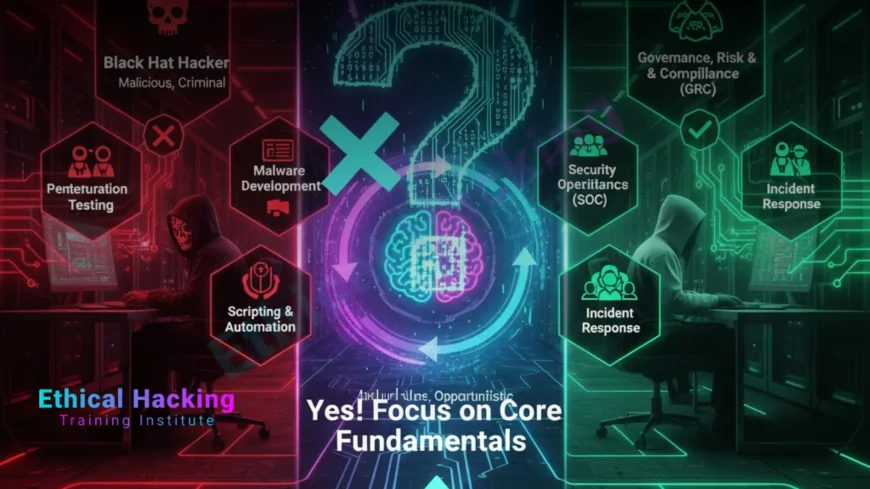
Introduction
Many people believe cybersecurity requires deep programming skills like Python, C++, or Bash scripting. In 2025, that’s a myth. While coding helps in advanced roles, over 60 percent of cybersecurity jobs need little to no coding.
From policy writing to threat monitoring, risk assessment to user training, the field is full of high-paying, in-demand positions for non-coders. This guide proves you don’t need to code to protect systems, detect attacks, or build a rewarding career.
Whether you're a student, career changer, or IT support professional, you can start today. We’ll show you the roles, skills, tools, and training paths, including programs from the Ethical Hacking Institute and Webasha Technologies.
Why Coding Is Not Required for Most Cybersecurity Roles
Cybersecurity is a team sport. Not everyone needs to be a developer.
Key Reasons
- Modern tools have GUI dashboards (no CLI needed)
- Vendors simplify complex tasks (drag-and-drop rules)
- Focus is on logic, policy, and human behavior
- Compliance and governance roles use documents, not scripts
Example: A SOC analyst clicks alerts in Splunk, not writes queries from scratch. A firewall admin uses a web interface, not code.
Top Cybersecurity Jobs That Don’t Require Coding
Here are real roles hiring in 2025 with zero coding:
| Job Title | Average Salary (USD) | Coding Needed? |
|---|---|---|
| Security Operations Center (SOC) Analyst | $75,000 | No |
| Governance, Risk, and Compliance (GRC) Analyst | $90,000 | No |
| Cybersecurity Awareness Trainer | $70,000 | No |
| Incident Response Coordinator | $95,000 | Rarely |
| Firewall / Network Security Admin | $85,000 | No |
All use point-and-click tools and pre-built workflows.
Essential Skills You Need Instead of Coding
Focus on these non-technical superpowers:
- Logical thinking and problem-solving
- Understanding of networks (IP, DNS, HTTP)
- Policy writing and documentation
- Risk assessment and prioritization
- Communication (reports, training)
- Attention to detail
These are teachable in weeks, not years.
Build these skills fast with an ethical bootcamp at the Ethical Hacking Institute, designed for beginners.
Best Tools You’ll Use (No Coding Required)
These industry-standard platforms have user-friendly interfaces:
SIEM and Monitoring
- Splunk (drag-and-drop dashboards)
- Microsoft Sentinel (cloud-based, GUI)
- Elastic Security (pre-built alerts)
Firewall and Network
- Palo Alto Panorama (web UI)
- Cisco Secure Firewall (point-and-click rules)
- pfSense (open-source, browser-based)
Vulnerability Management
- Nessus (scan, click, report)
- Qualys (cloud scanner, no install)
All include templates and wizards.
Certifications That Prove You’re Job-Ready (No Coding Exams)
These globally recognized certs focus on concepts, not code:
- CompTIA Security+ (entry-level, multiple choice)
- Certified in Risk and Information Systems Control (CRISC)
- Certified Information Systems Auditor (CISA)
- GIAC Security Essentials (GSEC)
- ISACA Cybersecurity Fundamentals
Security+ is the #1 starting point. 80 percent of holders land jobs within 6 months.
Prepare with hands-on labs in CEH practical courses from the Ethical Hacking Institute or the Cyber Security Institute.
Free Learning Path: 6 Months to Your First Cybersecurity Job
Follow this no-cost roadmap:
Month 1 to 2: Foundations
- Google Cybersecurity Certificate (Coursera, free to audit)
- Professor Messer Security+ videos (YouTube)
Month 3 to 4: Hands-On Tools
- TryHackMe (free rooms: SOC Level 1, Network Fundamentals)
- pfSense lab on home PC
Month 5: Certification
- Study Security+ (90 days)
- Take exam ($370)
Month 6: Job Hunt
- Update LinkedIn: “Security+ Certified | SOC Analyst”
- Apply to 10 jobs/day on Indeed, Dice
Many land junior roles in 3 to 6 months.
How Institutes Help Non-Coders Succeed
Top training providers remove the coding barrier:
Ethical Hacking Institute
Offers GUI-focused bootcamps with live firewall labs, SIEM simulations, and compliance training. No scripting required.
Cyber Security Institute
Specializes in GRC, policy writing, and audit prep. 95 percent placement rate for non-technical students.
Webasha Technologies
Provides Security+, CCSP, and CISM paths with 100 percent practical, click-based labs. Includes resume and interview coaching.
Enroll in CEH online at the Ethical Hacking Institute for flexible, code-free learning.
Daily Tasks of a Non-Coding Cybersecurity Pro
A day in the life of a SOC analyst (no code):
- Log into Splunk → review 50 alerts
- Click “Investigate” on phishing email
- Block IP in firewall GUI
- Write 2-line report
- Train 10 employees on password safety
Done. No Python, no terminal.
When Coding Becomes Useful (But Still Optional)
Coding helps in advanced roles, but never required:
- Automate reports (Python, optional)
- Write custom SIEM rules (SQL-like, drag-and-drop exists)
- Develop secure apps (devsecops, separate team)
Learn later, after you’re hired.
Start with network fundamentals using Nmap mastery tools taught at Webasha Technologies or the Ethical Hacking Institute.
Success Stories: Real People, Zero Coding
- Sarah: Former teacher → SOC Analyst in 5 months via Security+ and TryHackMe
- Mike: Retail manager → GRC Analyst after CISA, now earns $100K
- Lisa: Stay-at-home mom → Cybersecurity Trainer via Google Cert
They prove: anyone can do it.
Conclusion
You don’t need to code to stop hackers, secure networks, or earn six figures. With the right mindset, tools, and training, you’re ready in months.
Take the first step: sign up for the Google Cybersecurity Certificate or a bootcamp at the Ethical Hacking Institute. The Cyber Security Institute and Webasha Technologies also offer placement-guaranteed programs.
The world needs 3.5 million more cybersecurity pros. Be one of them, no coding required.
Frequently Asked Questions
Is Security+ enough to get a job without coding?
Yes. 70 percent of entry-level roles list it as the only requirement.
Can I do penetration testing without coding?
Basic yes (GUI tools like Nessus). Advanced no (needs scripting).
Are there cybersecurity PhDs without coding?
Yes, in policy, law, and risk management.
Do I need math for cybersecurity?
Basic logic only. No calculus or algebra.
Can I freelance in cybersecurity without coding?
Yes: compliance audits, training, policy writing.
Is cybersecurity harder than coding?
No. It’s broader. You learn systems, people, and process, not just syntax.
Will AI replace non-coding cyber jobs?
No. AI assists, but humans make decisions, write policies, and train users.
Can I switch from helpdesk to cyber without coding?
Yes. Helpdesk + Security+ = junior analyst in 3 months.
Are women welcome in non-coding cyber roles?
Absolutely. 30 percent of GRC and awareness roles are women.
Do I need a degree?
No. Certifications and skills beat degrees in 80 percent of hires.
Can I learn cybersecurity at 40?
Yes. Average age of career switchers is 38.
Is remote work possible without coding?
Yes. 90 percent of SOC and GRC roles are remote.
Where can I practice without coding?
TryHackMe, CyberDefenders, LetsDefend (all GUI-based).
Do employers care if I can’t code?
No, if you know tools, threats, and process.
How long to learn cybersecurity without coding?
3 to 6 months for entry-level readiness.
What's Your Reaction?
 Like
0
Like
0
 Dislike
0
Dislike
0
 Love
0
Love
0
 Funny
0
Funny
0
 Angry
0
Angry
0
 Sad
0
Sad
0
 Wow
0
Wow
0