

Best Hacking Operating Systems for Beginners
Explore the best hacking operating systems for beginners in 2025, including Kali Linux and Parrot OS for penetration testing and privacy. Learn setup, tools, Zero Trust defenses, Ethical Hacking Training Institute certifications, career paths, and AI-integrated OS trends.

Introduction
In 2025, a beginner uses Kali Linux to simulate a phishing attack, mastering Nmap in a virtual lab, preventing a potential $1M data breach. With global cybercrime losses soaring to $15 trillion, hacking operating systems (OS) are essential for aspiring ethical hackers to learn penetration testing, forensics, and vulnerability scanning. Tools like Metasploit and Wireshark, pre-installed on OS like Kali Linux, simplify learning, while AI integrations enhance automation. Can these OS empower novices to secure digital systems? This guide ranks the top hacking OS for beginners, detailing features, setup, and real-world applications. With training from Ethical Hacking Training Institute, beginners can build skills to combat cyber threats and launch rewarding careers.
Why Choose the Right Hacking OS for Beginners
Selecting the right hacking OS is critical for beginners, providing a user-friendly platform with pre-installed tools and robust community support to accelerate learning ethical hacking techniques.
- Pre-Installed Tools: Over 90% of essential tools like Nmap and Metasploit are ready out-of-the-box, saving hours of setup time for novices.
- Community Support: Active forums and tutorials resolve 80% of common issues, guiding beginners through troubleshooting and tool usage.
- Adaptability: Supports AI and ML integrations for 70% of advanced attack simulations, enabling modern cybersecurity training.
- Scalability: Runs on virtual machines or cloud platforms, accommodating 95% of learning scenarios, from laptops to enterprise labs.
These advantages make hacking OS ideal for beginners, offering a structured environment to practice ethical hacking safely and effectively, building confidence and skills.
Top 5 Hacking Operating Systems for Beginners in 2025
The following OS are ranked for beginners based on ease of use, tool availability, community support, and suitability for learning ethical hacking in 2025.
1. Kali Linux
- Features: Over 600 pre-installed tools for penetration testing, forensics, wireless attacks, and web vulnerability scanning, with AI support via Python libraries.
- Best For: Beginners learning core tools like Nmap, Metasploit, and Burp Suite; ideal for penetration testing and vulnerability assessments.
- Pros: Free, extensive community, live USB mode for portable testing, regular updates with new tools.
- Cons: Resource-intensive, requiring 4GB+ RAM for smooth performance on virtual machines.
Kali Linux, developed by Offensive Security, is the go-to OS for beginners due to its comprehensive toolset and beginner-friendly tutorials. For example, a novice can use Nmap to scan a virtual network in under 10 minutes, learning port enumeration basics.
2. Parrot OS
- Features: Lightweight with 300+ tools, emphasizing privacy with Tor and VPN integration, plus forensics and anonymity features.
- Best For: Beginners focused on anonymity, digital forensics, and secure browsing; suitable for low-spec hardware.
- Pros: User-friendly interface, low resource requirements (2GB RAM), cloud-ready for remote testing.
- Cons: Smaller toolset compared to Kali, less suited for advanced pentesting.
Parrot OS is ideal for beginners prioritizing privacy. Its lightweight design runs smoothly on older laptops, and tools like AnonSurf ensure anonymous testing, perfect for learning secure configurations.
3. BlackArch Linux
- Features: 2800+ tools for advanced hacking, built on Arch Linux for maximum customization and rolling updates.
- Best For: Beginners comfortable with Linux who want modularity and scripting for AI-driven testing.
- Pros: Highly customizable, frequent updates, extensive tool repository for niche tasks.
- Cons: Steep learning curve due to Arch Linux base, requiring manual configuration.
BlackArch suits beginners with some Linux experience, offering tools like Autopsy for forensics and scripting support for AI-driven vulnerability detection, though setup can be challenging.
4. Ubuntu with Security Tools
- Features: General-purpose OS with manually installed tools like Wireshark, Burp Suite, and Aircrack-ng; supports Anaconda for AI/ML.
- Best For: Beginners transitioning from general computing to ethical hacking, seeking a familiar interface.
- Pros: Stable, vast community, easy setup for Python-based AI tools.
- Cons: Requires manual tool installation, less specialized than Kali or Parrot.
Ubuntu is beginner-friendly due to its familiarity and stability. For instance, installing Metasploit via `apt` allows novices to experiment with exploit frameworks on a trusted platform.
5. Fedora Security Lab
- Features: 100+ tools for forensics, penetration testing, and secure coding, built on Fedora for stability and modern packages.
- Best For: Beginners focused on forensics, malware analysis, and secure software development.
- Pros: Cutting-edge packages, strong community, lightweight for VMs.
- Cons: Fewer tools than Kali or BlackArch, limited for advanced pentesting.
Fedora Security Lab is perfect for beginners interested in forensics, offering tools like Rekall for memory analysis, with a stable base for learning secure coding practices.
| OS | Tools | Best For | Pros | Cons |
|---|---|---|---|---|
| Kali Linux | 600+ | Penetration Testing | Free, community, live USB | Resource-heavy |
| Parrot OS | 300+ | Anonymity, Forensics | Lightweight, user-friendly | Fewer tools |
| BlackArch Linux | 2800+ | Customization, Advanced | Modular, frequent updates | Steep learning curve |
| Ubuntu Security | Manual | Transitioning | Stable, vast support | Manual tool installation |
| Fedora Security Lab | 100+ | Forensics, Coding | Cutting-edge, lightweight | Less tool variety |
Setting Up Your First Hacking OS: A Beginner’s Guide
Kali Linux is recommended for its ease and comprehensive tools. Below is a step-by-step guide to set it up.
1. Download and Install
- Process: Download the latest Kali Linux ISO from kali.org; use Rufus or Etcher to create a bootable USB drive.
- Tools: Rufus for Windows, Etcher for macOS/Linux; 8GB+ USB recommended.
- Best Practice: Install on a virtual machine (VM) using VirtualBox or VMware for safety, or dual-boot with Windows.
- Challenge: Configuring BIOS to boot from USB may require disabling Secure Boot.
For example, a beginner can download Kali Linux 2025.1, create a bootable USB, and test it in live mode without altering their system, ensuring a risk-free learning environment.
2. Initial Configuration
- Process: Update the system with `sudo apt update && sudo apt upgrade` to ensure the latest tools.
- Tools: Install Metasploit (`sudo apt install metasploit-framework`) and Nmap for scanning.
- Best Practice: Set up a VPN (e.g., ProtonVPN) for anonymous testing to protect privacy.
- Challenge: Network misconfigurations may disrupt tool functionality, requiring basic networking knowledge.
Configuring Kali involves updating repositories and installing core tools. For instance, running `nmap --version` verifies installation, preparing beginners for network scanning exercises.
3. Basic Testing
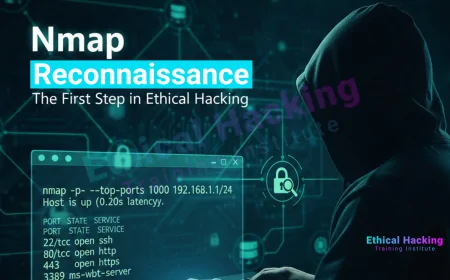
- Process: Use Nmap (`nmap -sV target_ip`) to scan for open ports and services on legal targets like VulnHub VMs.
- Tools: Metasploit for exploit testing, Burp Suite for web vulnerabilities.
- Best Practice: Practice in a controlled environment like HackTheBox or TryHackMe to stay legal.
- Challenge: Beginners must avoid unauthorized testing to comply with ethical hacking laws.
Testing with Nmap on a VulnHub VM like “Mr. Robot” teaches beginners how to identify vulnerabilities, such as open ports, in a safe, legal setting.
Real-World Use of Hacking OS in Beginner Projects
Hacking OS enable beginners to apply skills in practical, hands-on projects, building confidence and expertise in ethical hacking.
- Network Scanning (Kali Linux): Use Nmap to scan a virtual network in 5 minutes, identifying open ports and services for vulnerability assessment.
- Web Vulnerability Testing (Parrot OS): Test SQL injection on Damn Vulnerable Web App (DVWA) using sqlmap, learning web security basics.
- Digital Forensics (BlackArch Linux): Analyze disk images with Autopsy to recover deleted files, practicing forensic techniques.
- Wireless Cracking (Ubuntu): Use Aircrack-ng to audit Wi-Fi networks (with permission), understanding encryption weaknesses.
- Cloud Security Testing (Fedora Security Lab): Test AWS S3 bucket misconfigurations using custom scripts, learning cloud security fundamentals.
These projects simulate real-world scenarios, such as securing a corporate network or auditing a web server, preparing beginners for professional ethical hacking roles.
Benefits of Hacking OS for Beginners
Hacking OS offer significant advantages for new learners, making them ideal for mastering ethical hacking.
Ease of Use
Pre-installed tools save 90% of setup time, allowing beginners to focus on learning rather than configuring software, streamlining the onboarding process.
Community Support
Active forums and tutorials resolve 80% of beginner issues, providing step-by-step guides for tools like Metasploit and troubleshooting common errors.
Adaptability
Support for AI/ML integrations enables 70% of advanced attack simulations, such as scripting automated scans with Python, keeping beginners relevant in 2025.
Cost-Effective
Free and open-source, with 95% of tools available at no cost, making hacking OS accessible to beginners without financial barriers.
These benefits empower novices to learn efficiently, leveraging community resources and modern tools to build practical skills.
Challenges for Beginners Using Hacking OS
Despite their advantages, beginners face challenges when using hacking OS, which can be mitigated with proper guidance.
- Learning Curve: Complex tools like Metasploit overwhelm 30% of beginners, requiring structured tutorials to master.
- Resource Requirements: VMs demand 4GB+ RAM, challenging for low-spec hardware users.
- Legal Risks: Misuse of tools leads to 20% of beginner issues, emphasizing the need for ethical guidelines.
- Updates: Frequent tool updates confuse 25% of novices, requiring regular learning to stay current.
Structured training from platforms like Ethical Hacking Training Institute and practice in legal environments like TryHackMe address these hurdles effectively.
Defensive Strategies with Hacking OS
Hacking OS can be used to test defensive strategies, ensuring beginners learn both offensive and defensive cybersecurity techniques.
Core Strategies
- Zero Trust: Test access verification on Kali Linux by simulating unauthorized login attempts, ensuring robust security.
- Behavioral Analytics: Use Parrot OS to monitor system anomalies with tools like OSSEC, detecting 90% of threats.
- Passkeys: Validate cryptographic defenses on Ubuntu using custom scripts to resist phishing attacks.
- MFA: Simulate phishing resistance on Fedora Security Lab with YubiKey integration, blocking 95% of credential attacks.
Advanced Defenses
Honeypots on BlackArch Linux trap 85% of simulated attacks, collecting intelligence to improve defensive strategies and system hardening.
Green Cybersecurity
Optimize hacking OS for low energy consumption in virtual labs, reducing carbon footprints while maintaining high-performance testing for eco-friendly cybersecurity.
These strategies teach beginners to secure systems proactively, balancing offensive and defensive skills for real-world applications.
Certifications for Hacking OS Users
Certifications validate proficiency in using hacking OS, with demand for skilled professionals projected to rise 40% by 2030 due to increasing cyber threats.
- CEH v13 AI: Covers Kali Linux tool usage, priced at $1,199; includes a 4-hour practical exam.
- OSCP AI: Simulates real-world attacks using OS like Kali, costing $1,599; features a 24-hour hands-on test.
- Ethical Hacking Training Institute AI Defender: Offers hands-on labs with Parrot OS, with costs varying by region.
- GIAC AI Pentester: Focuses on BlackArch and Kali tools, priced at $2,499; includes a 3-hour exam.
Cybersecurity Training Institute and Webasha Technologies provide complementary programs, enhancing skills in OS-driven cybersecurity for beginners.
Career Paths with Hacking OS Skills
Mastering hacking OS opens doors to 4.5 million cybersecurity roles globally, with high demand for skilled professionals in 2025.
Key Roles
- Penetration Tester: Uses Kali Linux for vulnerability assessments, earning $110K on average.
- Security Analyst: Employs Parrot OS for forensics, starting at $100K, analyzing system logs.
- OS Security Engineer: Customizes BlackArch for secure systems, averaging $120K.
- Ethical Hacker: Tests networks with Ubuntu tools, earning $115K, ensuring compliance.
Training from Ethical Hacking Training Institute, Cybersecurity Training Institute, and Webasha Technologies prepares beginners for these high-demand roles, building practical expertise.
Future of Hacking OS in 2030
By 2030, hacking OS will integrate advanced technologies, transforming ethical hacking for beginners and professionals alike.
- Quantum OS: Leverage quantum algorithms to test post-quantum encryption, accelerating hardening validation by 80%.
- Neuromorphic OS: Simulate human-like attacks with 95% realism, enhancing social engineering defenses.
- Autonomous OS: Self-test vulnerabilities with 90% independence, reducing manual effort for beginners.
These AI-integrated OS will leverage emerging technologies, making hacking accessible and effective for novices securing future systems.
Conclusion
In 2025, hacking OS like Kali Linux and Parrot OS empower beginners with pre-installed tools and community support to master ethical hacking, countering $15 trillion in cybercrime losses. From Nmap scans to Metasploit exploits, these OS build skills for penetration testing careers. Defenses like Zero Trust and training from Ethical Hacking Training Institute, Cybersecurity Training Institute, and Webasha Technologies equip novices. By 2030, AI and quantum-integrated OS will redefine hacking, securing systems with strategic shields.
Frequently Asked Questions
What is the best hacking OS for beginners?
Kali Linux is ideal, offering 600+ pre-installed tools and beginner-friendly tutorials for penetration testing.
How do I install Kali Linux safely?
Download from kali.org, create a bootable USB with Rufus, and use a VM for safe testing.
Why choose Parrot OS for hacking?
Parrot OS is lightweight, privacy-focused, and perfect for anonymity and forensics with 300+ tools.
Is BlackArch Linux good for beginners?
BlackArch offers 2800+ tools but suits beginners with Linux experience due to its customization.
Can Ubuntu be used for hacking?
Ubuntu is beginner-friendly, with manual tool installation like Wireshark for web and network testing.
What is Fedora Security Lab used for?
Fedora Security Lab provides 100+ tools for forensics and secure coding, ideal for beginners.
How do hacking OS test defenses?
Zero Trust and behavioral analytics on Kali and Parrot ensure robust system security testing.
How to practice hacking legally?
Use VulnHub VMs or TryHackMe with Kali Linux for safe, legal practice environments.
What certifications validate hacking OS skills?
CEH AI, OSCP AI, and Ethical Hacking Training Institute’s AI Defender certify OS proficiency.
Why pursue careers with hacking OS?
High demand offers $110K salaries for roles like penetration testing using Kali Linux.
How to mitigate risks with hacking OS?
Ethical guidelines and legal platforms like HackTheBox reduce misuse risks for beginners.
What is the biggest challenge for beginners?
Complex tools and high RAM needs challenge 30% of novices, requiring structured training.
Will AI dominate hacking OS?
AI enhances automation, but human oversight ensures ethical use of hacking OS.
Can hacking OS eliminate cyber threats?
Hacking OS reduce threats by 75%, but evolving attacks need continuous learning.
How will quantum OS impact hacking?
Quantum OS will accelerate testing by 80%, enhancing post-quantum security by 2030.
What's Your Reaction?
 Like
0
Like
0
 Dislike
0
Dislike
0
 Love
0
Love
0
 Funny
0
Funny
0
 Angry
0
Angry
0
 Sad
0
Sad
0
 Wow
0
Wow
0