
What Is a Cybersecurity Career Roadmap in 2025?
Follow a practical 2025 cybersecurity career roadmap: entry paths, role specializations, must-have skills and tools, recommended certifications, learning resources, portfolio building, and advancement strategies to land and grow in security roles.
Introduction
Cybersecurity remains one of the fastest growing and most resilient career fields in 2025. Demand for skilled practitioners continues to outpace supply, creating many entry points for people from varied backgrounds. A clear roadmap helps you move from beginner to an experienced practitioner by sequencing learning, hands on experience, and credentialing so you stand out to employers and managers. Building a plan that mixes fundamentals, practical labs, and real projects will accelerate hiring and long term career growth.
Industry Landscape and Why Now Is a Good Time to Start
Companies, governments, and startups are investing in security because digital transformation and AI adoption expand the attack surface. That means more jobs across operations, engineering, governance, and offensive roles. Upskilling internally is a strong trend: teams prefer training staff for evolving responsibilities rather than hiring for every gap. Use this trend to your advantage by learning high demand skills that teams want to retain and grow. For structured study plans and step sequences, public roadmaps and guides offer useful checklists and timelines.
Core Roles on a Typical Roadmap
A practical roadmap groups roles by experience and focus. Typical entry and next step roles include:
- Entry: Security Analyst / SOC Analyst, Junior System Administrator, Helpdesk with security tasks
- Early-mid: Incident Responder, Vulnerability Analyst, Cloud Security Engineer, Application Security Tester
- Mid-advanced: Penetration Tester, Red Team Operator, Security Architect, Security Engineer
- Leadership: Security Manager, CISO, Head of Security Operations
Each step emphasizes different skills: SOC roles need detection and triage, while pentesting needs offensive tooling and exploit knowledge. Employers increasingly value cross-functional experience, for example a cloud engineer with strong security knowledge. Resources that list role expectations and leveling matrices help you map learning to job levels.
Fundamentals to Learn First
Before deep specialization, build a foundation in:
- Networking fundamentals: TCP/IP, DNS, routing, ports
- Operating systems: Linux essentials and Windows internals
- Scripting and automation: Python, Bash, PowerShell
- Security basics: encryption, authentication, common attack patterns
- Cloud basics: core cloud services and identity models
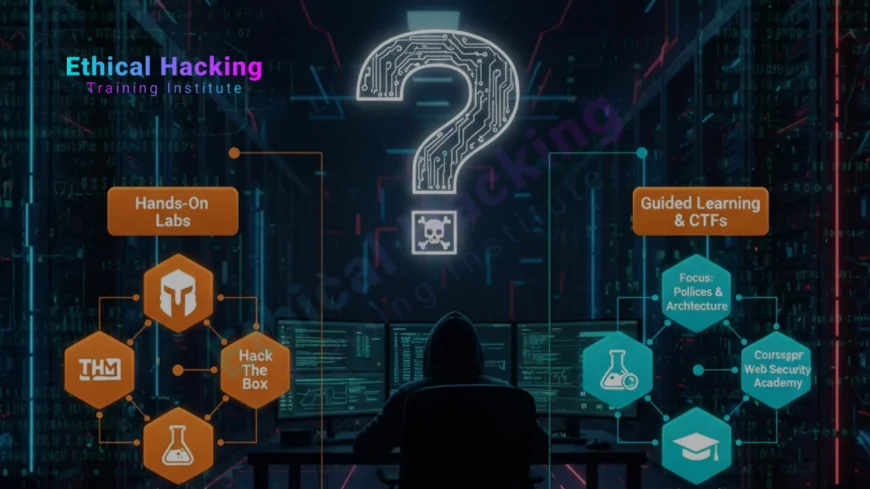
Hands on practice is critical. Start with guided labs and progressively harder challenges so you practice concepts rather than memorize commands. Many learners pair a guided course with self paced lab time to lock in skills; consider a comprehensive, hands on curriculum to ensure continuous practice in real environments.
Specializations and When to Pick One
After 6 to 18 months of foundational work, select a specialization that matches your interests and market demand. Common specializations include:
- Security Operations and Threat Hunting
- Cloud Security and DevSecOps
- Application Security and SAST/DAST workflows
- Penetration Testing and Red Teaming
- Digital Forensics and Incident Response
Choose a path by considering which daily tasks you enjoy, which communities you want to join, and which local employers are hiring. Many training providers offer focused tracks to accelerate specialization; practical, domain specific labs make the transition from generalist to specialist much smoother.
Must-Know Tools and Technical Skills
Across roles, certain tools recur. Learn these early and keep practicing them:
- Nmap, Wireshark for network discovery and analysis
- Burp Suite, OWASP ZAP for web testing
- Metasploit, sqlmap for exploitation and automation
- Endpoint tools: Sysinternals, EDR consoles
- Cloud consoles and IAM tooling for AWS/Azure/GCP
Tool proficiency matters, but context is king: know why and when to use each tool, how to interpret output, and how to document findings. If you plan a pentesting track, mastering Nmap and related reconnaissance techniques is a must and often taught in practical Nmap-focused modules.
Certifications: Which Ones and When
Certifications help pass HR filters and validate skills for hiring managers. A common certification progression is:
- Beginner: CompTIA Security+
- Entry / early career: CEH, CompTIA PenTest+
- Hands on / advanced: OSCP, GIAC GPEN
- Leadership / governance: CISSP, CISM
Pick certifications that match your chosen path. For example, OSCP is highly respected for penetration testing because it is hands on. CEH is useful for demonstrating a broad ethical hacking foundation and is often paired with practical experience or training courses to be most effective. Keep in mind employers weigh demonstrated practical skills and portfolio work very heavily alongside certifications.
Learning Resources and How to Structure Study
Mix learning modes: short videos for concepts, books for depth, labs for practice, and projects for portfolio work. Use a weekly schedule like:
- 2 sessions: theory (networking, OS internals)
- 3 sessions: hands on labs or retired machines
- 1 session: tool deep dive and documentation
- 1 session: community reading and news
Structured programs that combine guided content with lab time fast track learning by removing guesswork and offering curated practice. If you want hands on, instructor backed curricula that follow a career ladder, look for comprehensive courses that include labs, mentorship, and practical assessments.
Building a Portfolio and Gaining Experience
Employers hire demonstrable experience. Build a portfolio with:
- Write ups for labs and CTF solutions hosted on a public repo or blog
- Documentation of a security assessment or a small red team report from your lab
- Contributions to open source security tooling or detection rules
Also volunteer for small internal audits, help local nonprofits with basic security reviews, or participate in bug bounty programs to get real findings. The portfolio is often more persuasive than certificates alone. For guided training that helps create publishable write ups, pair coursework with real lab time.
Job Search, Interviews, and Soft Skills
Technical skills get you noticed, but soft skills get you hired and promoted. Practice:
- Clear report writing: concise executive summary plus technical appendix
- Communication: explain issues to non technical stakeholders
- Problem solving: demonstrate methodology and reproducibility
Prepare for interviews by rehearsing scenario based questions, walking through your portfolio, and practicing live troubleshooting. Employers often run practical tests; be ready to demonstrate methodology and remediation suggestions, not just exploit steps.
Career Growth: From Specialist to Leader
After you reach mid career, broaden impact by: mentoring juniors, owning cross functional security projects, contributing to policy and architecture, and improving how teams measure and reduce risk. Pursue leadership certifications and governance training when you shift from hands on work to strategy. Keep one foot in technical practice to stay credible with engineering teams and maintain hiring value.
Trends to Watch in 2025 and Beyond
Two important trends to watch are AI integration in security and the continued skill shortage. AI is reshaping detection and attack automation, so upskilling in AI-aware security tools will be valuable. Organizations are investing in internal upskilling and hybrid talent strategies, so being adaptable and continuously learning will be rewarded.
Action Plan: First 12 Months (Practical Roadmap)
Here's a compact month by month plan you can execute in your first year:
| Months | Focus | Outcome |
|---|---|---|
| 1-2 | Networking basics, Linux fundamentals | Comfort with OS and network concepts |
| 3-5 | Scripting and tooling (Nmap, Wireshark) | Perform basic scans and analyze traffic |
| 6-8 | Guided pentesting labs and small projects | Build portfolio write ups |
| 9-12 | Certify and apply for entry roles | Entry level job or internship |
Resources and Courses (links mid-paragraph)
When selecting a provider, pick one with hands on labs and a clear curriculum. Many learners start with a structured, comprehensive course that combines lessons and labs, which shortens the path to job readiness; practical lab programs are especially helpful when paired with self practice in home labs. For example, a well rounded learning plan often includes vendor neutral labs and bootcamps to reinforce the roadmap. Explore carefully curated, hands on learning tracks. comprehensive online courses are frequently used to structure study and lab time.
For focused skill deep dives, such as mastering reconnaissance tools and network scanning, practical modules and tool specific guides speed up learning. For example, many modules teach Nmap early so you understand infrastructure mapping. Nmap tutorials are a common early resource in practical tracks.
If you want location based instructor support or classroom practice to supplement self study, look at local training programs and bootcamps that offer mentor feedback and placement support. These programs often pair classroom lectures with lab access. Find local courses for guided practice and networking with peers.
When preparing for certification, consider official training and prep materials that focus on exam objectives while maintaining lab hours. For CEH-specific prep, structured CEH training courses support exam readiness with labs and practice tests. CEH training materials often include exam-focused labs.
Conclusion
A 2025 cybersecurity career roadmap is a personalized sequence of fundamentals, practical labs, chosen specialization, certifications, and portfolio building. Start with networking and OS fundamentals, practice tools in safe labs, choose a specialization after foundational competency, and validate skills with certifications and projects. Stay adaptable, keep learning as tools and threats evolve, and emphasize communication and reporting skills to move from practitioner to leader. The field rewards consistent practice and real evidence of capability.
Frequently Asked Questions
Do I need a degree to start a cybersecurity career?
No. Many employers value practical skills, certifications, and portfolio work more than a formal degree, though degrees can help in some hiring pipelines.
Which certification should I take first?
CompTIA Security+ is a strong first cert for general security fundamentals; choose role aligned certs later like CEH for ethical hacking or OSCP for hands on pentesting.
How long will it take to get a junior role?
With a focused 6 to 12 month plan combining labs, basic certs, and a few projects, many people reach entry level positions or internships.
Is OSCP necessary to be a penetration tester?
OSCP is highly respected for pentesting, but practical experience, tool mastery, and a portfolio can also lead to pentest roles. OSCP increases credibility.
What are employers looking for in 2025?
Employers want practical skills, evidence of hands on work, familiarity with cloud security, and the ability to use automation and AI aware tooling for threat detection and response.
How important are soft skills?
Very important. Clear reporting, communication with non technical stakeholders, and the ability to explain risks and remediation are crucial for career growth.
Should I specialize early or stay broad?
Start broad to build a foundation, then specialize after you have a year of practical experience. Specialization is easier and more valuable when built on solid fundamentals.
Where can I practice legally?
Use authorized lab platforms, CTFs, open source vulnerable VMs, and bug bounty programs; never test unauthorized systems.
What salary can I expect as a junior analyst?
Salaries vary by region, but demand for cybersecurity talent keeps entry level pay competitive. Research local market data to set expectations.
How do I keep skills current?
Read industry blogs, attend conferences or meetups, run labs, and take short advanced courses; continuous practice is essential.
Are bootcamps worth it?
Bootcamps that provide hands on labs, mentorship, and placement support can accelerate the job search, but vet them for outcomes and hands on content.
What role does cloud knowledge play?
Cloud security is increasingly important; many roles now expect at least basic cloud platform familiarity, especially IAM and network controls.
How do I demonstrate experience if I have none?
Create a public portfolio with lab write ups, GitHub projects, and volunteer security assessments for small organizations to show your skills.
Which communities help beginners?
Local meetups, Discord channels, CTF communities, and open source security projects are great for learning, mentorship, and networking.
What is the single best tip to progress quickly?
Practice deliberately on lab scenarios, document everything, and publish reproducible write ups that show your thought process to potential employers.
What's Your Reaction?
 Like
0
Like
0
 Dislike
0
Dislike
0
 Love
0
Love
0
 Funny
0
Funny
0
 Angry
0
Angry
0
 Sad
0
Sad
0
 Wow
0
Wow
0