
What Are the Common Cybersecurity Threats in 2025?
Explore the top cybersecurity threats in 2025: AI-enhanced malware, ransomware evolution, supply chain attacks, and more. Learn what they are, real-world impacts, and simple defense strategies for beginners.
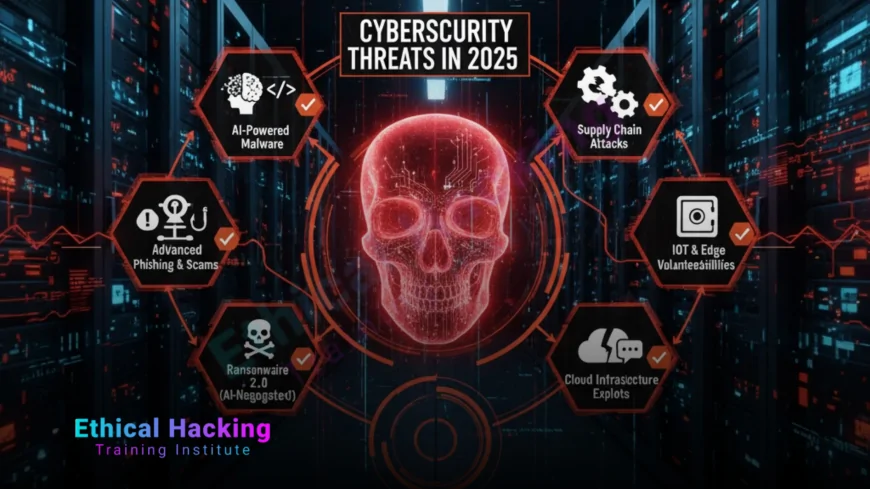
Introduction: Why 2025 Feels More Dangerous Than Ever
Cyberattacks hit a record high in 2024, costing businesses trillions. Now in 2025, threats are smarter, faster, and more targeted thanks to AI and global tensions. From AI-powered phishing to quantum risks, no one is safe.
This guide breaks down the 10 most common cybersecurity threats for 2025. We'll explain each one simply, share real examples, and give beginner-friendly tips to protect yourself or your business. Whether you're a small business owner or just curious, you'll walk away knowing what to watch for.
The good news? Awareness is your first defense. Let's dive in.
AI-Enhanced Malware: The Smart Infection
Malware isn't just viruses anymore. In 2025, AI makes it adaptive and sneaky, changing to dodge detection.
What It Is
AI-enhanced malware uses machine learning to evolve in real-time. It scans your system, learns defenses, and mutates to stay hidden. Think of it as a virus that gets smarter as it spreads.
Real-World Impact
- 60% of IT pros call this the top AI threat
- Affected healthcare: $4.7 million average cost per attack
How to Defend
- Use AI-powered antivirus that fights fire with fire
- Keep software updated to patch known weaknesses
- Run regular scans and monitor unusual file behavior
Ransomware Evolution: Lock and Demand
Ransomware locks your files and demands payment. In 2025, it's more aggressive, hitting critical infrastructure like hospitals and power grids.
What It Is
Attackers encrypt data and charge crypto ransoms. New twists include "ransomware-as-a-service" where hackers rent tools to others.
Real-World Impact
- 46% surge in industrial attacks in Q1 2025
- UK businesses: 6.5 million records stolen, one company bankrupt
How to Defend
- Backup data offline regularly
- Train staff on phishing emails (entry point for 80% of attacks)
- Deploy endpoint detection tools
Supply Chain Attacks: The Hidden Weak Link
Attackers target trusted vendors to infiltrate multiple companies at once.
What It Is
Instead of hitting you directly, hackers compromise a supplier's software, spreading malware through updates.
Real-World Impact
- 29% of 2023 breaches from third parties; trend rising in 2025
- 54% of large orgs see this as top resilience barrier
How to Defend
- Vet suppliers with security audits
- Use multi-factor authentication (MFA) everywhere
- Monitor third-party access logs
Advanced Phishing and Social Engineering
Phishing tricks you into clicking bad links. 2025 versions use deepfakes and AI for realism.
What It Is
Emails, calls, or sites mimicking trusted sources. AI generates fake voices or videos for "vishing" (voice phishing).
Real-World Impact
- AI supercharges social engineering
- Top concern per World Economic Forum
How to Defend
- Verify requests via another channel
- Use email filters and train on red flags
- Enable ad blockers to avoid malvertising
DDoS Attacks: Flood and Overwhelm
Distributed Denial of Service floods sites with traffic to crash them.
What It Is
Botnets of hijacked devices bombard servers. In 2025, "DDoS-as-a-service" makes it cheap for attackers.
Real-World Impact
- Used for extortion: Pay or stay down
- Targets finance and comms sectors
How to Defend
- Use DDoS mitigation services
- Implement rate limiting on networks
- Have incident response plans ready
Insider Threats: The Enemy Within
Threats from employees or partners, intentional or accidental.
What It Is
Data leaks from disgruntled staff or careless clicks. AI helps detect but also enables insiders.
Real-World Impact
- AI-generated fake profiles for social engineering
- Common in healthcare: 92% hit in 2024
How to Defend
- Role-based access controls
- Behavioral analytics for anomalies
- Regular security awareness training
Business Email Compromise (BEC): The Money Grab
Fraudsters impersonate executives to steal funds.
What It Is
Spoofed emails requesting wire transfers. AI crafts convincing messages.
Real-World Impact
- One of top 10 threats
- Billions lost annually
How to Defend
- Verify financial requests by phone
- Use email authentication (DMARC)
- Train on executive impersonation
Defense Evasion Techniques: The Great Escape
Attackers bypass security tools like EDR.
What It Is
"EDRKillers" disable detection software. Common entry via unpatched vulnerabilities.
Real-World Impact
- Top threat in 2025
- Delays response, amplifies damage
How to Defend
- Layer defenses (multiple tools)
- Patch systems promptly
- Monitor for tool tampering
Quantum Computing Risks: The Encryption Breaker
Quantum tech could crack current encryption.
What It Is
Quantum computers solve complex math fast, threatening RSA and similar.
Real-World Impact
- Emerging threat for 2025
- Affects banking, healthcare data
How to Defend
- Adopt post-quantum cryptography
- Encrypt data at rest and transit
- Plan for crypto agility
Nation-State Attacks: Geopolitical Cyberwar
Governments hack for espionage or disruption.
What It Is
Advanced persistent threats (APTs) target infrastructure.
Real-World Impact
- Financial sectors hit hard
- Philippines detected foreign probes
How to Defend
- Collaborate with CERT teams
- Enhance threat intelligence sharing
- Secure critical infrastructure
Top Threats Comparison Table
| Threat | Frequency (2025 Est.) | Avg. Cost | Top Target |
|---|---|---|---|
| Ransomware | High | $4.7M | Healthcare |
| AI Malware | Rising | Varies | All Sectors |
| Supply Chain | Medium | High | Enterprises |
| Phishing | Very High | $1M+ | Individuals |
| DDoS | Medium | Downtime Costs | Websites |
Conclusion: Stay One Step Ahead in 2025
2025's cybersecurity threats blend old tricks with new tech like AI and quantum. Ransomware and phishing remain kings, but supply chains and insiders pose sneaky risks. The cost? Billions in damages and lost trust.
Don't panic: Start with basics like updates, training, and backups. Build layers of defense and stay informed. Your vigilance keeps the digital world safer. For deeper dives, many turn to CEH courses to understand and counter these threats.
Secure today, thrive tomorrow.
Frequently Asked Questions
What’s the biggest threat in 2025?
AI-enhanced malware tops lists, with 60% of experts worried about its adaptability
How has AI changed cyber threats?
AI powers smarter phishing, evasion, and malware that learns on the fly
Are small businesses safe?
No, 72% of growing startups expect attacks
What’s a supply chain attack?
Hacking a vendor to reach you indirectly
Can quantum break all encryption?
Potentially yes, but post-quantum crypto is emerging
How to spot phishing in 2025?
Look for deepfake red flags like odd audio or urgent demands.
Is ransomware decreasing?
No, up 46% in key sectors
What about insider threats?
Often accidental; train and monitor behavior
Do updates really help?
Yes, unpatched systems are prime targets
How to prepare for nation-state attacks?
Share intel and secure infrastructure
Is DDoS only for big sites?
No, small ones too for extortion
What’s BEC?
Email scams stealing money via fake exec requests
Cloud safe from threats?
No, vulnerabilities rising
Best free defense tool?
Open-source antivirus and firewalls.
Future of threats?
More AI, quantum, and geo-political
What's Your Reaction?
 Like
0
Like
0
 Dislike
0
Dislike
0
 Love
0
Love
0
 Funny
0
Funny
0
 Angry
0
Angry
0
 Sad
0
Sad
0
 Wow
0
Wow
0